Passing the Torch: How Ancient Greek Ceremonies Created America's Most Thrilling Olympic Moments

When Individual Glory Became Team Victory
In a sporting culture dominated by individual achievement, ancient Greece created something revolutionary: competition that required perfect teamwork. The torch relay ceremonies honoring various gods weren't just religious rituals—they were the world's first team athletic events. Today, those sacred flame-passing traditions live on in the relay races that have produced some of America's most memorable Olympic moments.
From Carl Lewis anchoring the 4x100 in 1984 to the U.S. women's 4x400 team's dramatic comeback in Tokyo 2021, relay racing captures something uniquely American: the idea that individual talent reaches its peak when channeled through collective effort.
Sacred Flames, Sacred Teamwork
The ancient Greek torch relay began as a religious ceremony honoring Prometheus, who stole fire from the gods and gave it to humanity. Teams of runners carried sacred flames from temple to temple, with each leg requiring precise timing and coordination. Drop the torch, let the flame die, or break the chain of custody, and the entire ceremony failed.
Sound familiar? It should. Modern relay racing operates on identical principles: four athletes, one shared goal, and zero margin for error. The ancient Greeks understood that passing an object at full speed while maintaining maximum velocity required skills beyond individual running ability. It demanded trust, timing, and the kind of split-second decision-making that separates good teams from legendary ones.
These religious torch relays weren't casual processions. Archaeological evidence suggests they covered distances exceeding 20 miles, with runners maintaining speeds that would challenge modern marathoners. Teams trained together for months, developing the precise handoff techniques and communication systems that modern relay teams still use today.
The Evolution of Cooperation
By the 5th century BC, Greek torch relays had evolved into formal athletic competitions. The Panathenaic Games in Athens featured team races where victory required not just speed, but flawless execution under pressure. These events drew massive crowds who understood they were watching something unique: athletic competition where individual glory was impossible without perfect teamwork.
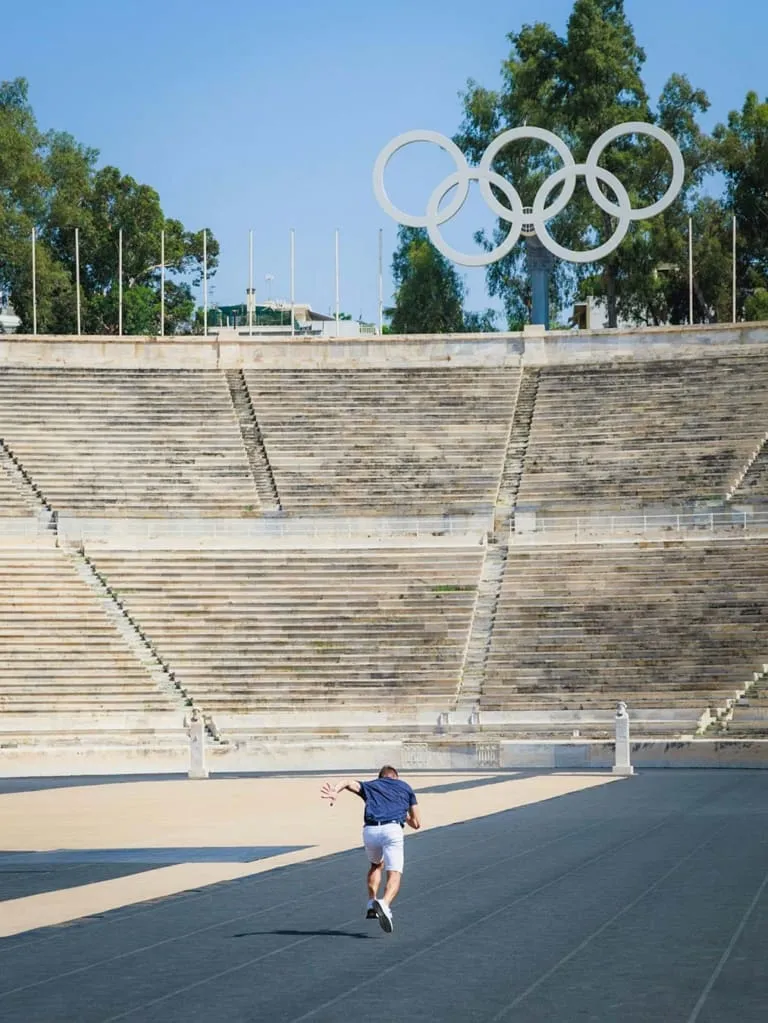 Photo: Panathenaic Games, via b2128690.smushcdn.com
The Greeks had accidentally created the template for every great team sport moment in American history. Whether it's a basketball team executing a perfect play or a football offense moving downfield in synchronized precision, the fundamental principle remains unchanged: individual excellence multiplied through collective effort.
Ancient Greek relay competitions also introduced concepts that define modern American sports culture. Teams developed specialized roles—some runners excelled at explosive starts, others at maintaining speed, still others at closing strong. This specialization within teamwork became the foundation for everything from baseball's batting order to football's offensive schemes.
America's Relay Revolution
When track and field arrived in America, relay racing found its perfect home. The sport's combination of individual excellence and team achievement matched American values perfectly. Early American relay teams in the 1900s and 1910s dominated international competition by treating relay racing as a distinct discipline requiring specific skills and strategies.
The breakthrough came at the 1912 Stockholm Olympics, where the U.S. men's 4x100 relay team didn't just win—they redefined what relay racing could be. Instead of simply handing off batons to their fastest runners, they developed systematic approaches to acceleration zones, exchange timing, and strategic positioning that maximized team speed rather than individual performance.
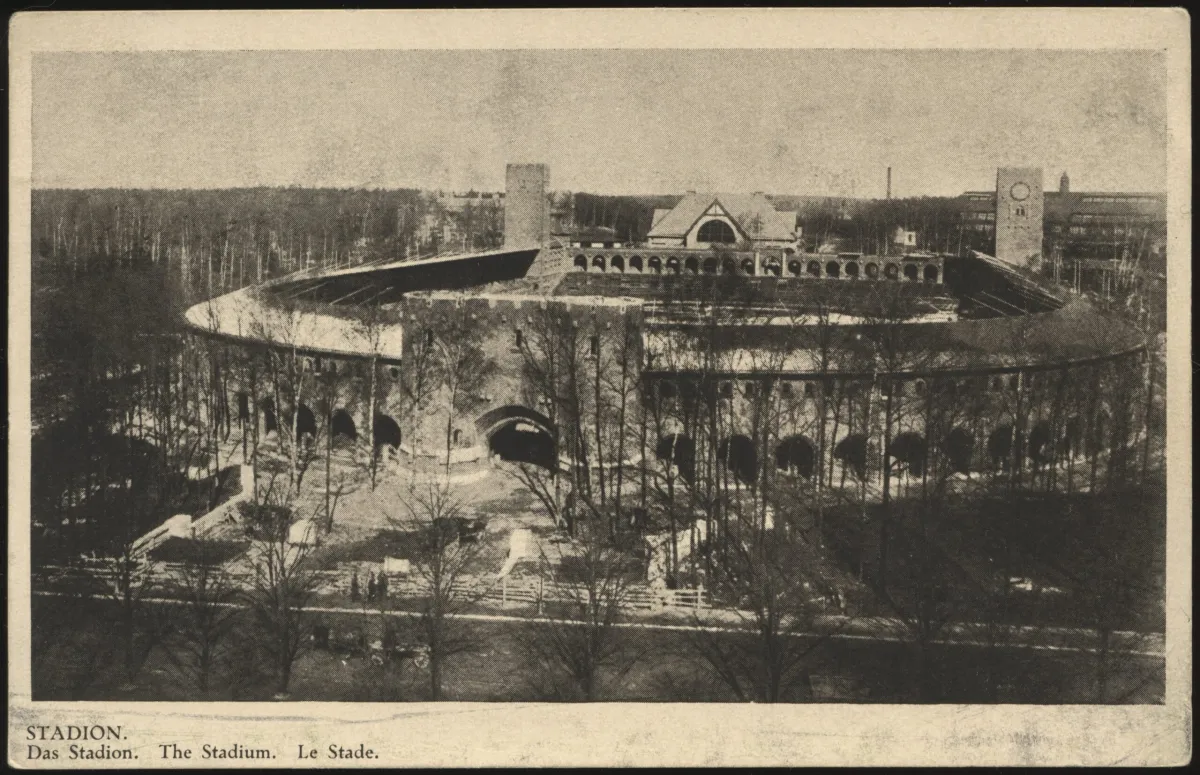 Photo: Stockholm Olympics, via cardhawkuk.com
This systematic approach to relay racing became distinctly American. While other nations focused on assembling their four fastest sprinters, U.S. coaches understood the Greek lesson: relay racing was a separate sport requiring specialized techniques. American teams began training together year-round, developing the chemistry and precision that would dominate Olympic competition for decades.
The Art of the Perfect Exchange
Modern relay racing has elevated the ancient Greek handoff into an art form requiring split-second timing and absolute trust. The exchange zone—that 20-meter window where the baton must change hands—becomes a laboratory for human cooperation under extreme pressure.
Consider the 2008 Beijing Olympics, where the U.S. men's 4x100 team featuring Tyson Gay, Darvis Patton, Walter Dix, and Asafa Powell was favored to win gold. Instead, they botched a handoff and failed to finish. Meanwhile, Jamaica's team—led by Usain Bolt—executed flawless exchanges and set a world record. The fastest individual runners lost to the better team.
 Photo: Beijing Olympics, via cdn.shopify.com
That's pure ancient Greek philosophy: individual talent means nothing without collective execution. The Greeks would have understood immediately why the Americans failed in Beijing—they prioritized individual speed over team chemistry, forgetting the lesson learned in those original torch ceremonies 2,500 years earlier.
Beyond the Track
The relay concept has influenced American sports far beyond track and field. Baseball's relay throws from outfield to home plate, basketball's fast break coordination, and football's option plays all trace back to those ancient Greek torch ceremonies. The fundamental principle—individual skills amplified through seamless teamwork—became central to American athletic culture.
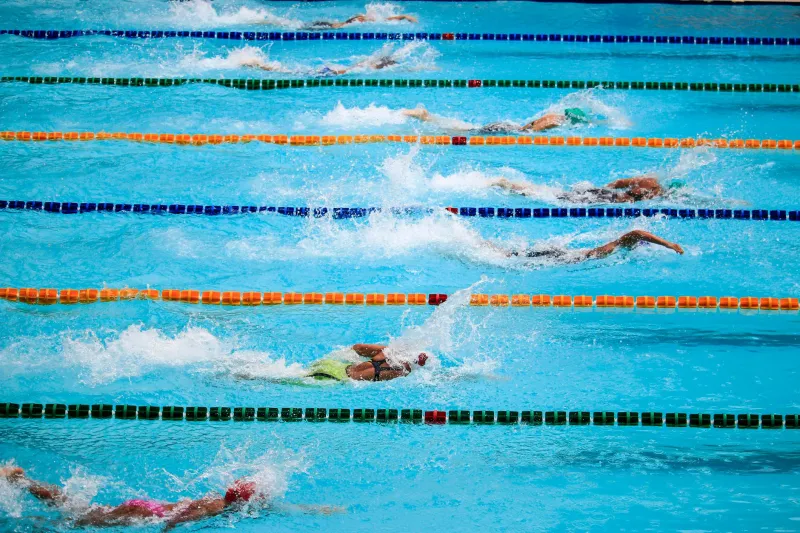
Even in individual sports, Americans have embraced the relay mentality. Swimming's medley relays, cycling's team time trials, and skiing's relay events all reflect the same cooperative competition philosophy that began with Greek religious ceremonies. American athletes excel in these events because the culture values both individual achievement and team success.
The Modern Torch Still Burns
Every four years, the Olympic torch relay reminds us of those ancient Greek origins. The flame still travels from Greece to the host city, carried by teams of runners who understand they're participating in humanity's oldest form of cooperative athletic competition. That torch connects every modern relay race to its sacred origins.
When American relay teams take the track today—whether it's the sprinters chasing gold in the 4x100 or the distance runners grinding through the 4x1500—they're participating in a tradition that began in ancient Greek temples. The batons have replaced torches, the tracks have replaced mountain paths, and the medals have replaced religious honors, but the essential challenge remains unchanged.
Success still requires four individuals becoming something greater than the sum of their parts. In a sports culture often obsessed with individual statistics and personal records, relay racing preserves the ancient Greek understanding that the greatest athletic achievements happen when individual excellence serves collective glory.
That's why relay racing produces such memorable moments in American Olympic history. It's not just about speed—it's about trust, timing, and the kind of seamless cooperation that transforms four good athletes into one unstoppable team. The ancient Greeks knew that some victories are only possible when you're willing to literally pass the torch to someone else.