Carved in Stone: How Ancient Greeks Turned Athletic Glory Into the World's First Sports Records
When Glory Needed No Numbers
Walk through any American sports bar during March Madness or the NFL playoffs, and you'll see something the ancient Greeks would instantly recognize: obsession with who's the best. The difference? We measure everything in tenths of seconds, yards per carry, and shooting percentages. The Greeks had no stopwatches, no measuring tapes, no stats at all—yet they created something even more powerful than our modern record books.
They carved athletic greatness directly into stone.
The Original Hall of Fame
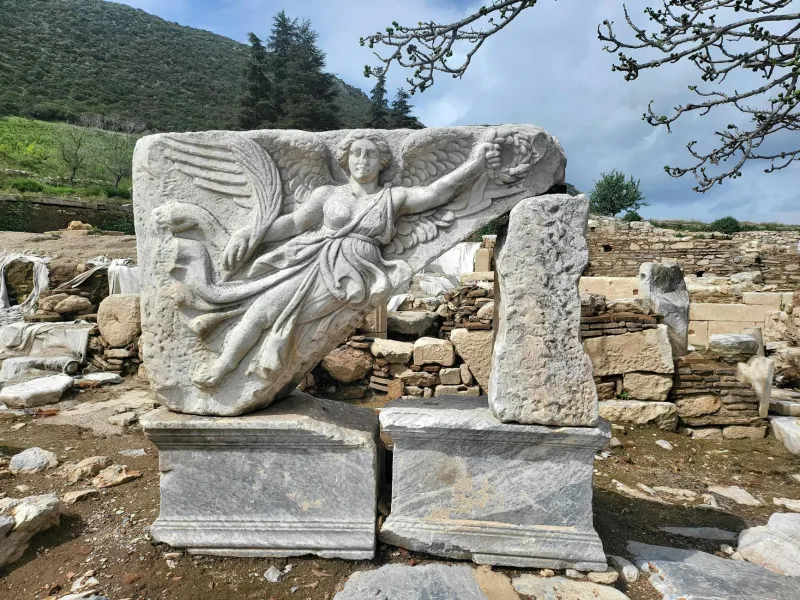
At Olympia, the sacred site where competitive athletics began in 776 BC, archaeologists have uncovered hundreds of inscribed stone slabs celebrating athletic achievements. These weren't participation trophies. Each inscription marked something extraordinary: "Diagoras of Rhodes, victor in boxing," or "Milo of Croton, six-time wrestling champion."
 Photo: Diagoras of Rhodes, via deliverback.com
 Photo: Milo of Croton, via dygtyjqp7pi0m.cloudfront.net
These stones served the same purpose as our modern record books—they preserved the moment when human performance reached new heights. But unlike today's digital databases that can be updated instantly, these records were literally set in stone. Once carved, they became permanent testimony to athletic excellence.
The Greeks understood something we're still chasing today: the need to measure ourselves against the best who came before us. Every time LeBron James passes another scoring milestone or a sprinter breaks the 100-meter record, they're participating in a tradition that started with Greek athletes whose names were chiseled into marble over 2,500 years ago.
Sacred Competition, Lasting Legacy
What made these ancient "records" different from modern statistics was their spiritual dimension. Greek athletes weren't just competing for personal glory—they were performing sacred acts honoring the gods. When someone achieved something unprecedented, it wasn't just athletic excellence; it was divine favor made visible.
This religious aspect gave Greek record-keeping a permanence our modern systems lack. Today's records get broken regularly, sometimes within months. But when a Greek athlete's achievement was carved into the temple wall at Olympia, it joined an eternal conversation about human potential.
The most famous of these inscriptions belonged to Milo of Croton, whose six Olympic wrestling victories between 540 and 516 BC remained unmatched for centuries. His name appeared on victory monuments across the Greek world, creating something like the first athletic brand. Sound familiar? It should—it's the same impulse that puts Michael Jordan's name on everything from sneakers to sports drinks.
From Stone to Stopwatch
The Greeks may not have had precise timing, but they had something arguably more valuable: context. Their inscriptions didn't just record what happened; they told stories. "Polydamas of Skotoussa, who stopped a charging bull with his bare hands and defeated three armed Persian soldiers." These weren't just athletic records—they were legends that inspired future generations.
Modern American sports inherited this storytelling tradition. When we talk about Babe Ruth's called shot or Joe Montana's Super Bowl drives, we're doing exactly what those Greek stone-carvers did: turning athletic achievement into permanent narrative.
The transition from stone inscriptions to modern record-keeping happened gradually. The first recorded athletic times appeared in 19th-century England, but the obsession with measurable performance—the idea that fractions of seconds matter—is pure American innovation. We took the Greek concept of preserving athletic greatness and turned it into a science.
The American Record Revolution
Today's American sports culture has taken the Greek foundation and built something unprecedented: a system where every performance is measured, compared, and ranked instantly. The NFL Combine turns college athletes into walking stat sheets. Baseball's sabermetrics revolution reduces entire careers to algorithms. Track and field records are measured to the hundredth of a second.
But underneath all those numbers lies the same human impulse those Greek athletes felt standing in Olympia's sacred grove: the need to prove that on this day, in this moment, no one in the world was better.
The Greeks carved their records in stone because they understood something we sometimes forget in our digital age: athletic greatness deserves permanence. Their inscriptions survived earthquakes, wars, and centuries of neglect because they were built to last.
Why Ancient Records Still Matter
Every time an American athlete breaks a record—whether it's Katie Ledecky dominating the pool or Patrick Mahomes rewriting quarterback statistics—they're participating in a conversation that began in ancient Greece. The methods have evolved from stone chisels to digital displays, but the fundamental human drive remains unchanged: the need to push beyond what anyone thought possible and leave proof for future generations.
The Greeks gave us more than the Olympics. They gave us the idea that athletic achievement should be remembered, celebrated, and used to inspire others to reach even higher. In a culture obsessed with breaking records, that might be their greatest victory of all.