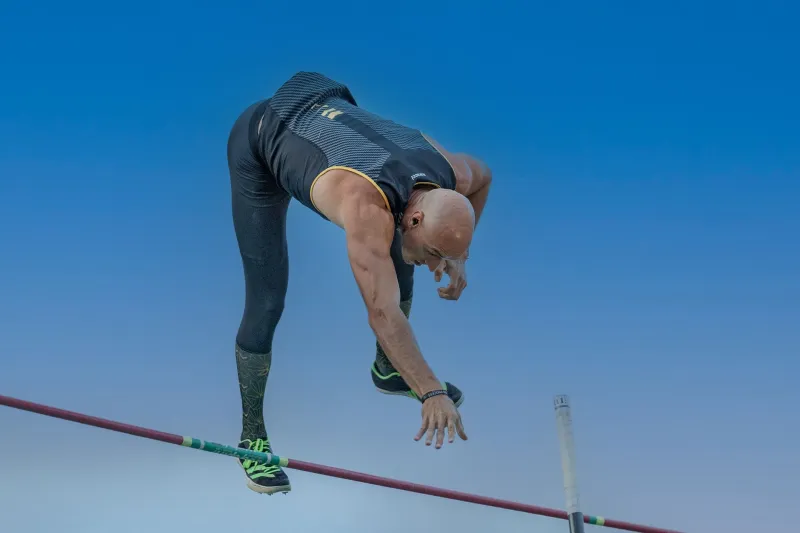
Six Crowns and Twenty Years: The Ancient Wrestler Who Wrote the Comeback Playbook
Every time Tom Brady jogged onto the field at 44 years old and threw a touchdown pass, or LeBron James dropped 40 points on a team half his age, American sports fans did what they always do with aging champions: they lost their minds with admiration. The late-career comeback, the refusal to fade, the athlete who outlasts everyone who said it was over — this narrative feels modern, almost uniquely American in its obsession with reinvention. But the blueprint was drawn in ancient Greece, by a wrestler from a southern Italian city-state named Milo of Croton, more than 2,500 years ago.
Milo didn't just win. He won across two full decades of Olympic competition, collecting six crowns at Olympia and establishing a record that no wrestler in the ancient world ever matched. His story is the oldest comeback story in sports history — and it still resonates because the competitive instincts driving it haven't changed at all.
The Boy Who Started Everything
Milo's first Olympic title came somewhere around 540 BC, and ancient sources suggest he was young enough that he may have initially competed in the boys' division before graduating to the men's event. The exact details are hazy the way all ancient sports history tends to be, filtered through centuries of retelling, but the broad arc is remarkably well-documented for its era. He was from Croton, a Greek colony on the toe of the Italian boot, a city that had developed a reputation for producing exceptional athletes — partly because of its strong Pythagorean philosophical traditions, which valued the cultivation of the body alongside the mind.
What separated Milo from his contemporaries wasn't just raw talent. Ancient writers describe a training regimen that sounds almost comically modern in its logic. According to legend, Milo began carrying a newborn calf on his shoulders every day, continuing the practice as the animal grew. By the time the calf became a full-grown bull, Milo could carry it effortlessly — an early and extraordinarily intuitive application of progressive resistance training. Whether the story is literally true matters less than what it tells us about how ancient Greeks understood athletic development: strength was built incrementally, systematically, over years.
That mindset is what allowed a young champion to become an older one.
What It Means to Keep Winning
Six Olympic titles across roughly twenty years of elite competition is a number that demands some context. The ancient Olympics were held every four years, which means Milo was competing at the highest level through at least five Olympic cycles, possibly more. He also collected multiple titles at the Pythian, Isthmian, and Nemean Games — the other three major festivals that made up the ancient Greek athletic circuit — giving him a total victory count that ancient sources place somewhere around 30 across all competitions.
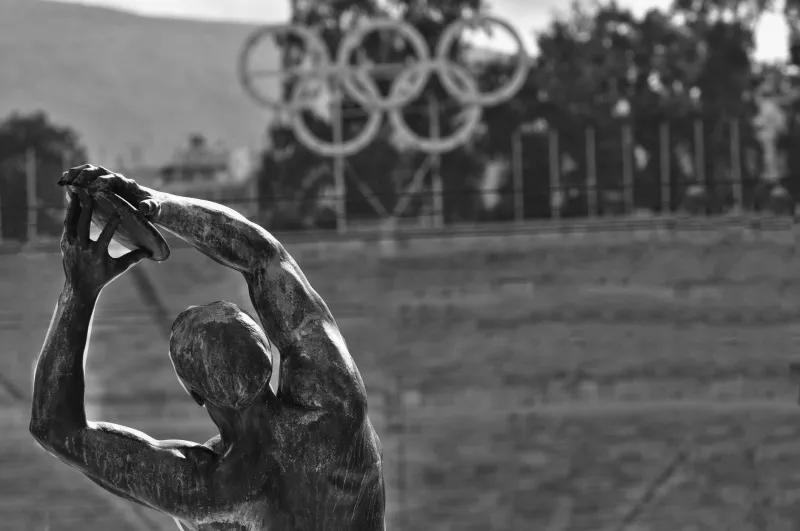
 Photo: Olympic Games, via news.sportslogos.net
But the sheer volume of wins isn't the most interesting part of the story. It's the longevity. At some point in any long career, an athlete stops being the young prodigy and becomes the veteran holding off the next generation. That transition — managing it, surviving it, thriving through it — is what separates good careers from legendary ones. Milo made that transition repeatedly. Each Olympic cycle brought younger, hungrier wrestlers looking to end the dynasty. Each time, for most of his career, they failed.
His only recorded Olympic loss came late, to a younger wrestler named Timasitheus, who reportedly avoided Milo's grip through patience and movement rather than trying to match him strength for strength. Even in that defeat, ancient accounts treat Milo with a kind of reverence — the aging champion who finally met someone clever enough to find a way around the mountain. It's the same emotional register American sports fans use when a great quarterback finally gets picked off in a playoff game, or when a dominant big man loses a step and the league figures it out. The loss, when it finally comes, almost adds to the legend.
The Mythology Machine
Ancient Greek culture was extraordinarily good at building mythology around its champions, and Milo became one of the most mythologized athletes in history. Stories accumulated around him the way highlight clips accumulate around modern superstars. He reportedly ate 20 pounds of meat and 20 pounds of bread in a single day. He allegedly carried a bull around the Olympic stadium on his shoulders before slaughtering and eating it. He is said to have held a pomegranate so gently that no one could take it from him, yet so carefully that he never bruised the fruit — a demonstration of controlled power that ancient writers used to explain what separated great athletes from merely strong ones.
These stories are almost certainly exaggerated, probably invented outright in some cases. But they serve the same function that sports mythology always serves: they give fans a way to hold onto greatness, to explain it, to make it feel supernatural enough to justify the awe it inspires. When people talk about Brady's TB12 diet or LeBron's reported $1.5 million annual investment in his body, they are doing exactly what ancient Greeks did with Milo's bull — constructing a story that explains how a human being can keep performing at an elite level long after most people would have stopped.
Why the Comeback Narrative Never Gets Old
American sports culture is particularly hungry for the aging champion story. There's something in the national character — the belief in self-reinvention, the suspicion that quitting is a kind of moral failure — that makes late-career excellence feel almost patriotic. We want our champions to refuse the exit gracefully. We want them to make the younger generation earn it.
Milo of Croton would have understood that instinct completely. He competed in a culture that offered athletes no financial reward for winning — only an olive wreath and the glory that came with it. Which means every time he stepped onto the sand at Olympia in his 30s, he was doing it purely for the competition itself, for the refusal to let someone else hold the title he had spent his life building.
That's the starting line of every comeback story ever told. Not a dramatic injury. Not a public failure. Just an athlete who looked at the next generation coming for them and decided the story wasn't over yet.
Milo drew that line in the sand around 540 BC. Every aging champion since has been running along it.