The Bar Nobody Raised: How the High Jump Went From Ancient Curiosity to Dick Fosbury's Revolution
The Bar Nobody Raised: How the High Jump Went From Ancient Curiosity to Dick Fosbury's Revolution
Sprints get the highlight reels. The long jump gets the mythology. But somewhere between the starting blocks and the sandpit, the high jump has been quietly rewriting the rules of human movement for centuries — and almost nobody talks about it.
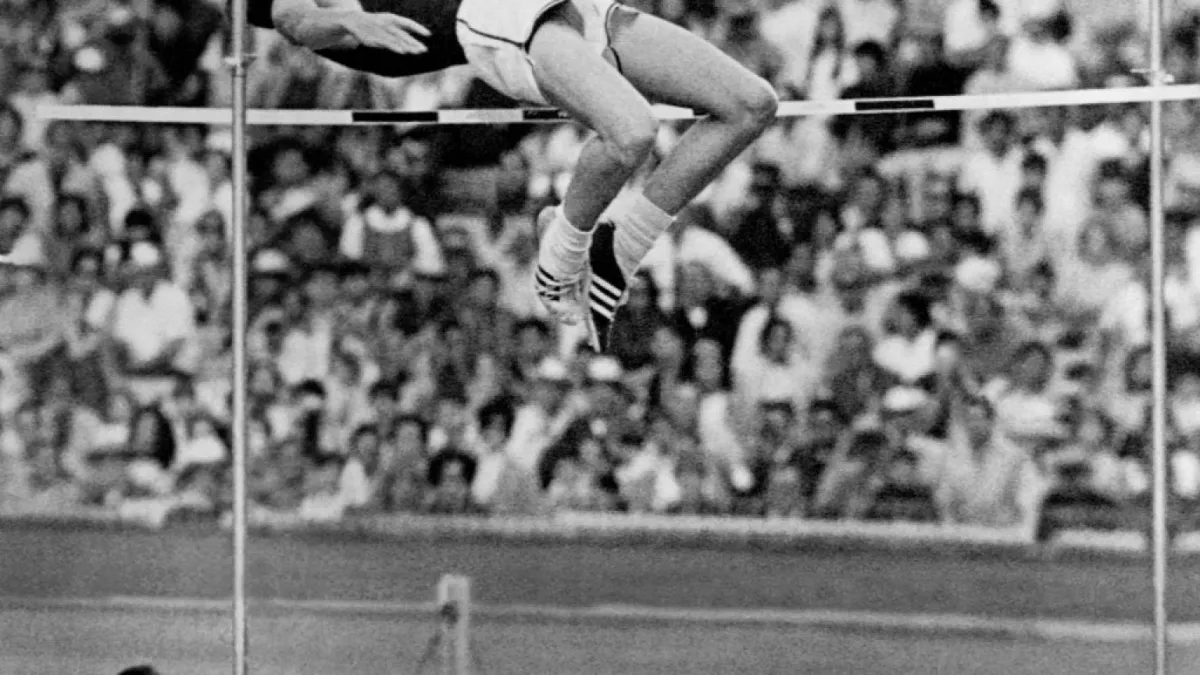 Photo: Dick Fosbury, via static.euronews.com
That's a shame, because the high jump might have the single most dramatic origin story in all of track and field. It's a sport that was essentially reinvented from scratch by one unconventional college kid in 1968, and the reverberations of that moment are still being felt every time an athlete clears a bar at the Olympics today.
Vertical Ambition in the Ancient World
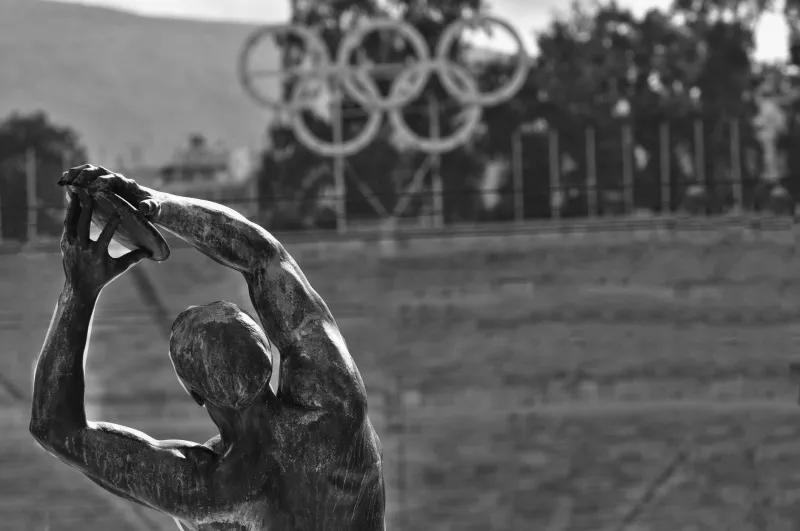
The ancient Greeks were obsessed with the body. Their athletic festivals at Olympia, Nemea, and Delphi celebrated physical excellence in nearly every form — running, wrestling, throwing, jumping. The long jump was a formal Olympic event, performed with hand weights called halteres to generate momentum. But clearing a fixed height? That particular challenge didn't carry the same ceremonial weight in the ancient program.
Still, the human impulse to vault over obstacles is as old as civilization itself. Archaeological records from ancient Egypt and Ireland suggest that bar-clearing competitions existed in various forms long before anyone codified the rules. Celtic festivals in Ireland included events where athletes cleared horizontal poles, and similar traditions appeared across the ancient Mediterranean world. The Greeks understood instinctively that jumping — in any direction — was a measure of explosive power, coordination, and athletic will.
The formal high jump as a competitive discipline, however, had to wait for the modern era to find its footing.
Scotland's Gift to the World
Credit for the first recorded high jump competition generally goes to Scotland in the early 19th century. By the 1840s, organized jumping contests were appearing at Scottish Highland Games, where athletes cleared wooden bars using a straightforward running approach and a simple scissor kick — swinging one leg over, then the other. It wasn't pretty, but it worked well enough that the event spread quickly through British athletic culture.
When the modern Olympic Games were revived in Athens in 1896, the high jump was on the program. American athlete Ellery Clark won that first modern Olympic gold with a clearance of 5 feet, 11.25 inches — a height that would get a high school athlete cut from a varsity squad today, but was considered world-class at the time. Clark used an Eastern Cutoff technique, a modest refinement of the old scissor approach that allowed athletes to get their center of gravity slightly lower relative to the bar.
For the next several decades, the high jump improved steadily but unspectacularly. Athletes tinkered with approach angles and body positioning. The Western Roll and the Straddle technique — where jumpers crossed the bar face-down — pushed records incrementally higher through the mid-20th century. By the 1960s, the world record sat just above seven feet, and most coaches assumed the human body was approaching its natural ceiling.
They were wrong.
The Flop That Changed Everything
Dick Fosbury was not supposed to reinvent anything. He was a lanky kid from Portland, Oregon, who couldn't master the conventional Straddle technique his coaches were teaching. So he did what frustrated athletes sometimes do: he experimented. He started arching his back, clearing the bar with his shoulders first, then his hips, then his legs — going over backward, face-up, in a move that looked less like athletics and more like someone falling out of bed.
His coaches were skeptical. His competitors laughed. The technique was so bizarre that when he competed in high school and college, crowds reportedly giggled watching him jump.
Then he went to the 1968 Mexico City Olympics and won the gold medal.
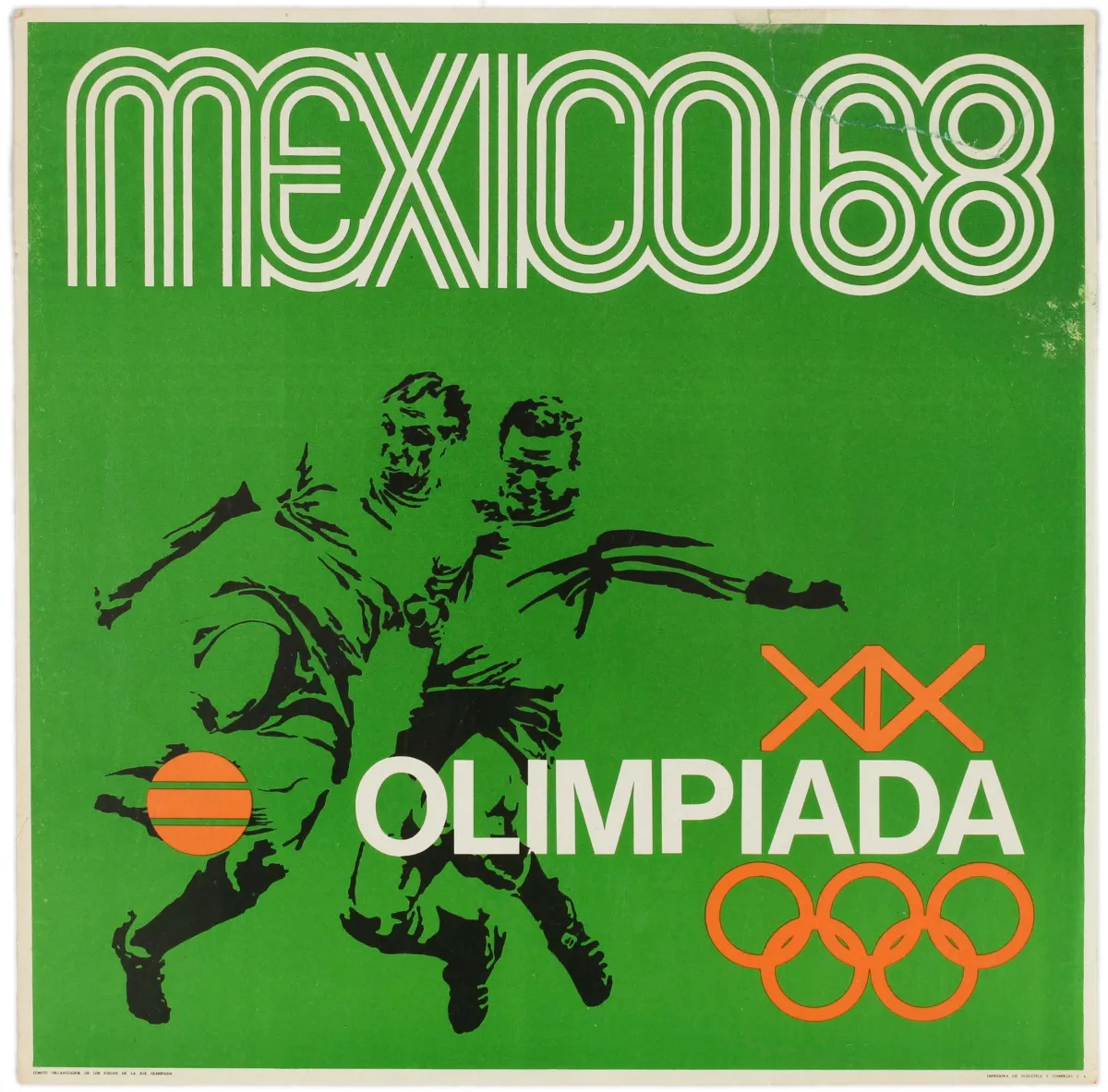 Photo: Mexico City Olympics, via blogger.googleusercontent.com
Fosbury cleared 7 feet, 4.25 inches with his back-first technique — what the press immediately dubbed the Fosbury Flop — and the entire event was transformed overnight. Within a decade, virtually every elite high jumper in the world had switched to the Flop. The old Straddle technique, which had dominated for 30 years, was essentially extinct at the competitive level by the 1980s.
What made the Flop so revolutionary wasn't just that it worked — it's why it worked. By going over backward, Fosbury allowed his center of mass to actually pass beneath the bar even as his body cleared it. It was a biomechanical trick hiding in plain sight. The body could arch in a way that the bar-clearing threshold and the athlete's center of gravity became two different things entirely. Once coaches and physicists understood the mechanics, there was no going back.
The Modern Record and What It Tells Us
The current men's world record — 8 feet, 0.45 inches, set by Cuba's Javier Sotomayor in 1993 — was achieved using the Fosbury Flop. So was the women's world record of 6 feet, 10.28 inches, set by Bulgaria's Stefka Kostadinova in 1987 and still standing today. Every Olympic high jump champion since 1972 has used Fosbury's technique.
That's not just a footnote. That's one man's unconventional idea becoming the universal language of an entire sport.
For American track and field fans, the high jump has produced its share of heroes — from Charles Austin's Atlanta gold in 1996 to the steady pipeline of elite American jumpers who have competed at the global level for generations. But the event still doesn't get the cultural real estate it deserves.
Why the High Jump Still Matters
The high jump is a perfect lens for understanding how sport evolves. It shows us that records don't just improve because athletes get stronger or train harder — sometimes they improve because someone asks a completely different question. Fosbury didn't ask how to jump higher using the existing technique. He asked whether the existing technique was even the right one.
That's the kind of thinking that connects ancient Greek athletes experimenting with hand weights to a kid from Oregon flopping backward over a bar in Mexico City. The starting line for every record, it turns out, isn't always drawn on the ground. Sometimes it's drawn inside someone's willingness to look ridiculous before they look like a champion.