Before the Highlight Reel: How Ancient Greece Became the World's First Sports Media Empire
Before the Highlight Reel: How Ancient Greece Became the World's First Sports Media Empire
Somewhere on the internet right now, someone is watching Usain Bolt's world record 100-meter run from the 2009 Berlin World Championships for the hundredth time. The slow-motion footage. The moment he looks sideways at the clock. The disbelief on every face in the stadium. It's a two-minute clip that has been viewed hundreds of millions of times, shared across every platform imaginable, translated into GIFs and memes and documentary B-roll. The performance happened once. The audience for it is effectively infinite and permanent.
That impulse — to capture a moment of athletic greatness and replay it until it becomes part of the culture — is not a product of the digital age. It isn't even a product of the 20th century. It is, in a very meaningful sense, a product of ancient Greece, where poets, sculptors, and ceramic artists developed an entire creative industry around the task of preserving and broadcasting sporting achievement to audiences who weren't there to see it.
The Greeks invented sports media. They just used different tools.
The Poet on the Payroll
The most direct ancient equivalent of the modern sports highlight isn't a sculpture or a painting — it's a poem. Specifically, it's the victory ode, a commissioned work of lyric poetry written to commemorate an athlete's win at one of the major Greek games. And no one produced victory odes at a higher level than Pindar, a Theban poet who worked in the fifth century BC and whose surviving work represents the most complete picture we have of how ancient Greek culture processed and celebrated athletic achievement.
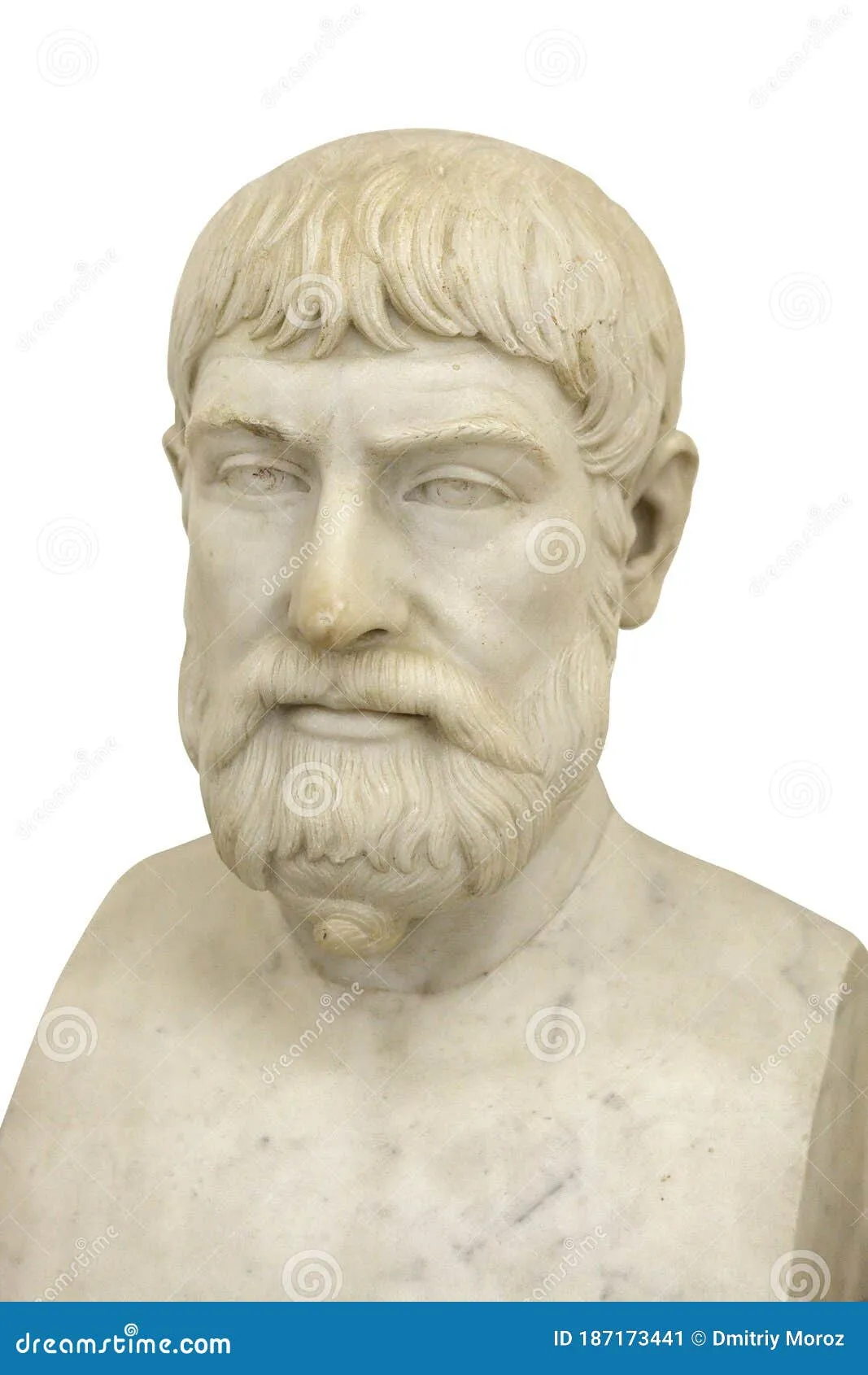 Photo: Pindar, via thumbs.dreamstime.com
Pindar wrote 45 surviving epinician odes — poems commissioned by winning athletes or their wealthy patrons to mark victories at Olympia, Delphi, Corinth, and Nemea. These weren't casual tributes. They were elaborate, carefully constructed artistic works, performed publicly with musical accompaniment, designed to be heard by large audiences and remembered for generations. They connected the athlete's victory to mythology, to the glory of their home city, to the favor of the gods, and to the broader Greek understanding of what human excellence meant.
In other words, Pindar was doing what every great sports broadcaster does: he was contextualizing the moment, making the audience feel the weight of what they'd witnessed, and ensuring that the performance outlasted the afternoon it happened on.
The parallel to modern sports media is uncomfortably precise. When a commentator connects a current athlete's performance to the history of their sport, situates a record-breaking moment within a narrative of struggle and redemption, and delivers the call in a way that makes the hair stand up on the back of your neck — that is Pindar's job description, translated across 2,500 years.
Stone and Bronze as Slow Motion
Poetry was the audio package. Sculpture was the close-up.
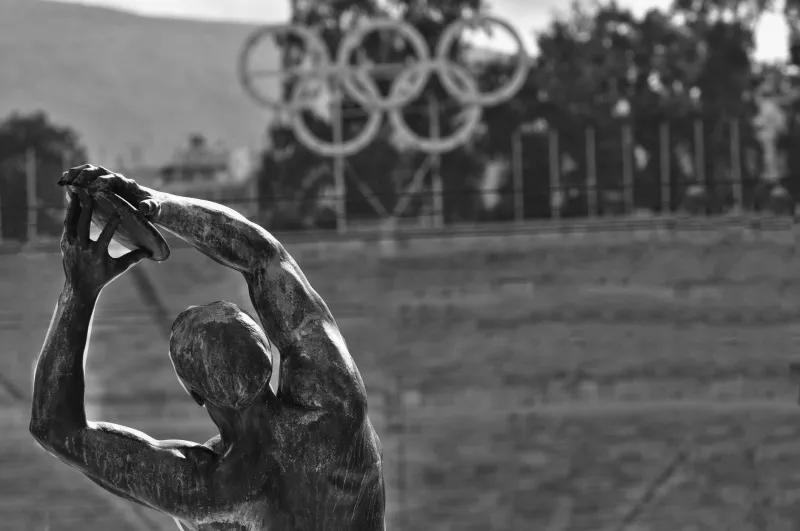
Victorious athletes at the ancient Olympics were entitled to have a statue erected in their honor at Olympia — a life-sized or larger-than-life bronze or marble figure that captured their physical form at the peak of their achievement. These weren't generic commemorations. The best ancient sculptors, working in a tradition that prized anatomical accuracy and the depiction of the body in motion, produced works that functioned as permanent, three-dimensional replays of athletic greatness.
The Discobolus — the famous sculpture of a discus thrower frozen at the moment of maximum coil before release — is the most recognizable example, but it represents a much broader tradition. Ancient Greek sculpture was obsessed with the athletic body in action, with capturing the precise instant of explosive movement that defines competitive sport. When you stand in front of a great piece of ancient athletic sculpture, you're watching a replay. The artist froze a moment that existed for a fraction of a second and made it permanent.
Modern sports photography does exactly this. The iconic image of Michael Jordan's 1988 dunk from the free-throw line, arms fully extended, body parallel to the floor — that photograph is a Discobolus. It takes a moment that lasted less than a second and transforms it into something that exists outside of time, that can be revisited indefinitely, that becomes the defining image of a career.
The Greeks understood the cultural power of that freeze-frame instinct. They built an entire sculptural tradition around it.
The Vase as the Viral Clip
If victory odes were the broadcast and sculptures were the close-up, then painted pottery was the social media of the ancient world — the medium through which sports imagery spread to the widest possible audience.
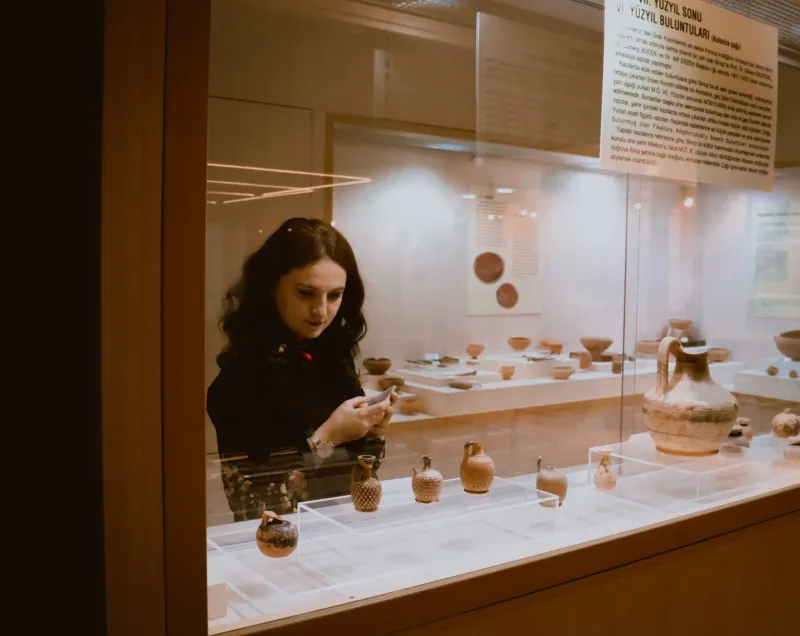
Ancient Greek vase painting documented athletic competition in extraordinary detail. Excavations across the Mediterranean have produced thousands of vessels decorated with images of footraces, wrestling bouts, javelin throws, chariot races, and boxing matches. These weren't just decorative choices. They were cultural currency, a way of circulating images of athletic achievement to households and communities far beyond the stadiums where the events took place.
A wealthy Athenian merchant who never attended the Olympics could own a vase depicting the stadion race, could see how athletes held their bodies at full sprint, could watch a wrestling match frozen in the moment of a throw. The imagery traveled with trade, moved across the ancient world, and planted the idea of athletic excellence in communities that had no direct access to the games themselves.
This is almost exactly what social media does with sports content. The person who watched Simone Biles' Yurchenko double pike vault in real time was a small fraction of the total audience that eventually encountered that performance. The clip traveled — through Twitter, Instagram, YouTube, TikTok — to audiences who had no connection to the gymnastics world, who watched it because someone they followed shared it, who then shared it further. Ancient vase painters were running the same distribution network. The technology was different. The cultural logic was identical.
Why It Still Matters
The Greeks built their sports media apparatus because they understood something that the modern entertainment industry has spent billions of dollars confirming: the performance itself is only the beginning of the story. What makes athletic achievement last — what transforms a fast race or a great throw into something that shapes a culture — is the machinery built around it to capture, preserve, and replay it.
Pindar knew that a victory celebrated only in the moment was a victory half-wasted. The sculptors at Olympia knew that a champion who left no physical trace would eventually be forgotten. The vase painters knew that images of athletic competition could travel further and faster than any athlete could.
Every sports network, every highlight package producer, every social media manager working for an Olympic federation today is operating from the same fundamental insight. The game matters. But the story of the game matters more, and it matters longer.
That starting line was drawn in ancient Greece. Everything since has been a longer race down the same track.