Draft Day in Ancient Greece: How Olympic Athletes Would Crush Today's NFL Combine

The Ultimate Athletic Evaluation
Every February, NFL scouts gather in Indianapolis to watch college football's elite run, jump, and lift their way toward million-dollar contracts. The NFL Combine has become America's premier showcase of raw athleticism—but it's testing the exact same physical qualities that ancient Greek athletes developed 2,500 years ago.
Here's the twist: those ancient competitors might have embarrassed today's prospects.
Ancient Training, Modern Results
Consider Milo of Croton, the legendary wrestler who dominated six consecutive Olympics starting in 540 BC. Ancient sources describe his daily routine: carrying a full-grown bull on his shoulders, then eating the entire animal for dinner. While that sounds like exaggeration, archaeological evidence suggests Greek athletes possessed extraordinary physical capabilities.
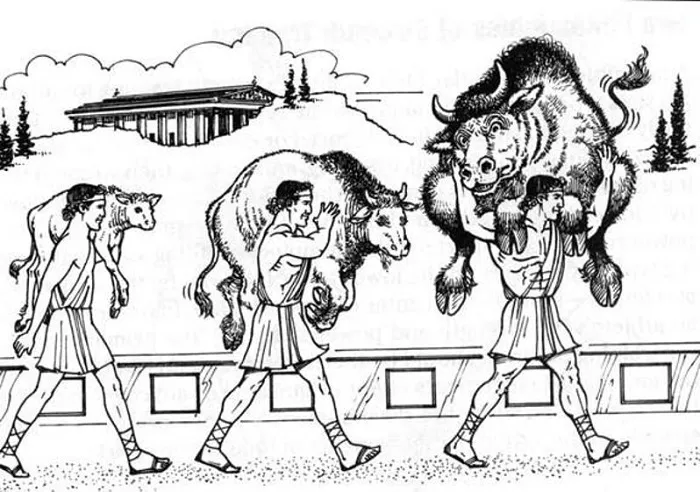 Photo: Milo of Croton, via greekreporter.com
Recent analysis of ancient Greek athletic facilities reveals training equipment that would fit right into a modern NFL strength program. Stone weights found at Olympia range from 30 to 480 pounds—heavier than anything used in today's Combine testing. Greek athletes weren't just strong; they were functionally powerful in ways that translate directly to football skills.
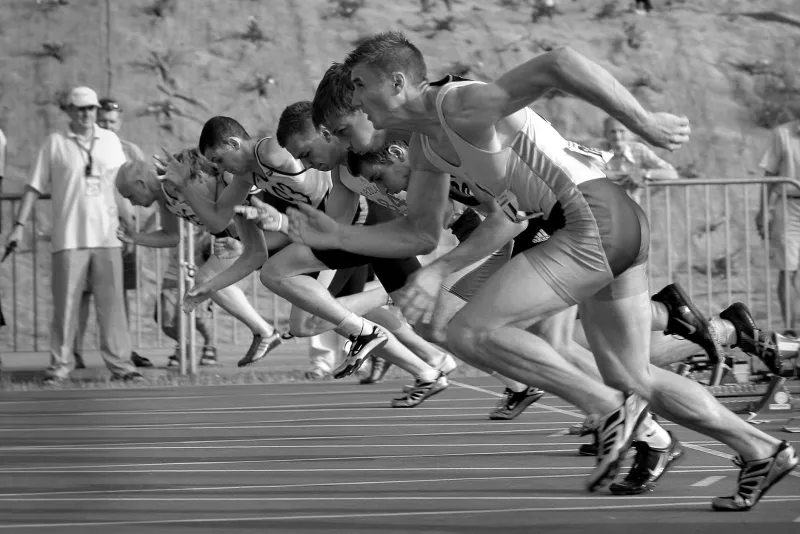
The 40-yard dash, the Combine's signature event, measures pure speed over a distance remarkably similar to the ancient stadion race. Greek sprinters trained on courses between 180 and 200 meters, developing the explosive acceleration that NFL scouts prize above all else. Without modern starting blocks or specialized tracks, these athletes generated times that would impress even today's scouts.
The Pancration Advantage
The ancient Olympic sport of pancration combined wrestling and boxing into what historians call "ancient MMA." Pancration athletes developed exactly the skill set modern NFL players need: explosive power, grappling technique, hand-eye coordination, and the ability to maintain balance while being attacked by a 200-pound opponent.
Compare that to today's Combine drills. The broad jump tests explosive leg power—pancration athletes trained by leaping over bulls. The bench press measures upper body strength—Greek wrestlers regularly lifted and threw opponents weighing 180-220 pounds. The 20-yard shuttle tests agility and change of direction—skills pancration fighters needed to survive combat that often lasted hours.
Pancration champion Arrhichion of Phigalia reportedly died while winning his final Olympic victory, refusing to submit even as his opponent strangled him. That's the kind of mental toughness NFL teams spend millions trying to identify in college prospects.
 Photo: Arrhichion of Phigalia, via www.worldhistoryedu.com
Size and Strength Comparison
Modern NFL players are undeniably bigger than their ancient counterparts. Today's offensive linemen average 6'5" and 315 pounds, while archaeological evidence suggests even the largest Greek athletes rarely exceeded 6'2" and 220 pounds. But size isn't everything at the Combine.
The tests that matter most—speed, agility, and relative strength—favor the Greek training system. Ancient athletes trained year-round for their specific events, unlike college football players who split time between strength training, skill development, and actual games. Greek olympians were professional athletes in the truest sense, dedicating their entire lives to physical perfection.
Consider the vertical jump, which measures explosive power relative to body weight. Greek long jumpers used stone weights called halteres to generate momentum, developing the precise muscle coordination needed for maximum vertical leap. Without the weight of modern equipment and padding, ancient athletes achieved remarkable power-to-weight ratios.
The Mental Game
Beyond pure athleticism, ancient Greek competitors possessed psychological advantages that would translate beautifully to the NFL. They competed in front of crowds exceeding 40,000 people at Olympia, handling pressure that rivals any modern sporting event. More importantly, they understood that athletic performance was about more than individual glory—it represented their entire city-state.
That team-first mentality is exactly what NFL coaches look for in Combine interviews. Greek athletes trained in groups, lived together, and understood that individual success meant collective honor. They'd grasp NFL team culture immediately.
The religious aspect of Greek athletics also created mental toughness modern athletes rarely match. Competing at Olympia meant performing in front of the gods themselves. Every race, every throw, every wrestling match carried cosmic significance. That perspective breeds the kind of clutch performance that separates good NFL players from great ones.
Training Without Limits
Perhaps most importantly, ancient Greek athletes trained without the safety restrictions that limit modern development. They lifted until their bodies couldn't function, ran until they collapsed, and fought until someone submitted or died. While we'd never advocate returning to such extremes, that unlimited approach to training created physical capabilities that bordered on superhuman.
Modern sports science has refined training methods, but it's also made them safer and more conservative. Greek athletes pushed their bodies to absolute limits because they believed athletic excellence was a form of worship. That spiritual motivation drove them beyond what modern athletes—training for contracts rather than cosmic approval—typically achieve.
The Verdict
Would ancient Greek olympians dominate the NFL Combine? In pure athletic testing, absolutely. Their combination of speed, strength, agility, and mental toughness would translate perfectly to Indianapolis. They might struggle with the technical aspects of football—route-running, pass protection schemes, defensive coverages—but the Combine doesn't test football knowledge.
It tests raw athleticism, and that's where ancient Greece produced the most gifted athletes in human history. These weren't weekend warriors or part-time competitors. They were full-time athletic professionals who treated physical excellence as sacred duty.
In a world where NFL teams spend millions searching for the perfect combination of size, speed, and toughness, they might find their ideal prospects carved in marble at ancient Olympia. The Greeks didn't just compete—they redefined what human beings were capable of achieving.
That's exactly what every NFL team hopes to find on draft day.