Defeat First, Glory Second: The Ancient Greek Athletes Who Invented the Comeback Story

America loves a comeback. We love it so much we've practically turned it into its own sports genre — the documentary treatment, the slow-motion training montage, the tearful post-game interview. Muhammad Ali returning from a three-year exile to reclaim the heavyweight title. The 1980 US Olympic hockey team beating the Soviets after years of being outclassed on the international stage. Tiger Woods winning the 2019 Masters after a decade of injury and personal collapse.
We treat these stories as if they're uniquely modern — products of the sports media age, narratives constructed by ESPN and Netflix. But the comeback story is not a modern invention. It is one of the oldest competitive narratives in human history, and its earliest chapters were written in the dust of ancient Olympia.
The Ancient World Had No Patience for Losers — Which Made Winning Twice Extraordinary
To appreciate what a comeback meant in ancient Greece, you first have to understand how brutal the stakes were. The ancient Olympics were not a participation culture. There were no silver medals, no consolation rounds, no polite acknowledgment of effort. You either won or you didn't. The poet Pindar wrote that losers returned home through back alleys, avoiding eye contact, stung by the disgrace of defeat.
In a culture where athletic victory was tied directly to civic honor and personal reputation, losing at Olympia wasn't just disappointing. It was a public statement about your worth as a man and a citizen. The pressure to perform was immense, and the cost of failure was social humiliation on a scale that's hard to fully appreciate today.
That's what makes the documented cases of athletes who lost and came back to win so remarkable. They didn't just overcome an opponent. They overcame a culture that had written them off.
Theagenes of Thasos: Defeat Before Dynasty
Theagenes of Thasos is one of the most celebrated athletes in ancient Greek history, credited with over 1,400 victories across various competitions during his career in the early fifth century BC. But his path to that legacy wasn't a straight line.
 Photo: Theagenes of Thasos, via c8.alamy.com
At the 78th Olympiad, Theagenes entered both the boxing and the pankration — a brutal combination of wrestling and striking that had almost no rules. He won the boxing. Exhausted from that contest, he was defeated in the pankration. The Olympic judges fined him heavily, ruling that he had entered the second event not to compete seriously but simply to deny his rivals the chance to claim a victory over him.
The judgment was humiliating. Theagenes returned to competition, rebuilt his reputation across the Panhellenic circuit, and went on to claim victories at events across the Greek world. His story is a reminder that even the greatest ancient athletes navigated failure before they achieved lasting glory — and that how they responded to that failure became as much a part of their legend as the victories themselves.
Milo of Croton: The Long Road to Six Crowns
Milo of Croton is the most famous strongman in ancient history, a wrestler who won six Olympic titles across roughly two decades of competition. But the beginning of his Olympic career offers a detail that tends to get overlooked in the legend.
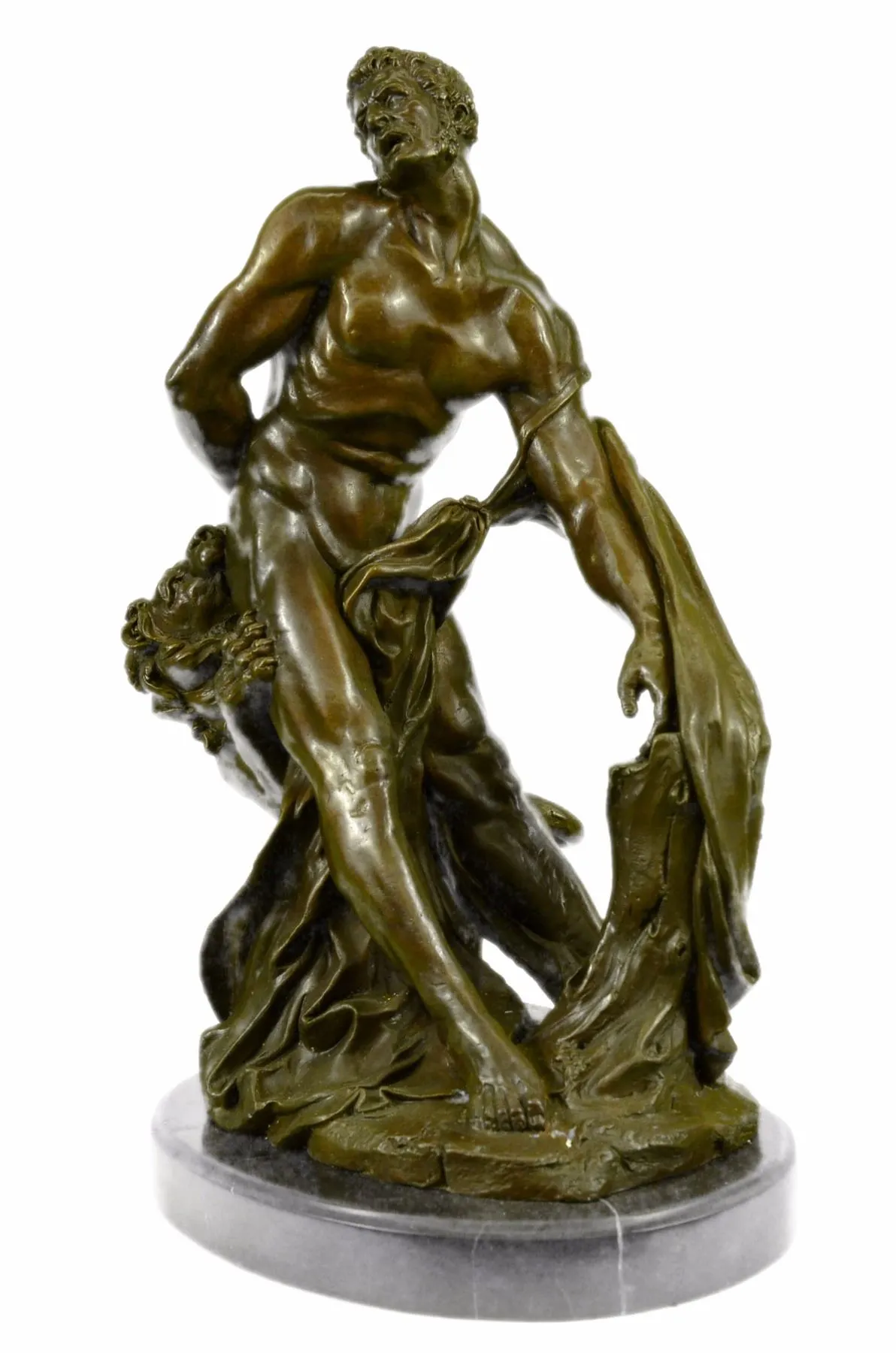 Photo: Milo of Croton, via dygtyjqp7pi0m.cloudfront.net
At the 60th Olympiad in 540 BC, the young Milo reportedly competed in the boys' wrestling division and won. Some ancient sources suggest his early career included a defeat in the men's competition before he went on to dominate it for a generation. Regardless of the precise details — ancient records are fragmentary — Milo's career arc fits the comeback template precisely: early struggle, sustained commitment, eventual dominance that became the stuff of mythology.
The stories attached to Milo — carrying a bull across a stadium, training by lifting a growing calf every day — reflect how ancient Greek culture processed the idea of earned greatness. You didn't just wake up as the best. You built it, often after being shown exactly how far you had to go.
The Comeback as a Human Constant
What connects Theagenes and Milo to Ali and the 1980 Miracle on Ice isn't just narrative convenience. It's something more fundamental about how human beings process competition and adversity.
Sports psychologists today will tell you that the athletes who respond most productively to defeat tend to be the ones who develop genuine resilience — the capacity to analyze failure without being destroyed by it. Ancient Greek athletic culture, brutal as it was in its treatment of losers, also produced a training system built around exactly that capacity. Athletes who wanted to return to Olympia had to spend ten months in mandatory training at Elis before the Games. That extended preparation period was, among other things, a structured response to previous failure.
The comeback story resonates because it maps onto the deepest human experience of effort and growth. We recognize something true in it — the idea that defeat is data, not destiny.
From Olympia to the Locker Room
When Ali stepped back into the ring after his conviction was overturned and his prime years were stripped away, he was operating inside a narrative framework that ancient Greeks would have recognized immediately. When the 1980 US hockey team — dismissed by virtually every analyst before the tournament — beat the Soviet machine in Lake Placid, they were living out the same story that Greek athletes carved into the cultural record twenty-five centuries earlier.
The details change. The sandals become skates. The olive wreath becomes a gold medal. The stone inscription becomes a thirty-part documentary series.
But the story is the same story. Defeat comes first. Then the work. Then, if the work is real and the will holds, the return.
That story didn't start in a locker room or a broadcast studio. It started in ancient Olympia, where losing wasn't the end of the narrative. It was just the beginning of a better one.