They Weren't Even Allowed to Watch — Now They're Rewriting the Record Books

Let's start with a rule so extreme it's hard to process from a modern American perspective: in ancient Olympia, married women were forbidden from watching the Olympic Games under penalty of death. The ancient writer Pausanias recorded that offenders were to be thrown from a nearby cliff called Mount Typaion. Whether that punishment was ever actually carried out is debated by historians. That the rule existed at all tells you everything you need to know about where women stood in ancient Greek athletic culture.
They weren't just excluded from competing. They were excluded from witnessing competition. Sport, in the ancient Greek conception, was a male space — physical, civic, and religious — and women existed entirely outside it.
Now consider this: the women's marathon world record, set by Tigst Assefa in 2023, stands at 2:11:53. The men's Olympic marathon record from the 1908 London Games — won by a man named Johnny Hayes — was 2:55:18. A modern woman running her best marathon would beat the men's Olympic champion from just over a century ago by more than 43 minutes.
Something remarkable happened between those two data points. Several somethings, actually.
The One Exception — and What It Reveals
The ancient Greek world wasn't entirely without women's athletics. At Olympia itself, a separate festival called the Heraia — held in honor of the goddess Hera — featured foot races for unmarried women. The distances were shorter than the men's events, and the competition was far less celebrated, but it existed. Girls and young women ran.
This single exception is historically significant precisely because of how limited it was. Women could run, but only in a carefully controlled, gender-separated context that was explicitly subordinate to the main Games. They wore tunics while men competed nude. They ran a shorter course. Their victories were noted but not elevated.
For historians, the Heraia represents both a crack in the wall of exclusion and evidence of how thick that wall was. Women were capable of athletic competition — ancient Greek society knew this — but the cultural and religious architecture of the Olympics was built entirely around male performance. Dismantling it would take not decades but millennia.
The Long Road to the Starting Line
When Pierre de Coubertin revived the modern Olympics in Athens in 1896, women were again excluded from competition. Coubertin himself was openly opposed to female participation, calling the idea "impractical, uninteresting, unaesthetic, and incorrect." The 241 athletes who competed in Athens were entirely male.
Women first competed in the modern Olympics in 1900 in Paris — in golf and tennis, sports considered appropriately feminine by the standards of the era. Track and field events for women didn't appear until 1928, and even then, the program was severely limited. The 800 meters — a middle-distance event considered routine today — was dropped from the women's program after 1928 because some competitors collapsed at the finish line, and officials decided the distance was too demanding for women. The event didn't return until 1960.
The women's marathon wasn't added to the Olympic program until 1984 in Los Angeles. Let that sit for a moment: the marathon, a race that has been central to American running culture since the late 1800s, wasn't an Olympic event for women until Ronald Reagan was president and MTV was two years old.
Joan Benoit Samuelson won that inaugural race in 2:24:52. The crowd at the Los Angeles Coliseum gave her a standing ovation that witnesses described as one of the most emotional moments in Olympic history. She wasn't just winning a race. She was completing a journey that had taken 2,700 years.
What Exclusion Actually Cost Sport
Here's an angle that doesn't get discussed enough: the exclusion of women from athletics didn't just harm women. It impoverished sport itself.
Every year that half the human population was barred from competition was a year when potential world records went unrun, unswum, and unjumped. Every decade of exclusion represented an incalculable loss of athletic talent — women who might have been the fastest humans alive, who might have expanded our understanding of what the human body is capable of, who simply never got the chance.
When women were finally given access to serious competitive infrastructure — real coaching, professional training programs, sports science support, and the motivational fuel of genuine competition — the results were dramatic and fast. Women's world records in track and field events fell at staggering rates through the 1970s and 1980s as more women gained access to elite-level training and competition. The trajectory wasn't gradual improvement. It was a sudden, steep climb that reflected pent-up potential finally being released.
The Modern Numbers That Reframe Everything
The performances of today's elite women athletes are worth sitting with, because the numbers are genuinely startling when placed in historical context.
Faith Kipyegon of Kenya holds the women's world record in the 1500 meters at 3:49.11. The men's world record at the 1896 Athens Olympics — the first modern Games — was 4:33.2. Kipyegon, running the women's race, would have beaten every male competitor in Athens by more than 44 seconds.
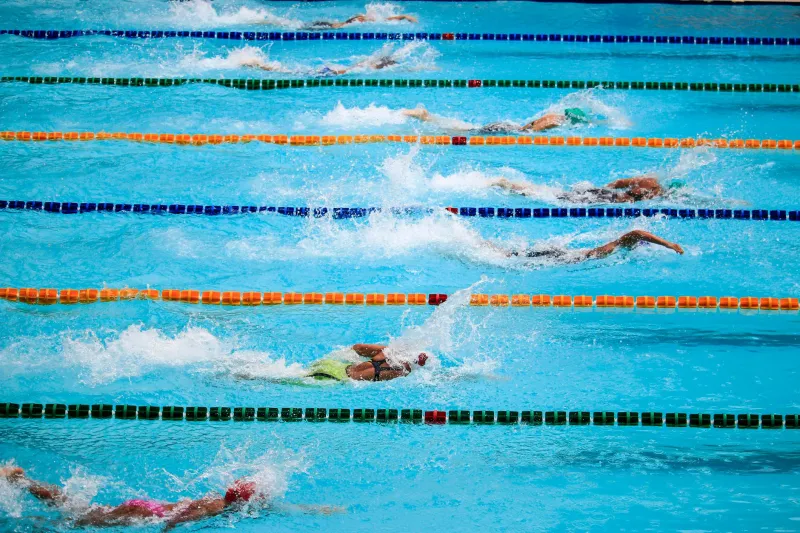
Katie Ledecky's world record in the women's 800-meter freestyle swim is faster than the men's world record in the same event from 1956. Sydney McLaughlin-Levrone's world record in the women's 400-meter hurdles is faster than the men's world record in the flat 400 meters from the 1932 Los Angeles Olympics.
These aren't cherry-picked anomalies. They reflect a consistent pattern: women's athletic performance, once given the resources and infrastructure that men had enjoyed for decades, advanced at a pace that repeatedly crossed historical male benchmarks.
Why the History Still Matters
For American sports fans, women's athletics has become one of the most compelling spaces in the entire sporting landscape. The US women's national soccer team, the WNBA, women's college basketball — these aren't niche interests anymore. They're mainstream, and they're growing.
But understanding where that growth came from requires looking backward. The story of women in sport is inseparable from the story of exclusion. The ancient Greek decision to ban women from Olympia wasn't just a historical footnote. It established a template of exclusion that persisted, in various forms, for most of recorded human history.
The records being broken today by Kipyegon and McLaughlin-Levrone and Assefa and Ledecky aren't just athletic achievements. They're the accumulated answer to centuries of a question that should never have needed asking: what happens when you let women compete?
At Sport Origins, we believe every record has a starting line. For women in sport, that line was drawn in ancient Olympia — not as an invitation, but as a barrier. What makes the modern story so powerful is how completely, and how recently, that barrier finally came down.