The Loudest Weapon in Sport: How Ancient Greek Crowds Invented Home Field Advantage
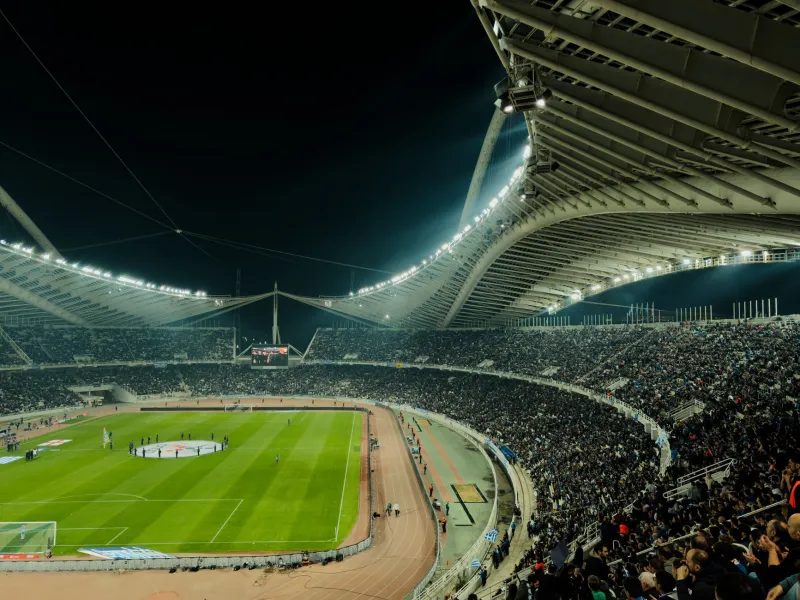
Arrowhead Stadium in Kansas City holds roughly 76,000 people, and on a cold January playoff night, those 76,000 people generate noise levels that have been officially measured above 140 decibels — louder than a jet engine at close range. The Seahawks' home in Seattle built a reputation during the 2013 and 2014 seasons as the loudest outdoor stadium on the planet, with crowd noise so intense that opposing offenses couldn't hear their own snap counts. The New Orleans Superdome on a Saints game day has driven visiting quarterbacks to the edge of communicative breakdown.
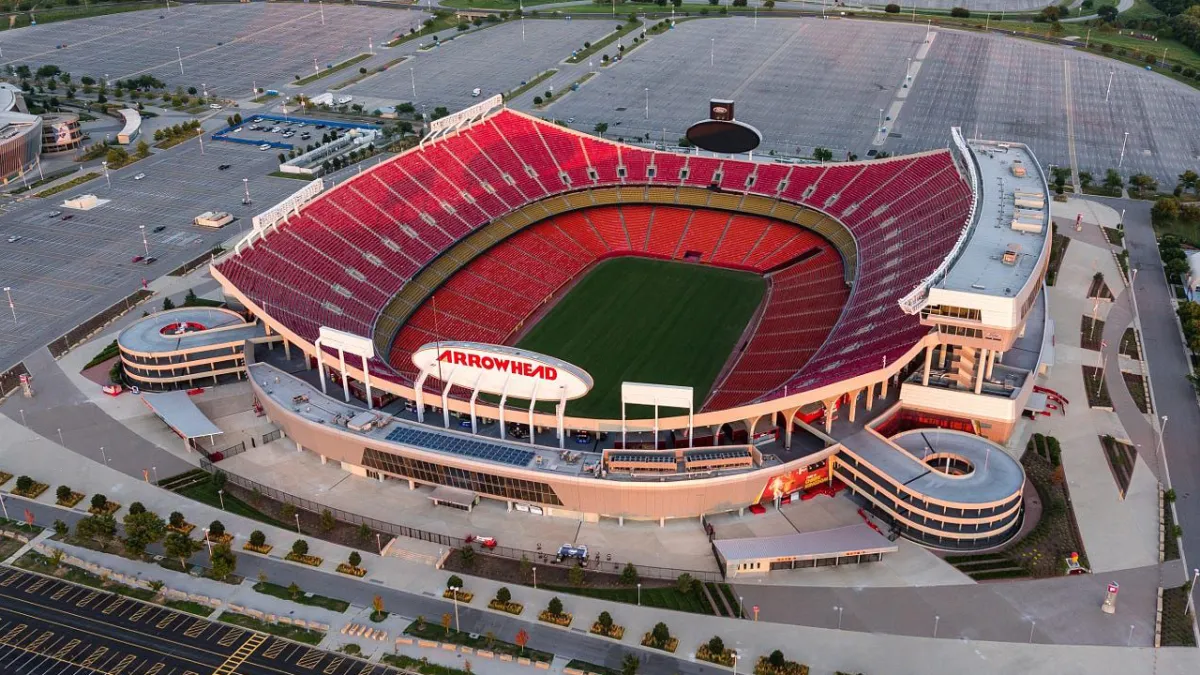 Photo: Arrowhead Stadium, via hitthatline.com
American sports culture treats these venues as modern phenomena — products of architectural engineering, passionate fanbases, and the particular alchemy of a team playing well at home. And they are all of those things.
But the fundamental idea — that a concentrated, roaring crowd creates a competitive advantage for the home competitor — is not a modern discovery. It was documented in ancient Greece nearly three thousand years ago.
40,000 Spectators on a Hillside
The ancient Olympics at Olympia weren't held in a closed stadium. They were held in an open valley, with spectators crowding onto the natural hillsides that flanked the track. Estimates of attendance at peak-era ancient Olympic Games run as high as 40,000 to 50,000 people — an enormous gathering by any standard of the ancient world.
Those spectators were not passive observers. Ancient sources describe crowds that shouted, cheered, and actively engaged with the competition in ways that created a charged, electric atmosphere. The historian Epictetus, writing centuries later, described the experience of attending the Olympics as an overwhelming sensory event — heat, dust, noise, and the press of thousands of bodies all combining into something that bordered on the overwhelming.
For competitors, that environment was a constant presence. The ancient Greeks understood, at least intuitively, that performing in front of a massive, emotionally engaged crowd was a fundamentally different experience from training in private. The pressure was different. The energy was different. And critically, the crowd's response to competition wasn't uniform — it had preferences, and those preferences were audible.
Crowd Favoritism in the Ancient World
One of the most revealing aspects of ancient Olympic crowd behavior involves how spectators responded to athletes from different city-states. The Olympics were technically a Panhellenic festival — open to all Greeks — but that didn't mean the crowd was neutral. Athletes from prominent, respected city-states, or from cities with large contingents of traveling supporters, received louder, more enthusiastic responses than athletes from lesser-known poleis.
This is documented in ancient sources describing crowd reactions to famous athletes. Competitors like Milo of Croton, who won six Olympic wrestling titles, commanded crowd responses that bordered on theatrical. The roar of recognition and approval when a celebrated champion entered the competition space was itself a form of pressure on his opponents — a public declaration of who the crowd expected to win.
 Photo: Milo of Croton, via a.1stdibscdn.com
Less celebrated competitors, performing in front of a crowd largely indifferent or actively hostile to their success, faced a version of the psychological burden that visiting teams experience in hostile American stadiums today. The crowd wasn't just watching. It was participating.
What Modern Sports Science Says
Researchers studying home field advantage in modern sport have identified several mechanisms through which crowd noise and presence affect competitive outcomes. The most direct is communication disruption — in sports that require verbal coordination, extreme noise levels degrade a team's ability to function. That's the Arrowhead effect, the CenturyLink effect, the reason visiting offenses routinely false-start in Seattle.
But the psychological dimension runs deeper. Studies across multiple sports have shown that referees and judges — even when attempting to be objective — are subtly influenced by crowd response. In sports with subjective judging components, home competitors tend to receive marginally more favorable scores. The crowd creates a social pressure that even trained officials aren't fully immune to.
Ancient Greek athletic competition included events with subjective elements — judges evaluated certain aspects of performance — and the crowd's vocal presence almost certainly influenced those assessments in ways that parallel modern research findings. The ancient Greeks didn't have sports psychologists. But they built their athletic venues in ways that maximized crowd presence and acoustic intensity, suggesting an intuitive understanding that the audience was part of the competitive environment.
From Hillsides to High-Rises
The evolution from ancient hillside spectating to modern stadium architecture is a story about systematically intensifying the effect that ancient Greeks discovered accidentally. Natural hillsides at Olympia created a bowl-like acoustic environment that concentrated crowd noise. Modern stadium designers work with acoustic engineers to achieve the same effect deliberately — angling upper decks inward, designing roof structures that trap and amplify sound, positioning the loudest fan sections nearest to the areas where crowd noise does the most damage to visiting teams.
Arrowhead's reputation for noise isn't an accident of passion. It's an accident of geometry. The stadium's design channels crowd sound in ways that create maximum disruption on the field. The Seahawks' fan organization, the 12s, became so integral to the team's competitive identity that the franchise retired the number 12 in their honor — an explicit acknowledgment that the crowd is a competitive asset, not just a revenue source.
The ancient Greeks would have understood that acknowledgment completely. They built their athletic spaces on hillsides rather than flat ground precisely because elevation created presence and presence created pressure.
The Crowd Has Always Been Playing
Home field advantage is real. Modern research confirms it across virtually every sport studied. The mechanisms are multiple — crowd noise, referee influence, travel fatigue for visiting competitors, the psychological comfort of familiar surroundings. But at the core of all of it is something ancient and human: the presence of thousands of people who want you to win creates an environment that is genuinely different from competing in silence.
Ancient Greek athletes knew this. They competed under conditions that maximized crowd intensity, in front of massive, vocal audiences who had traveled days to watch and who had strong opinions about the outcome. The roar of Olympia's hillside crowds was the first version of the noise that rattles opposing quarterbacks in Kansas City on a January night.
The stadium got bigger. The seats got cushioned. The beer got more expensive.
But the crowd has been the twelfth player since long before anyone thought to count to twelve.