26.2 Miles of American Obsession: Why the Marathon Became Our National Distance
The Distance That Built a Nation of Runners
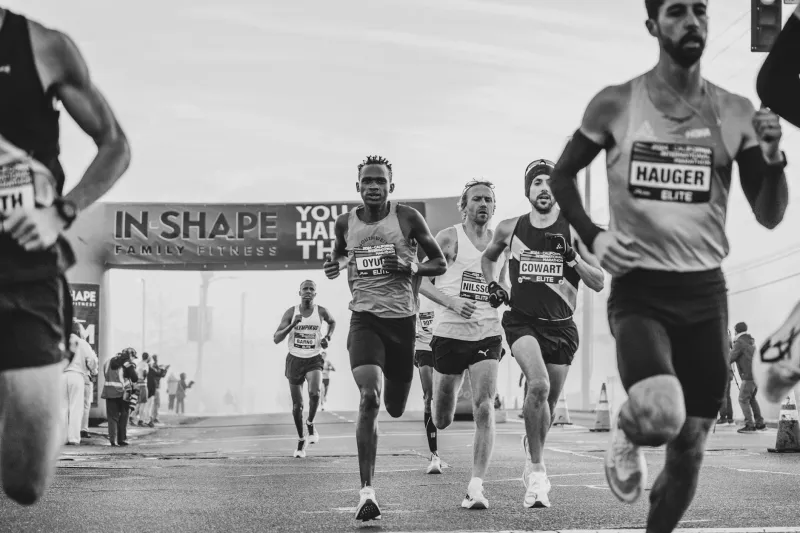
Every spring morning in Boston, 30,000 runners line up in Hopkinton for a ritual that connects them directly to ancient Greece. They're about to cover 26.2 miles—a distance that exists because of a legend about a Greek messenger, refined by British royalty, and perfected by American determination to make long-distance running the most democratic sport on earth.
The United States now hosts over 1,100 marathons annually, more than any other nation. Over 500,000 Americans finish marathons each year, with millions more training for the distance. No other country comes close to this level of marathon participation, and the reason reveals something fundamental about how ancient Greek athletic values found their perfect home in American culture.
From Greek Legend to American Reality
The marathon's origin story—Pheidippides running from Marathon to Athens to announce victory over the Persians—may be more legend than history, but its meaning was always clear. This was about ordinary people achieving extraordinary things through pure determination. No special equipment, no natural gifts required—just the willingness to keep moving when everything hurts.
That message resonated powerfully with American ideals from the moment the first Boston Marathon was held in 1897. While other Olympic sports seemed to require natural talent or expensive coaching, the marathon promised that anyone willing to train hard enough could achieve something remarkable.
 Photo: Boston Marathon, via heatherabbottfoundation.org
The early American marathon culture was built around this accessibility. The Boston Marathon's original field of 15 runners included a mailman, a blacksmith, and various other working-class athletes who trained in their spare time. They weren't professional athletes—they were regular Americans proving that extraordinary achievement was within reach of ordinary people.
The Greek Philosophy That America Embraced
Ancient Greek athletics was built around the concept of arete—excellence that approached the divine through human effort. The Greeks believed that pushing physical limits was a way of touching something greater than yourself, of proving that human potential was unlimited.
This philosophy found perfect expression in American marathon culture. Unlike sprinting or field events, where genetics play a major role, marathon success comes primarily from training, discipline, and mental toughness—qualities that align perfectly with American values of hard work and self-improvement.
The Greeks also understood that the greatest athletic achievements often came from enduring suffering rather than avoiding it. Marathon running embodies this principle completely. Every marathoner knows that the race really begins around mile 20, when the body wants to quit and only mental strength can carry you forward.
Why America Fell in Love With 26.2 Miles
The marathon boom that began in the 1970s wasn't just about fitness—it was about Americans rediscovering ancient Greek athletic values during a time of cultural upheaval. The first New York City Marathon in 1970 attracted just 127 runners; by 2019, over 53,000 people finished the race, with millions more applying for entry.
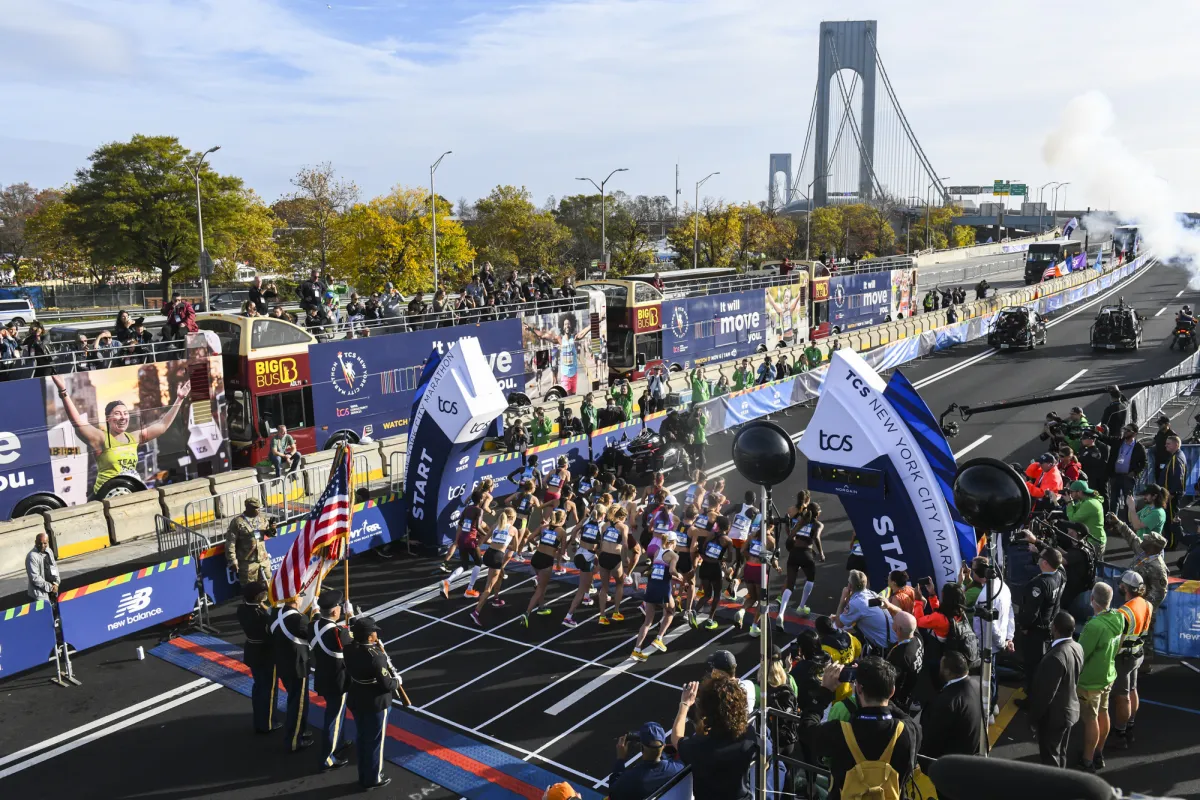 Photo: New York City Marathon, via ceritalari.com
This explosion happened because marathoning offered something uniquely American: the chance to compete against yourself rather than others. In a marathon, age-group awards mean that 60-year-olds can achieve the same recognition as elite athletes. Personal records matter more than finishing position. Everyone who crosses the finish line gets the same medal.
The Boston Marathon's qualifying standards created an even more democratic form of excellence. Unlike other major sporting events that require connections or luck to enter, Boston is open to anyone fast enough to earn their spot. A school teacher from Iowa who runs 3:05 gets the same starting line as Olympic marathoners.
The Cultural Impact of Going the Distance
Marathon culture has fundamentally shaped how Americans think about athletic achievement. The concept of "personal bests" that now dominates recreational sports comes directly from marathon training, where improvement is measured against your own previous performances rather than others' achievements.
The marathon also democratized the concept of athletic sponsorship. While shoe companies once focused exclusively on elite athletes, the running boom created a market for performance gear aimed at recreational marathoners. This shift helped establish the modern sports industry's focus on amateur participants rather than just professional spectators.
Marathon training culture introduced Americans to concepts that seem obvious now but were revolutionary in the 1970s: periodization, cross-training, sports nutrition, and the idea that regular people could benefit from scientific approaches to athletic performance. These concepts have since spread to every corner of American fitness culture.
The Modern Marathon as Greek Theater
Today's major American marathons are direct descendants of ancient Greek athletic festivals. Like the original Olympics, they combine athletic competition with cultural celebration, drawing participants and spectators from around the world to witness ordinary people achieving extraordinary things.
The Boston Marathon, in particular, has become America's closest equivalent to the ancient Olympic Games. It attracts a pilgrimage of runners who train for years just to qualify, creating the same sense of sacred athletic space that the Greeks understood at Olympia. Marathon Monday in Boston feels like a religious holiday because, in many ways, it is—a celebration of human potential that connects directly to ancient Greek athletic values.
The marathon's appeal also lies in its narrative structure. Unlike other sports that can end suddenly or unpredictably, every marathon tells the same basic story: ordinary people choosing to push themselves beyond what seems possible, struggling through crisis, and ultimately transcending their limitations. It's the hero's journey played out on asphalt.
Why Ancient Greeks Would Recognize American Marathon Culture
The ancient Greeks would immediately understand America's marathon obsession because it embodies their core athletic philosophy: that physical challenge is a path to personal excellence, that suffering voluntarily chosen builds character, and that athletic achievement should be celebrated as a community event.
They would recognize the ritual elements that surround modern marathons—the pre-race pasta dinners, the ceremonial number pickup, the post-race celebrations—as direct descendants of the religious festivals that accompanied ancient athletic competitions.
Most importantly, they would understand why Americans have embraced a sport where participation matters more than winning, where personal achievement is measured against individual potential rather than others' performances, and where the greatest victories often come from simply finishing what you started.
The Distance That Defines Us
America's marathon culture represents ancient Greek athletic values surviving in their purest form. In a nation built on the idea that anyone can achieve greatness through effort and determination, the marathon offers proof that these ideals are more than just rhetoric—they're a way of life.
Every American who has ever trained for 26.2 miles is participating in a tradition that stretches back 2,500 years, proving that the Greek understanding of athletic excellence as a path to human flourishing was not bound by time or geography. It was universal, waiting for the right culture to embrace it fully.
That culture turned out to be America, where the marathon became not just a race, but a national expression of the belief that ordinary people can do extraordinary things—exactly what the ancient Greeks knew all along.