Chiseled Into History: How Archaeologists Rebuilt Ancient Olympic Records From Dust and Stone
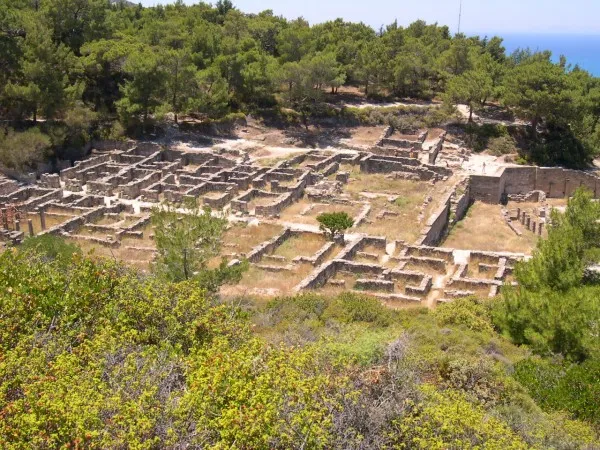
Photo: Amcs1983 at English Wikipedia, Public domain, via Wikimedia Commons
Imagine trying to reconstruct the NFL record books using nothing but graffiti, religious poetry, and the occasional bronze statue. That's essentially what historians have been doing for the past two centuries when it comes to ancient Olympic competition. No official timing systems, no standardized measurement, no box scores. Just fragments—literal fragments—of a sporting culture that was, by any reasonable measure, obsessed with athletic excellence.
The miracle isn't that we lost so much of it. The miracle is how much we actually recovered.
The World Before the Stopwatch
The ancient Olympics ran for over a thousand years, from 776 BC until Roman Emperor Theodosius I shut them down in 393 AD. That's more than twelve centuries of competition. For context, the United States hasn't existed for three centuries yet. And across all that time, no one was keeping official split times or recording precise distances in any format we'd recognize today.
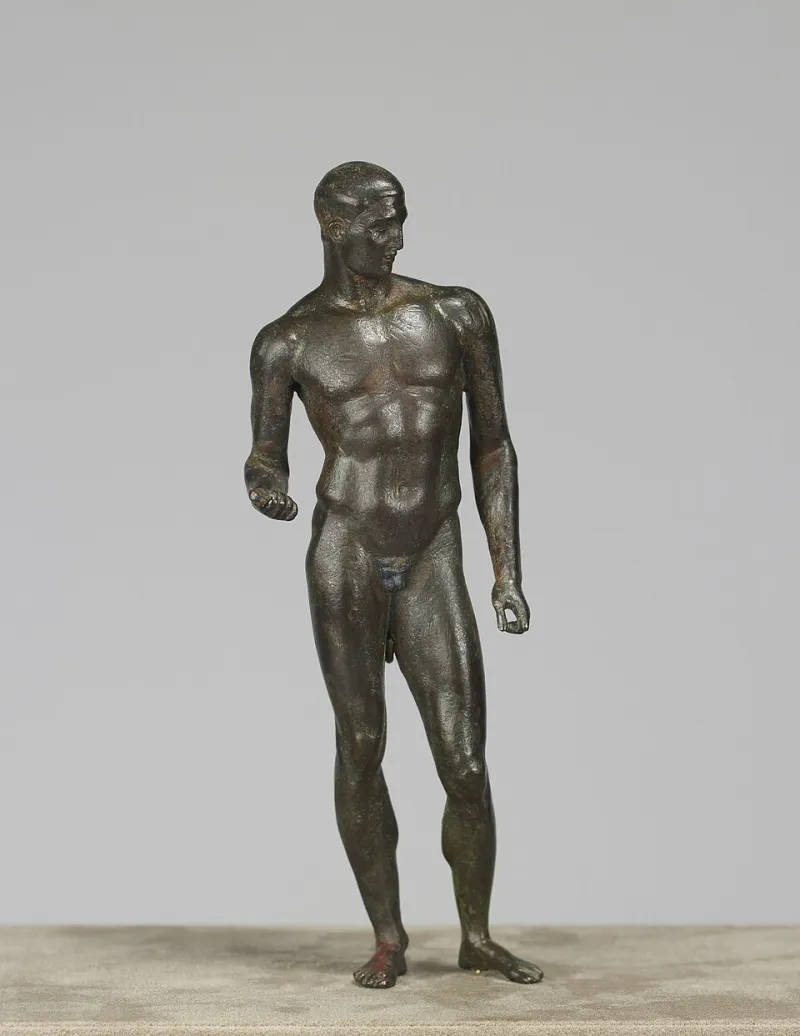
What they did keep were names. Winners mattered enormously in ancient Greek culture—victory at Olympia was a religious and civic event, not just an athletic one. Champions were immortalized in victory odes written by poets like Pindar, whose elaborate verses celebrated athletes the way modern sports media celebrates Super Bowl MVPs. Stone inscriptions called epinikia were carved at sanctuaries and public spaces. Statues were erected. Cities threw parades.
All of that praise left a paper trail—or more accurately, a stone trail—and historians have been following it ever since.
Reading the Evidence
The excavation of ancient Olympia, which began in earnest in the 1870s under a joint German-Greek archaeological effort, produced thousands of artifacts: pottery shards, bronze dedications, building foundations, and inscribed stone blocks. Many of those inscriptions named athletes and their home cities. Some mentioned specific victories and the events they won. Pieced together with surviving literary sources—Pausanias, Herodotus, Thucydides, and others—historians were able to construct surprisingly detailed athletic records.
One of the most important sources is Eusebius of Caesarea, a fourth-century historian who compiled a chronological list of Olympic victors going back to the very first recorded champion, Koroibos of Elis, who won the stadion foot race in 776 BC. His list isn't complete, and scholars debate its accuracy in places, but it forms the backbone of what we know about ancient Olympic champions.
Papyrus documents recovered from Egypt—particularly from the ancient city of Oxyrhynchus—have also been invaluable. Preserved by the dry desert climate, these texts include everything from administrative records to sports commentary, and some contain references to athletic performances that don't appear anywhere else in the historical record.
What the Numbers Actually Tell Us
Here's where things get genuinely surprising. Because ancient competition didn't use standardized measurement in the modern sense, historians have had to reverse-engineer performance estimates using what they do know: the dimensions of ancient stadiums, the physics of throwing implements recovered archaeologically, and comparative analysis with early modern athletic performances.
The stadion race—roughly 192 meters, the length of the Olympic stadium at Olympia—was the most prestigious event. Based on the known dimensions of the track and reasonable athletic modeling, some historians estimate elite ancient sprinters could have covered the distance in somewhere between 22 and 28 seconds. That's a wide range, and scholars argue about it constantly. For reference, the modern 200-meter world record sits at 19.19 seconds, set by Usain Bolt in 2009. Ancient sprinters weren't in that conversation—but they weren't as far off as you might assume for men competing without starting blocks, synthetic tracks, or modern nutrition.
The discus throw offers an even more tantalizing puzzle. Ancient discuses recovered archaeologically vary wildly in weight—from about 1.3 kilograms to over 5 kilograms—making direct comparison nearly impossible. But artistic depictions of throwing technique, combined with biomechanical analysis, suggest some ancient throwers were genuinely elite athletes by any standard.
The Gaps We'll Never Fill
For all the progress historians have made, enormous gaps remain. We know names but not times. We know events but not always the rules. We know some champions competed for decades—the wrestler Milo of Croton reportedly won six Olympic titles over twenty years—but we can't always verify the claims made about their specific feats.
The ancient Greeks themselves sometimes blurred the line between athletic history and mythology. When ancient sources claim that the hero Hercules founded the Olympic Games, or that certain athletes performed literally superhuman feats, historians have to carefully separate cultural storytelling from factual record. That distinction isn't always clean.
There's also the problem of what wasn't written down at all. Women's athletic competitions—which did exist, in a separate festival called the Heraia—are documented so sparsely that reconstructing any performance record is nearly impossible. Whole categories of athletes, particularly those from lower social classes, barely appear in the surviving record at all.
Why It Still Matters
You might wonder why any of this is worth the effort. If we can't get precise times or distances, what's the point of chasing ancient athletic records at all?
The answer is that the chase itself reveals something important. The ancient Greeks built a culture so thoroughly organized around athletic competition that even two thousand years of silence couldn't erase it completely. The records survived—imperfectly, fragmentarily, sometimes controversially—because the performances mattered deeply to the people who witnessed them.
Every modern record-breaking moment, from Bolt's 9.58 in the 100 meters to Katie Ledecky's dominance in the pool, exists inside a tradition that started in a dusty stadium in western Greece. The obsession with measuring human performance, with knowing exactly how fast and how far and how strong, goes back to the very beginning of organized sport.
The stopwatch is modern. The impulse behind it is ancient. And somewhere in the archaeological record, carved into stone or pressed into papyrus, the starting line is still there—waiting to be read.