Zero to 9.58: The Untold Story of How the 100-Meter Dash Became Sport's Greatest Spectacle
There is no simpler idea in all of sport: run as fast as you can, in a straight line, and stop. No strategy, no equipment, no teammates to bail you out. Just you, the track, and the clock. Yet somehow, that primal concept has evolved into the single most anticipated ten seconds in global athletics. The 100-meter dash is the race that stops the world — and it started, like so many great stories, in ancient Greece.
The Starting Line: Ancient Greece and the Stadion Race
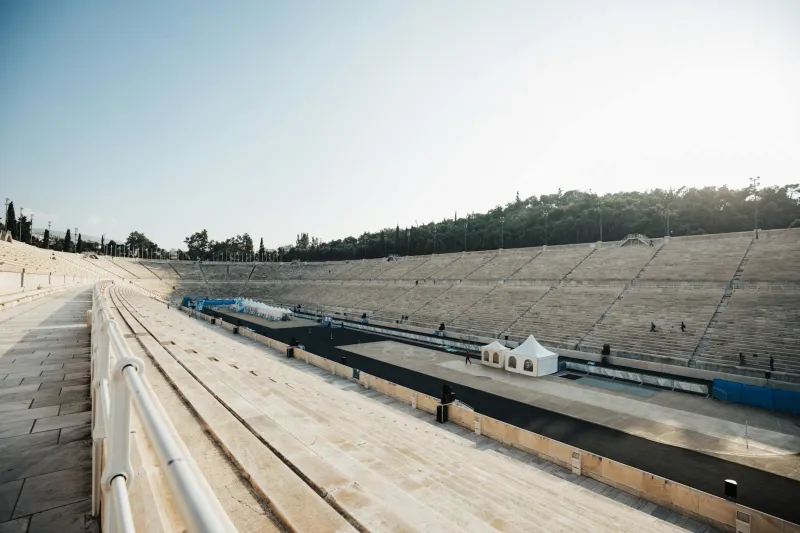
Long before synthetic tracks and carbon-plated spikes, there was the stadion. Held at the ancient Olympic Games beginning in 776 BC in Olympia, the stadion was a straight sprint of roughly 192 meters — the length of the stadium itself, which is where the word originates. Athletes ran barefoot on packed earth, oiled their bodies, and competed entirely in the nude, as was customary for Greek athletic competition.
The stadion wasn't just a race. It was the centerpiece of the entire Games. For the first thirteen Olympiads, it was the only event. The winner didn't just earn a wreath of olive branches — he had his name attached to that entire four-year Olympiad. The first recorded champion, Koroibos of Elis, won the stadion in 776 BC and became the first name etched into athletic history.
We don't have a clocked time for Koroibos. No stopwatch, no photo finish. But based on the distance and what we know about human movement, historians estimate the ancient stadion winner probably ran somewhere in the range of 30 to 35 seconds for roughly 192 meters. Scaled to 100 meters, that's a pace that would barely qualify for a modern high school junior varsity team.
That gap tells the whole story of what the last 2,800 years have done to human athletic performance.
The Long Gap: From Ancient Olympia to Athens 1896
After the Roman Emperor Theodosius I banned the ancient Games in 393 AD as part of a broader suppression of pagan traditions, competitive sprinting essentially went underground for over a millennium. It survived in scattered forms — footraces at local festivals, informal competitions — but organized, timed sprinting on a world stage didn't return until the revival of the modern Olympic Games in Athens in 1896.
At those inaugural modern Olympics, the sprint program looked a little different. The main short-distance event was the 100 meters, and the competition drew a modest field by today's standards — twelve athletes from a handful of nations. The gold medal went to American Thomas Burke, who won in 12.0 seconds running from a crouched start, a technique that was considered unusual at the time but would soon become universal.
Twelve seconds. That was the gold standard of human speed in 1896.
America Enters the Picture
From that moment in Athens, American sprinters became central to the story of the 100-meter dash. The United States brought a level of athletic organization and competitive intensity to the event that few nations could match in the early twentieth century, and the results showed up on the scoreboard decade after decade.
Jesse Owens changed everything in 1936. Running in Berlin under the shadow of the Nazi regime, Owens won four gold medals, including the 100 meters in 10.3 seconds. The political context made his performance legendary, but the athletic achievement was equally remarkable. He proved that the ten-second barrier was within reach, and he did it on a cinder track wearing leather shoes.
Bob Hayes, the man they called "the world's fastest human," brought the record down to 10.0 seconds in 1964 in Tokyo — a performance so dominant that he later became an NFL wide receiver and won a Super Bowl with the Dallas Cowboys. Carl Lewis carried the torch through the 1980s, winning the 100-meter gold at the 1984 Los Angeles Olympics and anchoring an era of American sprint dominance. Maurice Greene took the world record to 9.79 seconds in 1999.
Then came a Jamaican named Usain Bolt, and everything changed again.
The 9.58 Era and the Science Behind It
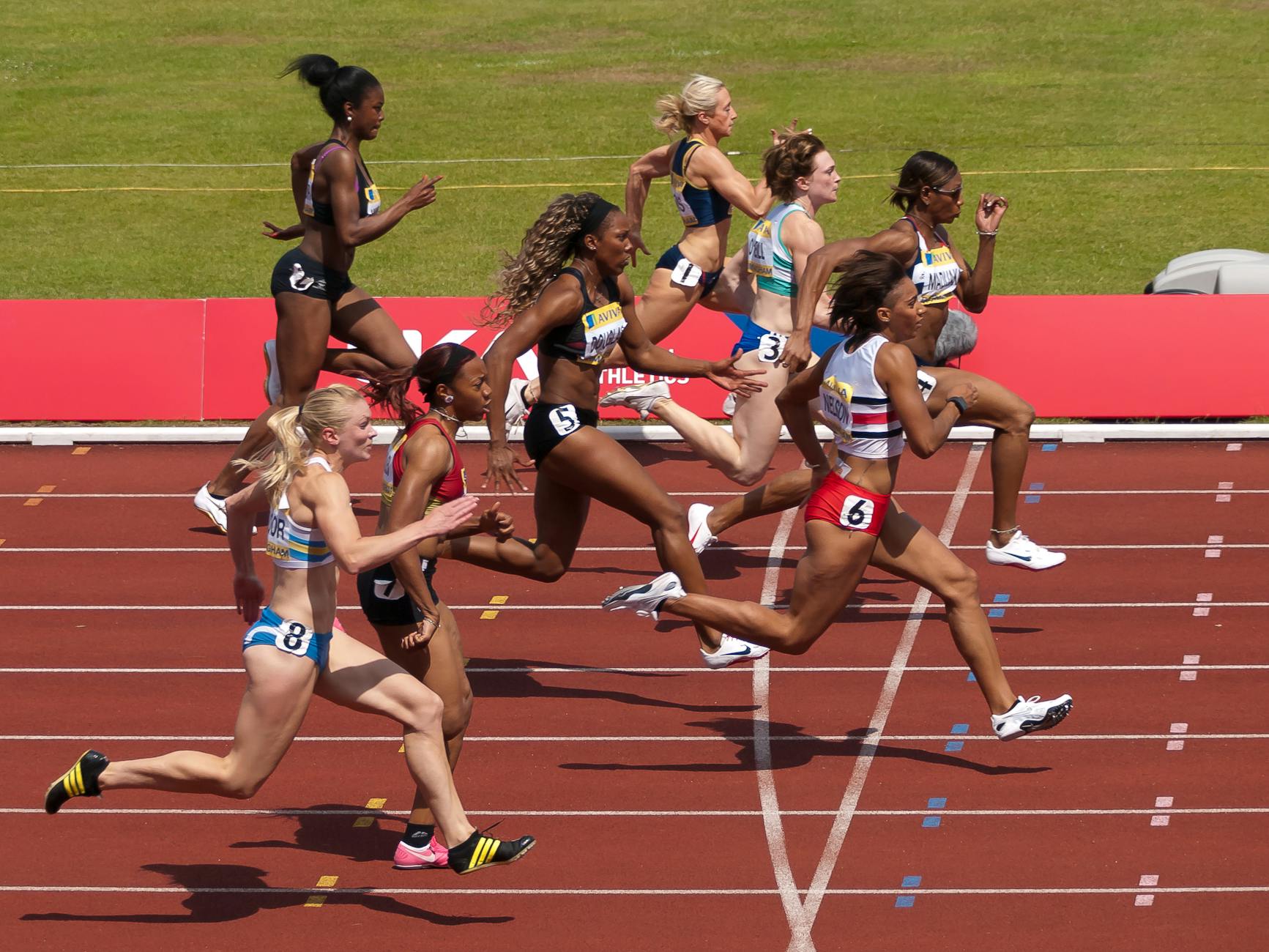
When Bolt crossed the finish line at the 2009 World Championships in Berlin in 9.58 seconds, he didn't just break the world record — he shattered the concept of what human legs are capable of. His top speed during that run was measured at 27.8 miles per hour. At his peak stride, he was covering roughly 12 meters per second.
How did we get from 12.0 seconds in 1896 to 9.58 seconds today? The answer isn't one thing. It's everything, all at once.
Training methodology transformed from general fitness work to highly specialized sprint programs built around biomechanics, force production, and reaction time. Sports science gave coaches tools to analyze stride length, ground contact time, and acceleration curves with a precision that would have seemed like science fiction to Thomas Burke. Nutrition went from whatever an athlete happened to eat to carefully engineered fueling strategies designed around performance windows and recovery.
Then there's the equipment. Modern polyurethane tracks return energy to the athlete in a way that cinder and dirt simply cannot. Spiked shoes evolved into precision instruments engineered to maximize propulsion. Starting blocks replaced the simple holes that Burke dug into the track in Athens.
Global competition matters too. Where the 1896 field had twelve athletes, modern Olympic 100-meter finals pull from a worldwide talent pool developed through professional training systems on every continent. The gene pool for elite speed is simply larger, deeper, and better coached than it has ever been.
Why This Race Still Matters
The 100-meter dash has maintained its grip on the public imagination precisely because it strips sport down to its rawest form. No game plan survives contact with the starting gun. In roughly nine and a half seconds, you find out everything you need to know.
From Koroibos running barefoot in Olympia to Usain Bolt launching off starting blocks in Berlin, the race has always asked the same question: how fast can a human being actually go? We've been chasing that answer for nearly three thousand years, and somehow, we're still not sure we've found it.
That's what makes every Olympic final feel like a starting line.