Nine Gold Medals and a Point to Prove: The Story of How America Became the Olympic Games' Defining Nation
The United States wasn't supposed to be there.
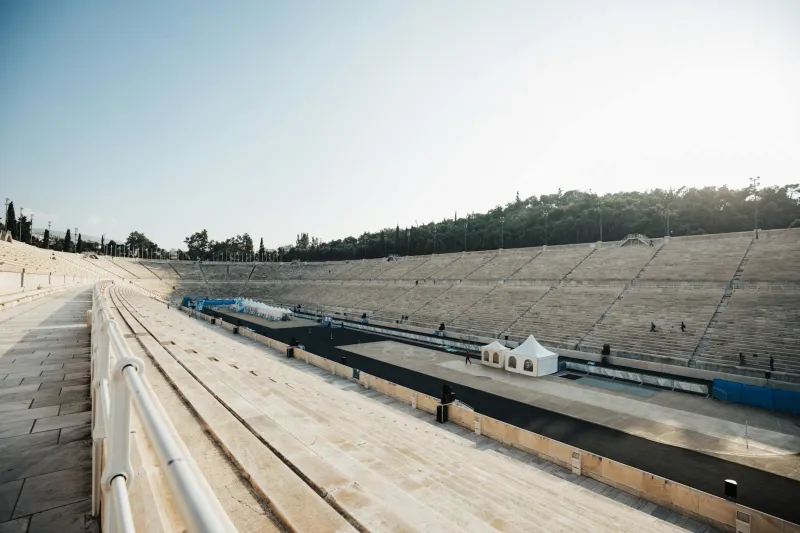
When the modern Olympic Games opened in Athens on April 6, 1896, the American delegation was small, underfunded, and organizationally improvised. Several athletes paid their own way. Some were college students who had only recently learned the Games were happening at all. The US had no national Olympic committee, no formal selection process, and no government backing.
What they did have was something harder to quantify: a competitive instinct that, it turned out, translated extraordinarily well to international sport.
By the time the Athens Games closed, American athletes had won nine gold medals — more than any other nation. It was a result that surprised almost everyone except, perhaps, the Americans themselves.
That was the beginning of the most dominant run in Olympic history.
A Country That Arrived Late and Won Anyway
To understand how remarkable 1896 was, you have to understand how informal the whole operation was.
Pierre de Coubertin, the French educator who spearheaded the revival of the Olympic Games, had been building toward that Athens moment for years. Most of the early organizational energy came from Europe — from French, Greek, and British institutions with established athletic traditions and the infrastructure to match.
America's involvement was driven largely by one man: William Milligan Sloane, a Princeton professor who had met Coubertin and recognized what the Games could become. Sloane helped organize a small group of American competitors, most of them connected to the Boston Athletic Association and Princeton and Harvard athletic programs.
The journey to Athens alone was an ordeal. The athletes crossed the Atlantic by steamship, arrived in Greece exhausted and jet-lagged before jet lag was even a concept, and discovered that the European calendar had caused a scheduling confusion — they were nearly late for the opening.
None of it mattered when the races started.
The Athletes Who Announced America
James Connolly of Boston became the first Olympic champion of the modern era, winning the triple jump on April 6 — the opening day of competition. He was a Harvard student who had left school without permission to make the trip. (Harvard denied his request for a leave of absence. He went anyway. He later received an honorary degree from the university, decades after the fact.)
Thomas Burke won the 100-meter and 400-meter sprints. Thomas Curtis took the 110-meter hurdles. Ellery Clark won both the high jump and the long jump. Robert Garrett, who had practiced throwing the discus in New Jersey using a metal replica he'd had made from a description — having never seen an actual discus — won the discus throw and the shot put.
These weren't professional athletes operating within a national performance system. They were talented, driven individuals who showed up with minimal preparation and outperformed the world.
It established a template that American sport would return to again and again: the individual competitor, backed by personal ambition, rising to meet a global stage.
Building the Machine
What followed 1896 was a long, uneven process of formalization. The United States Olympic Committee wasn't officially established until 1900. Funding was inconsistent. The American approach to Olympic preparation remained relatively decentralized for decades, relying on the strength of the country's college athletic system rather than a state-sponsored development program.
That turned out to be an advantage.
The NCAA system, which grew steadily through the early 20th century, created a vast talent pipeline that no other country could match in scale. American universities were producing track and field athletes, swimmers, rowers, and boxers in numbers that dwarfed what most national programs could develop. The sheer size of the competitive base meant that the athletes who rose to the top had been tested more thoroughly than almost anyone else in the world.
By the 1920s and 1930s, the United States had become the dominant force in the Summer Olympics, consistently topping the medal table. Jesse Owens' four gold medals at the 1936 Berlin Games — won under the eyes of Adolf Hitler, in a performance that carried enormous political and cultural weight — cemented American athletic identity on the world stage in a way that went far beyond sport.
The Cold War and the Stakes That Changed Everything
If the pre-war era established American Olympic dominance, the Cold War turned it into something else entirely: a proxy battlefield.
The Soviet Union entered the Olympic movement in 1952, and almost immediately the Games became a scoreboard for competing ideological systems. Every gold medal carried geopolitical significance. American victories were framed as proof of the superiority of democratic capitalism. Soviet victories were framed as proof of the opposite.
For American athletes, particularly in track and field and swimming, the pressure was unlike anything previous generations had faced. And yet, by almost any measure, they delivered. The US-Soviet Olympic rivalry produced some of the most memorable athletic performances of the 20th century, and American athletes were central to nearly all of them.
The 1980 US boycott of the Moscow Games and the Soviet-led boycott of the 1984 Los Angeles Games interrupted the rivalry but didn't diminish American investment in Olympic success. If anything, hosting the 1984 Games in Los Angeles — where American athletes dominated a boycott-thinned field — reinforced the national emotional attachment to Olympic achievement.
What the Numbers Actually Say
The United States has won more Summer Olympic medals than any other country in history — over 2,600 in total, including more than 1,000 gold. The gap between the US and the next closest nation is substantial and has been built over more than a century of consistent performance across a remarkably wide range of events.
That breadth matters. American Olympic success isn't built on dominance in one or two sports. It spans track and field, swimming, gymnastics, basketball, boxing, wrestling, and beyond. It reflects a sports culture that, at its best, rewards excellence wherever it appears and provides enough competitive infrastructure to develop it.
From Athens to Now
The through line from James Connolly's triple jump in 1896 to the American athletes who will compete in future Games is a long one, and it runs through some of the most significant moments in sports history.
But it starts in Athens, with a group of underprepared, underfunded competitors who crossed an ocean and won anyway.
That impulse — to show up, compete hard, and let the results speak — is as American as anything in the Olympic story. The infrastructure around it has grown enormously. The impulse itself hasn't changed at all.