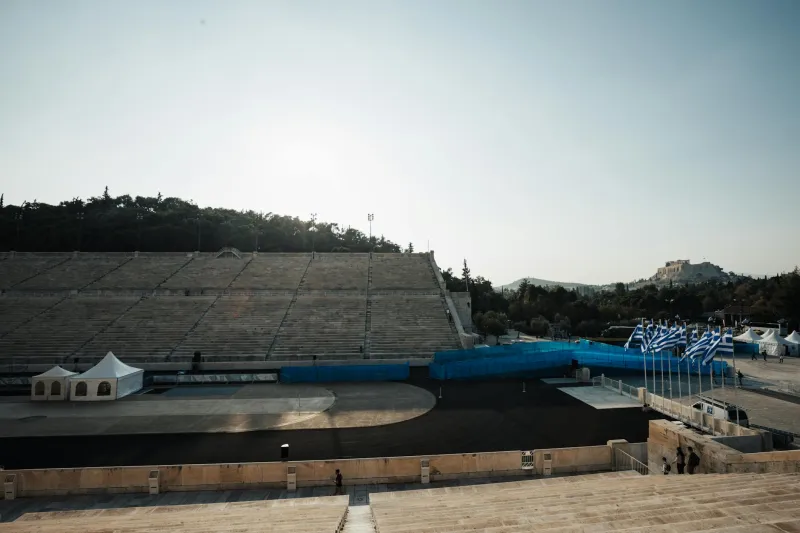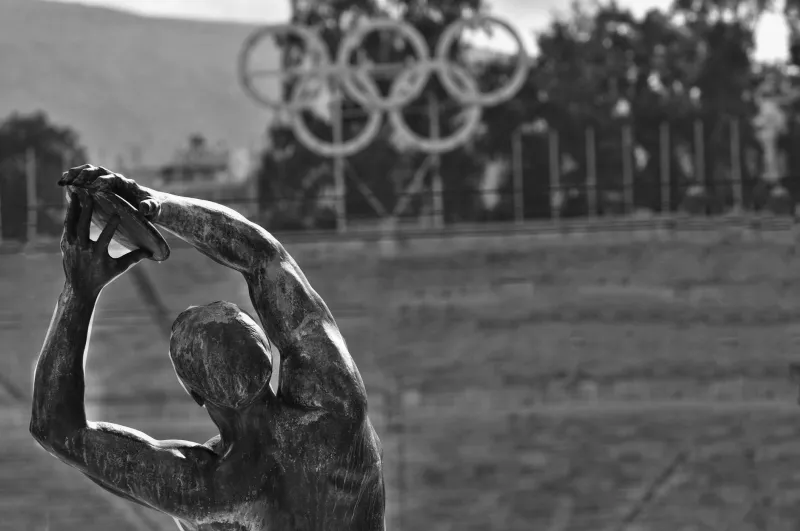
Imagine if the NFL required players to compete naked, banned all wives from attending games, and settled disputes by consulting Zeus through divine omens. Welcome to the ancient Olympics, where athletic competition mixed with religious ritual to create a rulebook that would make today's sports lawyers break out in cold sweats.
While modern American sports operate under thousands of pages of regulations—from the NFL's 92-page rulebook to the NCAA's phone book-sized manual—the ancient Greeks managed their Olympic Games with a surprisingly elaborate yet wildly different set of laws. These weren't just sporting regulations; they were sacred commandments that carried the weight of divine punishment.
The Ultimate Dress Code Violation
Perhaps no ancient Olympic rule seems stranger to modern eyes than the requirement for complete nudity. Around 720 BC, Greek athletes began competing in the buff, and this wasn't some artistic statement—it was the law.
The Greeks believed athletic nudity honored the gods and celebrated the human form. But there was a practical side too: clothing could provide unfair advantages, hide weapons, or conceal an athlete's true gender. When you're running the stadion (roughly equivalent to today's 200-meter dash), loose fabric could mean the difference between victory and defeat.
This nude competition rule lasted for over a thousand years, making it one of sport's longest-standing dress codes. Compare that to modern American athletics, where uniform regulations fill entire chapters of rulebooks, specifying everything from sock colors in the NBA to helmet decal placement in college football.
No Wives Allowed: The Ancient Gender Ban
While today's Title IX ensures equal access to American sports, ancient Olympia took the opposite approach. Married women faced the death penalty—literally thrown from a cliff—for watching the Games. Unmarried women could attend, and priestesses of certain goddesses had special viewing privileges, but wives were strictly forbidden.
The reasoning? The nude male athletes were considered too sacred (and too tempting) for married women to witness. Only one woman ever violated this rule and lived to tell about it. Kallipateira disguised herself as a trainer to watch her son compete. When he won, she jumped over the barrier in celebration, revealing her identity. The judges spared her life because her father, brothers, and son were all Olympic champions, but they immediately passed a new law requiring trainers to compete naked too.
This gender segregation seems absurd today, when American sports actively promote family attendance and female viewership drives billions in revenue. Yet the underlying concern—maintaining competitive integrity and preventing distractions—echoes in modern policies about sideline access and media restrictions.
Divine Justice: When Gods Settled Disputes
Before instant replay and video review, the ancient Olympics had their own technology for settling close calls: divine intervention. When judges couldn't determine a winner, they consulted the Oracle of Zeus through various rituals, including examining the flight patterns of sacred birds or interpreting sacrificial omens.
The hellanodikai (Olympic judges) wielded absolute authority, backed by religious law. They carried staffs as symbols of Zeus's power and could disqualify athletes, impose fines, or order floggings for rule violations. Unlike modern referees who face criticism but keep their jobs, ancient judges were considered divinely appointed and beyond reproach.
This system might sound primitive, but it established crucial precedents still visible in American sports: the concept of neutral officiating, the finality of referee decisions, and the idea that competitive integrity requires enforcement authority.
The Original Salary Cap: Amateurism at All Costs
Centuries before the NCAA debated student-athlete compensation, ancient Olympia wrestled with similar questions about payment and professionalism. Olympic champions received only an olive wreath as their official prize, maintaining the fiction of pure amateur competition.
But like today's college athletics, the reality was more complicated. Winners returned home to substantial rewards from their city-states: money, free meals for life, tax exemptions, and hero status. Some athletes essentially became professional competitors, traveling from festival to festival.
The Greeks tried to maintain amateur ideals while acknowledging athletic excellence deserved reward—a tension that sounds remarkably familiar to anyone following modern debates about Name, Image, and Likeness deals in college sports.
Cheating, Ancient Style
Long before performance-enhancing drugs, ancient athletes found creative ways to gain unfair advantages. Bribery was the biggest problem, with wealthy competitors attempting to buy off opponents or judges. When caught, cheaters faced public humiliation through bronze statues called "Zanes"—monuments to their shame that lined the path to the stadium, each inscribed with the cheater's name and offense.
These shame monuments served as ancient sports' first Hall of Shame, warning future competitors about the consequences of corruption. Modern sports still use public disgrace as punishment—think of baseball's steroid era or cycling's doping scandals—but the Greeks literally carved their cheaters' names in bronze for eternity.
From Sacred Law to Sports Law
These bizarre ancient rules weren't just quirky historical footnotes—they established foundational principles that still govern American athletics today. The concept of neutral officiating, standardized competition rules, eligibility requirements, and consequences for cheating all trace back to those naked Greek athletes running around Olympia.
The major difference? Today's rules focus on fairness, safety, and competitive balance rather than religious devotion. But the underlying goal remains the same: creating a sacred space where athletic excellence can flourish under agreed-upon standards.
When modern American athletes step onto the field, court, or track, they're participating in a tradition of regulated competition that began with those strange, sacred laws of ancient Olympia. The rules may have evolved from divine commandments to legal documents, but the spirit remains unchanged—sport requires structure, and structure requires rules, no matter how weird they might seem.