The Pilgrimage That Built a City
Every four years, something remarkable happened across ancient Greece. Farmers abandoned their fields, merchants closed their shops, and soldiers laid down their weapons. Wars literally stopped as tens of thousands of people began the journey to a remote valley in western Greece—not for conquest, not for trade, but to watch athletes compete.
This was the power of Olympia, the world's first sports destination.
While modern Americans debate whether taxpayer money should fund new stadiums, the ancient Greeks were already proving that sports could transform entire communities. Olympia started as a sacred grove and evolved into a purpose-built entertainment complex that would make modern Las Vegas jealous.
Building the Perfect Sports Experience
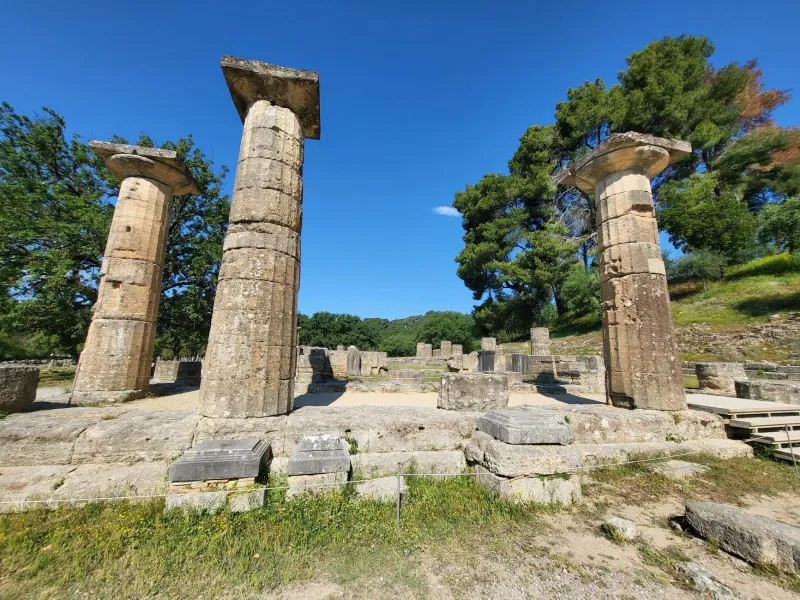
Olympia wasn't accidentally great—it was engineered for athletics. The site's natural amphitheater shape provided perfect sightlines for spectators, while the Alpheus River offered fresh water for both athletes and the massive crowds. The Greeks didn't just stumble upon a good location; they recognized its potential and built accordingly.
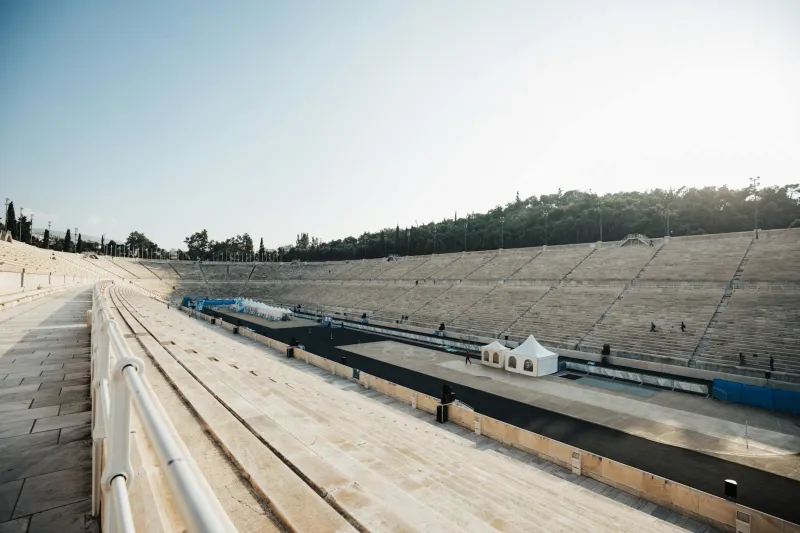
The centerpiece was the stadium itself, a 200-meter track carved into a hillside that could hold 45,000 spectators. That's roughly the size of Yankee Stadium, built with nothing but human labor and bronze tools. The track's design was so perfect that its proportions influenced athletic facilities for the next two millennia.
But the stadium was just the beginning. Olympia featured the world's first athlete village, complete with training facilities, dining halls, and even early versions of sports medicine clinics. Athletes could arrive weeks early to acclimate and prepare, creating the training camp model that every modern sports team follows.
The Ancient Hospitality Industry
With 40,000+ visitors descending on a town that normally housed a few hundred residents, Olympia faced the same challenges as modern Super Bowl host cities—except they solved them 2,500 years ago.
Entrepreneurs set up temporary markets selling everything from food to souvenirs. Wealthy spectators built permanent guest houses, while common folks pitched tents wherever they could find space. The economic impact was so significant that Greek city-states competed to sponsor events and build facilities, hoping to attract future festivals.
Sound familiar? It's the same model that drives modern stadium construction, from Jerry World in Dallas to SoFi Stadium in Los Angeles. Cities invest billions in sports infrastructure because they understand what the Greeks figured out first—athletics create economic ecosystems.
The Celebrity Culture
Olympia invented athlete celebrity culture. Winning Olympians didn't just get olive wreaths—they received lifetime pensions, front-row seats at theaters, and free meals in their home cities. Statues of champions lined the sacred grove, creating the ancient equivalent of a hall of fame.
The most successful athletes became international superstars. Milo of Croton, a wrestler who won six Olympic titles, was so famous that his training methods were copied across the Mediterranean. His story spread like viral content, inspiring imitators and spawning legends that lasted centuries.
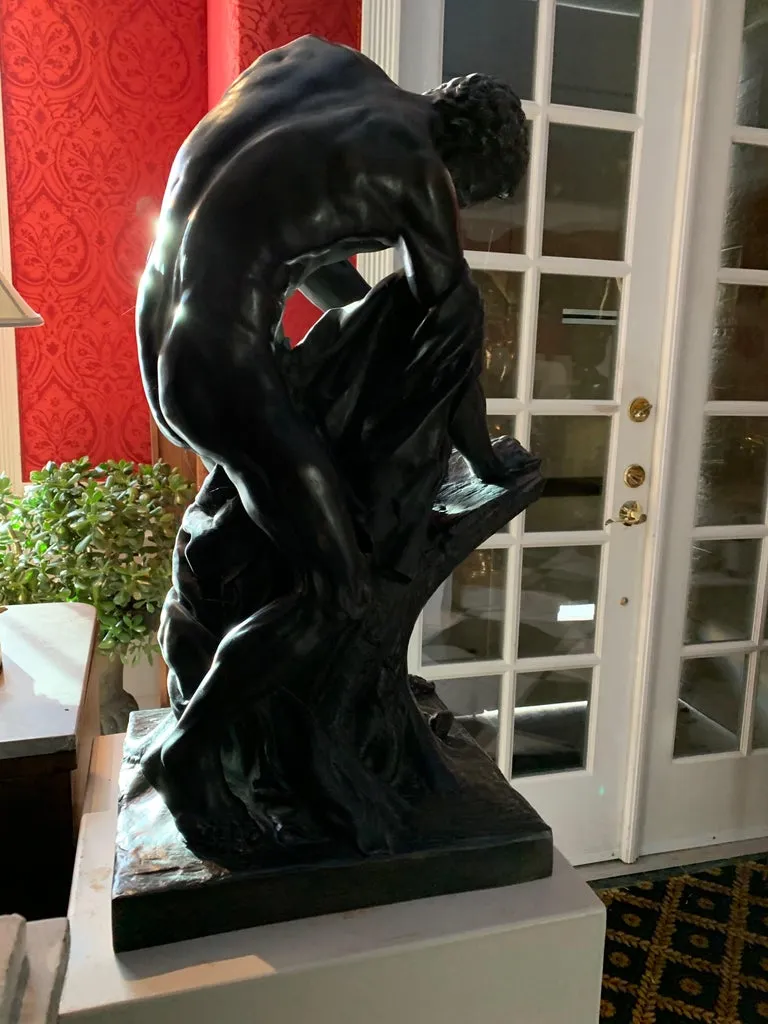 Photo: Milo of Croton, via a.1stdibscdn.com
This celebrity system created the first sports marketing economy. Cities paid enormous sums to recruit talented athletes, offering citizenship and financial incentives that would make modern free agency look quaint. The Greeks understood that star athletes drove tourism and civic pride.
The Original Fan Experience
Olympia pioneered every aspect of the modern sports experience. Vendors sold food and drinks throughout the crowds. Musicians and poets performed between events. Philosophers and politicians used the gatherings to share ideas and build networks.
The Greeks even invented sports journalism. Historians like Pindar wrote detailed accounts of competitions, creating the narrative storylines that modern sports media still uses—the underdog triumph, the dynasty's fall, the comeback story.
Spectators didn't just watch passively; they participated in the experience. Cheering sections formed around regional loyalties. Betting was common and often elaborate. Victory celebrations could last for days, complete with parades and public feasts.
The Sacred and Secular Balance
What made Olympia unique was its blend of religious reverence and commercial entertainment. The Games honored Zeus, but they also generated massive profits. Sacred ceremonies coexisted with merchant stalls. This balance between meaning and money created a sustainable model that lasted over a thousand years.
Modern sports venues struggle with this same balance. How do you honor tradition while maximizing revenue? How do you maintain authenticity while appealing to casual fans? The Greeks solved this by making the religious aspects enhance rather than compete with the entertainment value.
Innovation Through Competition
Olympia's success sparked imitators across Greece. The Pythian Games at Delphi, the Isthmian Games at Corinth, and the Nemean Games all copied Olympia's model while adding their own innovations. This competition between venues drove constant improvement in facilities, athlete treatment, and fan experience.
The result was an arms race of athletic excellence that pushed Greek civilization to new heights. Cities invested in gymnasiums, training programs, and sports science because athletic success brought prestige and economic benefits.
The Modern Legacy
Every time an American city builds a new stadium district—like Atlanta's Battery or St. Louis's Ballpark Village—they're following the Olympia playbook. Create a destination that offers more than just the game itself. Combine entertainment, dining, shopping, and community gathering spaces around the core athletic experience.
The Greeks understood something that modern sports economists are still proving: successful sports venues don't just host events—they create communities. Olympia wasn't just where the Games happened; it was where Greek culture came together to celebrate its highest values.
Why It Still Matters
Olympia's story matters because it proves that sports infrastructure isn't just about athletics—it's about building connections between people. The ancient Greeks didn't invest in Olympia because they needed a place to run races. They built it because they understood that shared experiences create shared identity.
Every time Americans gather in stadiums to cheer for their teams, they're participating in a tradition that started in a small Greek valley 2,800 years ago. The venues have gotten bigger and more sophisticated, but the fundamental idea remains the same: sports bring people together in ways that nothing else can match.
That's the real legacy of Olympia—not just as the birthplace of the Olympics, but as proof that building communities around athletics isn't just possible, it's essential.