Open any sports app on your phone right now and you'll find numbers everywhere. Split times. Efficiency ratings. Launch angles. Win probability percentages updating in real time. Modern sports have become, in many ways, a vast statistical enterprise — a constant effort to quantify, compare, and rank every moment of athletic performance against every other moment.
It's easy to assume that's just how sports work. That measuring greatness means measuring it numerically. But for most of human history, athletic glory was recognized and celebrated without a single stopwatch, tape measure, or scoring table. And the systems ancient cultures built to honor their champions were, in their own way, every bit as powerful.
The Greek Model: Witnesses and Words
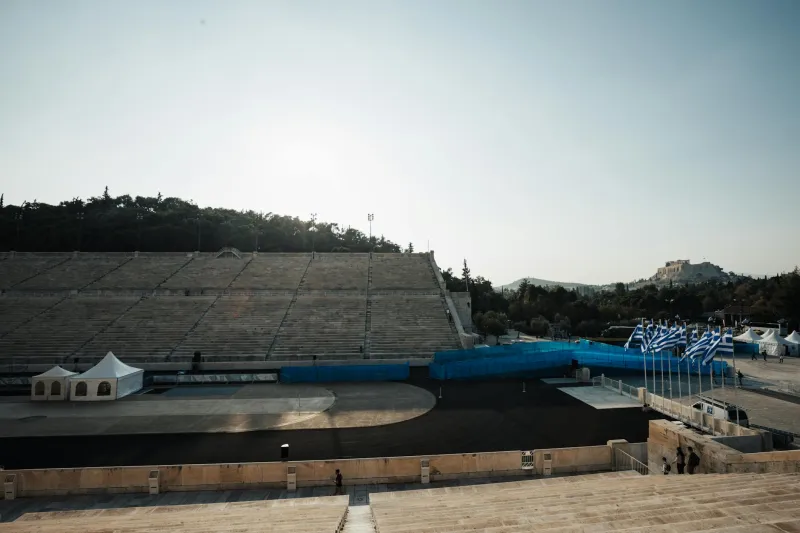
At the ancient Olympic Games, which began in 776 BC in Olympia, Greece, there were no official records kept of winning times or distances. The Greeks weren't indifferent to performance — they cared deeply about athletic excellence. But their framework for understanding it was fundamentally different from ours.
What mattered in ancient Greek athletics was victory, not margin. You either won the stadion footrace — roughly 200 meters along the sacred track at Olympia — or you didn't. The winner's name was recorded. The loser's was not. There was no second place, no bronze medal consolation, no personal best to carry home. The Greek word for "second" in a competition was essentially synonymous with "first loser."
This winner-take-all philosophy shaped how greatness was recognized. Without numbers to compare, the Greeks relied on two things: the testimony of those present and the power of language to preserve what they witnessed.
Enter Pindar.
The Poet Who Made Athletes Immortal
Pindar was a Greek lyric poet who lived from roughly 518 to 438 BC, and his victory odes — known as the Epinicians — are among the most important documents in the history of sport. Commissioned by victorious athletes or their wealthy patrons, these poems were performed publicly, often with music and dance, to celebrate triumphs at the four great Panhellenic Games: the Olympics, the Pythian Games, the Isthmian Games, and the Nemean Games.
Pindar's odes didn't describe athletic performances the way a modern sports journalist would. He didn't tell you how fast the winner ran or how far the discus flew. What he captured instead was the meaning of the victory — the athlete's lineage, the glory brought to his city-state, the divine favor implied by winning, and the way the triumph would echo through time.
In one of his most celebrated odes, written for a young wrestler named Diagoras of Rhodes, Pindar declared that Diagoras's victory was so pure and his conduct so noble that the gods themselves had favored him. That kind of language wasn't hyperbole. It was the ancient Greek equivalent of a world record — a public declaration, preserved in verse, that this person had achieved something beyond ordinary human limits.
The odes were performed at banquets, at civic ceremonies, and at the athlete's homecoming. Some victors returned to their cities through gaps knocked in the city walls — a symbolic gesture suggesting that a city with such a champion had no need of conventional defenses. The athletic hero was woven into the social and political fabric of his community in ways that no leaderboard could replicate.
Rome and the Spectacle of Validation
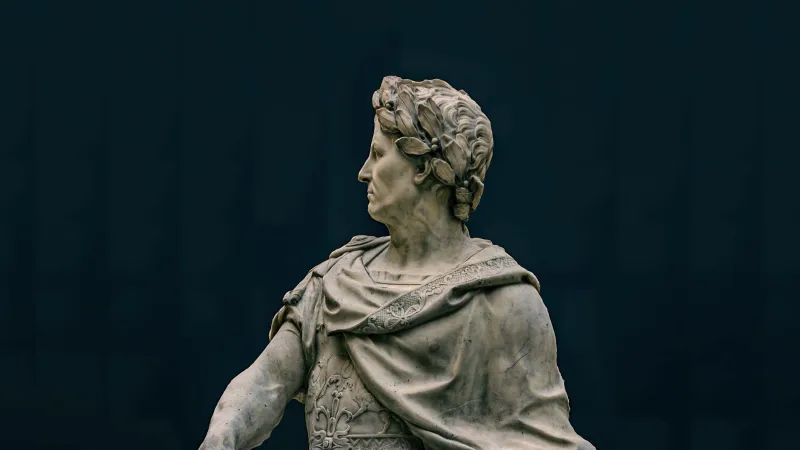
Roman athletic culture operated differently but shared the same instinct: greatness needed witnesses to become real. The gladiatorial games and chariot races of Rome were massive public spectacles, attended by tens of thousands in venues like the Circus Maximus, which could hold an estimated 150,000 spectators.
The crowd itself was the scoreboard. A charioteer who won repeatedly — men like Gaius Appuleius Diocles, who raced in the second century AD and amassed winnings estimated by some historians as equivalent to hundreds of millions of modern dollars — became famous not through statistics but through the accumulated memory of the Roman public. Diocles's career totals were eventually inscribed on a monument, one of the earliest examples of athletic record-keeping in the ancient world. But even that inscription was less about the numbers and more about the public declaration: this man was here, he competed, and he was extraordinary.
What Numbers Give Us — and What They Take Away
The shift toward statistical measurement in modern sports accelerated through the 19th and 20th centuries as timekeeping technology improved and international competition demanded standardized comparison. The first officially timed Olympic 100-meter final was run in 1896. The IAAF began ratifying world records in athletics in the early 20th century. From there, the numbers took on a life of their own.
There's no question that statistical record-keeping has enriched sports in meaningful ways. It allows us to compare athletes across generations, to track the arc of human improvement, and to identify performances that genuinely transcend their era. Knowing that Usain Bolt ran 9.58 seconds in the 100 meters tells you something real and important about what a human body can do.
But something is also lost when athletic achievement gets reduced entirely to data. The ancient Greeks understood that victory is an experience before it is a number — that what makes a great performance great is not just the measurement but the human drama surrounding it, the sacrifice it represents, the community that witnesses it.
Pindar's odes have outlasted every ancient Olympic record that was never kept. The names of champions like Diagoras of Rhodes are still known today not because of a time or a distance but because a poet decided their stories were worth telling.
The Starting Line of How We Honor Greatness
Modern sports broadcasting has actually circled back, in some ways, to the ancient model. The most memorable moments in American sports history aren't remembered as statistics. They're remembered as stories — the imagery, the crowd noise, the human stakes. Kirk Gibson's home run in the 1988 World Series. Jesse Owens at the 1936 Berlin Olympics. The Miracle on Ice.
The numbers are there. But they're not what lasts.
The ancient world built systems for celebrating athletic greatness that relied on community, language, and ceremony. They didn't have stopwatches, but they understood something fundamental: that the point of sport was never really the measurement. It was the meaning. And meaning, then as now, requires a story.