Barley Cakes and Bull Meat: The Original Olympic Training Table
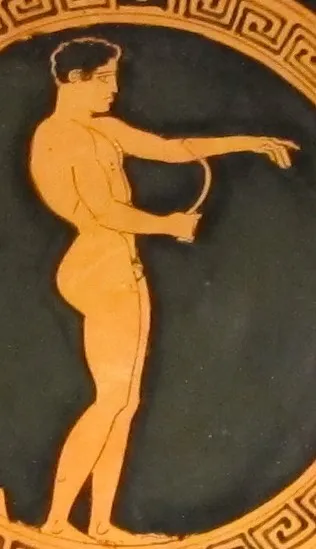
Photo: RickyBennison, CC BY-SA 3.0, via Wikimedia Commons
Before there were gels, electrolyte packets, and a nutritionist on the team flight, there was a teenage wrestler being told to eat more cheese. Ancient Greek athletics had no sports drinks and no macronutrient math, but it did have a training table, a coaching philosophy about food, and a fierce argument that has never really gone away: do you build a champion on light fuel or heavy fuel?
The answers the Greeks landed on — some right, some dangerous, some simply built for a different sport — are a useful mirror for how far modern sports nutrition has traveled, and how much of it is still guesswork dressed up in lab coats.
Breakfast at the Gymnasium
The standard ancient Greek athlete's diet was heavy on carbohydrates, long before anyone knew what a carbohydrate was. Barley was the staple: ground, baked into flat cakes called maza, and eaten with figs, cheese, olives, and watered wine. Wheat bread was a step up in status. Meat was expensive and, in many periods, rare.
That is, unintentionally, a pretty reasonable endurance diet. Barley cakes and figs deliver glucose. Cheese brings protein and fat. The Greeks did not know about glycogen, but they noticed what happened when athletes ate this way in the month-long training camp at Elis before the Games: they could handle repeated hard sessions without falling apart.
Food was also part of the ritual. Sacrificial animals meant meat was available at festivals, and victorious athletes sometimes received portions as part of their honors. Eating was woven into competition, not separated from it the way a modern recovery shake is.
The Great Meat Debate
Around the fifth century BC, something shifted. Ancient writers credit Dromeus of Stymphalos, a two-time Olympic champion in the long race, with being the first athlete to train on a diet that included meat. Whether that means he was a pioneer or just the first man famous for it is impossible to say, but the idea spread.
Later tradition pins a more philosophical version of the story on Pythagoras, who reportedly told a boxer named Eurymenes to swap cheese and figs for meat to build strength. Whether or not that happened as told, it captures a real debate among the paidotribai, the trainers who ran the gymnasiums. Some believed heavy food built mass and power. Others thought it dulled speed and made athletes sluggish.
Both camps had a point, because they were training different athletes for different events. A wrestler or pankratiast needed bulk and raw strength. A sprinter or long-distance runner needed a lean engine. Ancient Greece never developed the idea of position-specific or event-specific fueling, so the same advice got applied across the board — which is exactly the mistake modern nutrition spends enormous effort correcting.
And then there were the legends. Milo of Croton, six-time Olympic wrestling champion, was said to have carried a bull on his shoulders and later eaten it. That story is almost certainly exaggeration, but it tells you what the culture valued: appetite as a proxy for power.
The Four-Day Cycle
What ancient coaches did have was structure. The best-known system, described by the writer Philostratus, organized training into a four-day cycle that alternated preparation, intense effort, relaxation, and moderate work. Food followed the cycle: heavier intake around the hard days, lighter eating during recovery.
That is, in broad outline, periodized nutrition — the idea that what you eat should track what you are asking the body to do. The Greeks arrived there through observation and trial and error rather than biochemistry.
What they did not have was any understanding of hydration science. Athletes competed nude, in the sun, coated in olive oil and dust, and the prevailing view was that drinking during exertion was harmful. Some of the same belief would still be killing marathoners in 1904, two and a half millennia later.
What the Modern Olympian Actually Eats
Today's elite endurance athlete operates on numbers the Greeks could not have imagined. A marathoner might take in 8 to 10 grams of carbohydrate per kilogram of body weight per day during heavy training, then target 60 to 90 grams per hour during a race. Protein intake lands around 1.6 grams per kilogram for strength and repair. Sodium is individualized through sweat testing. Beet juice, caffeine, and creatine all have evidence behind them.
The biggest conceptual leap is not any single food but the principle of individuality. Two athletes on the same team can have wildly different sweat rates, gut tolerance, and recovery needs. Modern teams run gut-training protocols so athletes can absorb more fuel without stomach distress — something the barley-and-figs crowd stumbled into by eating the same bland, easily digested food for years.
Recovery nutrition is the other enormous gap. Ancient athletes refueled with whatever the day offered. Modern ones time protein and carbohydrate within a window after training, use ice baths and compression, and monitor sleep as a performance variable. None of that existed in the gymnasium at Elis.
The Supplement Problem, Then and Now
Here is where the ancient world and the modern one start to rhyme uncomfortably. Greek athletes were happy to try special foods, herbal preparations, and ritual substances in pursuit of an edge. The details are murky and often exaggerated, but the impulse is recognizable.
The difference is that modern sport has testing, and contamination is a genuine hazard. A meaningful share of supplements on the market have been found to contain trace amounts of banned substances, which is why anti-doping agencies warn athletes to verify every product. The supplement aisle is still a place where hope outruns evidence — the same bargain ancient athletes were making with a special cake or a charm.
Why the Old Training Table Still Teaches
Strip away the mythology and the Greeks got a surprising amount right. They built their athletes on plants and dairy, ate simply, structured their intake around training load, and treated food as a coaching tool rather than an afterthought.
They also got things badly wrong — no hydration strategy, no concept of micronutrients, and a one-size-fits-all approach that ignored the enormous difference between a wrestler and a distance runner.
The through-line is the same one that runs through every corner of sports history. Someone noticed that a change in routine produced a change in results, told other people, and the practice spread long before anyone could explain why it worked. The barley cake came first. The biochemistry came 2,400 years later. Both belong to the same story, and the starting line for sports nutrition runs straight through a Greek gymnasium where a coach was arguing, loudly, about whether his athlete should eat more meat.