The Weapons That Became Sports
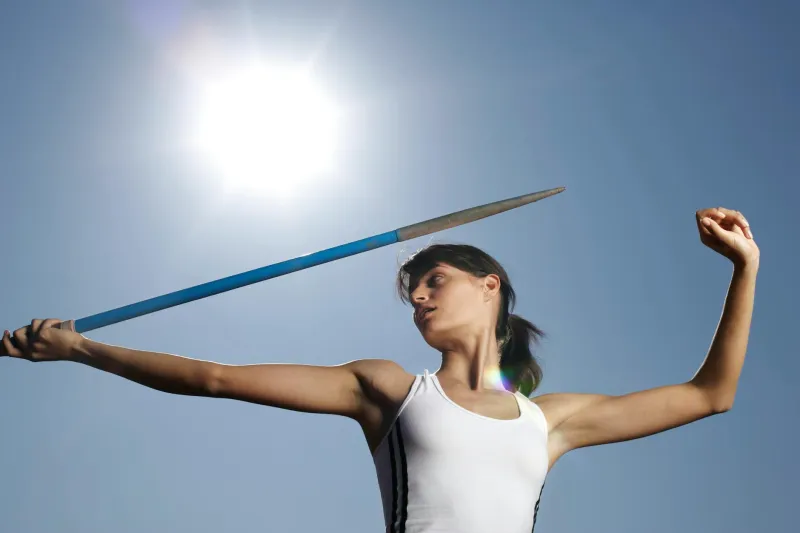
In ancient Greece, the ability to hurl a spear accurately could mean the difference between victory and death on the battlefield. Greek warriors trained daily with the javelin, not for Olympic glory, but for survival. The discus, originally a bronze war quoit used to knock enemies off their feet, served a similar purpose. These weren't just athletic events—they were military necessities that happened to make for compelling competition.
Fast-forward 2,500 years, and these ancient weapons have become America's most underappreciated Olympic success story. While the world obsesses over swimming and track sprints, American throwers have quietly built one of the most dominant programs in international competition. Yet ask the average sports fan to name a single American javelin thrower, and you'll likely get blank stares.
The College Pipeline That Changed Everything
America's throwing dominance didn't happen by accident. It's the result of a uniquely American institution: the college athletics system. While other countries focus their throwing development on club programs and national training centers, the U.S. created something unprecedented—a network of over 300 NCAA programs that recruit, develop, and compete with throwers year-round.
Take the University of Georgia, which has produced more Olympic and World Championship throwers than most entire countries. Their training facility in Athens features multiple throwing circles, specialized strength training equipment, and coaching staff dedicated solely to the throwing events. This level of infrastructure, replicated across dozens of major universities, creates a development pipeline that other nations simply can't match.
 Photo: University of Georgia, via logosandbrands.directory
The NCAA system also provides something crucial that club-based programs lack: consistent competition. American college throwers compete 15-20 times per season, facing high-level competition weekly. Compare that to European throwers, who might compete in only 8-10 meets annually, and the advantage becomes clear.
From Battlefield to Backyard: The Technology Revolution
Modern throwing technique would be unrecognizable to those ancient Greek warriors. Where they emphasized brute strength and basic accuracy, today's athletes use biomechanical analysis, specialized equipment, and training methods that turn the human body into a precision launching system.
American throwers have been at the forefront of this technological revolution. The rotational technique in shot put and discus, now used by virtually every elite competitor worldwide, was pioneered and perfected in American college programs. High-speed video analysis, force plate measurements, and computer modeling of throwing mechanics—all innovations that emerged from the marriage of American sports science and college athletics.
Consider the evolution of the javelin itself. The ancient Greek javelin was a functional weapon, designed for penetration and accuracy. Modern javelins are aerodynamic marvels, with precisely calculated weight distribution and surface textures that maximize distance. American manufacturers like Nemeth Javelins have become global leaders in javelin technology, their products used by competitors worldwide.
The Numbers Tell the Story
Since 1984, American men have won 23 Olympic medals in the throwing events—more than any other nation. In the javelin alone, the U.S. has captured 4 of the last 8 Olympic medals available to men. The women's program has been even more dominant, with American shot putters and discus throwers claiming 31 Olympic medals over the same period.
Yet these achievements fly under the radar of mainstream American sports media. While a swimming gold medal generates headlines for weeks, throwing victories often merit little more than a brief mention. This invisibility is partly cultural—throwing events lack the obvious drama of head-to-head racing—but it's also strategic. Many successful American throwers prefer the low profile, finding it easier to focus on training without the pressure and distractions that come with celebrity status.
The Professional Reality
Unlike ancient Greek athletes who competed for olive wreaths and civic honor, modern American throwers face a harsh economic reality. There's no NFL for javelin throwers, no NBA for shot putters. The professional opportunities are limited to appearance fees at track meets, modest prize money, and endorsement deals that pale in comparison to other sports.
This economic pressure has created an interesting dynamic: American throwers often maintain amateur status longer than athletes in other sports, using college eligibility and graduate school to extend their competitive careers. Some of America's greatest throwers didn't reach their peak until their late twenties or early thirties, having spent nearly a decade honing their craft in the college system.
Training Like Ancient Warriors, Competing Like Modern Athletes
Today's American throwing programs combine ancient wisdom with cutting-edge science. The basic principle remains unchanged from those Greek battlefields: generate maximum force and transfer it efficiently through an implement. But the methods have evolved dramatically.
Modern American throwers train like hybrid athlete-engineers. They spend hours in weight rooms building the explosive power needed for elite performance, but they also work with biomechanics experts to optimize their technique down to the millisecond. Video analysis reveals flaws invisible to the naked eye, while force sensors measure the exact power output of each throw.
The mental game has evolved too. Sports psychologists work with throwers to manage the unique pressures of their events—the need for perfect technique under pressure, the ability to bounce back from poor throws, the patience required for events where athletes get only three to six attempts to achieve their best performance.
The Future of American Throwing
As other nations invest more heavily in their throwing programs, American dominance faces new challenges. Countries like Germany, Poland, and Kenya have begun adopting American-style college systems and training methods. The technological advantages that once belonged exclusively to U.S. programs are becoming more widely available.
But America retains crucial advantages: the depth of its college system, the quality of its coaching education, and the competitive intensity of its domestic programs. While other countries might produce individual stars, the U.S. continues to develop throwers in numbers that ensure sustained success at the highest levels.
The ancient Greek warriors who first hurled spears and discuses could never have imagined their battlefield skills would evolve into America's quiet Olympic empire. Yet in the precision of a modern javelin throw or the explosive power of a shot put launch, their legacy lives on—transformed by American innovation into sporting excellence that the world has learned to respect, even if it doesn't always notice.