Five Sports, One Champion: Why Ancient Greece's Pentathlon Created the Blueprint for Modern Athletic Greatness
Every spring, NFL prospects gather at the combine to run the 40-yard dash, bench press 225 pounds, and leap through agility drills. College basketball players showcase their vertical jumps and sprint times. Olympic hopefuls cross-train in multiple disciplines to build complete athletic foundations. What none of these athletes realize is they're following a playbook written 2,800 years ago in ancient Greece.
The pentathlon—literally meaning "five contests" in Greek—wasn't just another event at the ancient Olympic Games. It was the ultimate test of human athletic potential, combining running, long jump, discus, javelin, and wrestling into a single competition that crowned the most complete athlete in the ancient world.
The Birth of Athletic Versatility
When the pentathlon debuted at the 18th Olympic Games in 708 BC, it represented a radical shift in how Greeks thought about athletic excellence. While other Olympic events celebrated singular skills—pure speed in the stadion race or raw power in wrestling—the pentathlon demanded something entirely different: balance.
Ancient Greek writers like Aristotle praised pentathletes as the most beautiful and proportioned athletes, calling them "the most harmonious" competitors. They weren't the fastest runners or the strongest wrestlers, but they possessed something more valuable: complete physical development across multiple domains.
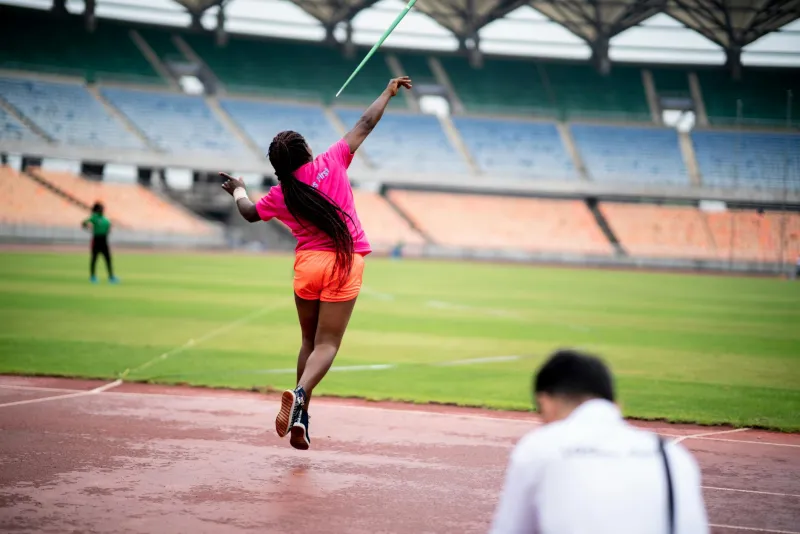
The five events weren't chosen randomly. Running tested cardiovascular endurance and leg speed. The long jump (performed while holding weights called halteres) measured explosive power and coordination. Discus throwing required rotational strength and technique. Javelin demanded accuracy, arm strength, and timing. Wrestling brought it all together with combat skills, strategy, and mental toughness.
Why the Greeks Valued the Complete Athlete
To understand the pentathlon's significance, you have to understand ancient Greek culture. These weren't professional athletes competing for prize money—they were citizen-soldiers who needed to be ready for anything. A pentathlete's diverse skill set translated directly to battlefield effectiveness.
The running speed helped in military charges and retreats. Javelin skills meant deadly accuracy with spears. Wrestling ability was crucial in hand-to-hand combat. The jumping and discus events built the kind of explosive power and coordination that separated elite warriors from ordinary soldiers.
But the Greeks also valued the pentathlon for philosophical reasons. They believed in the concept of arete—excellence in all things—and the pentathlon embodied this ideal. A pentathlete represented the perfect balance between different types of strength, speed, and skill.
The Ancient Scoring Mystery
Here's where the pentathlon gets interesting from a modern perspective: we still don't know exactly how ancient Greeks scored it. Unlike today's decathlon, which uses a complex points system, the ancient pentathlon likely used an elimination format.
Most historians believe that if an athlete won three of the first four events (running, jumping, discus, javelin), they were declared the overall champion without needing to wrestle. If no one achieved three victories, the remaining competitors faced off in wrestling to determine the winner.
This scoring system reinforced the Greek emphasis on versatility. You couldn't win by dominating just one or two events—you needed to be consistently excellent across multiple disciplines.
From Olympia to the NFL Combine
Fast-forward to modern American sports, and the pentathlon's influence is everywhere, even if we don't recognize it. The NFL combine is essentially a modern pentathlon: multiple tests designed to identify the most complete football prospects.
The 40-yard dash measures speed. The vertical jump tests explosive power. The bench press evaluates strength. Agility drills assess coordination and body control. Position-specific drills examine technical skills. Sound familiar?
NFL scouts aren't looking for the fastest runner or the strongest lifter—they want players who excel across multiple physical and mental dimensions. A linebacker needs speed, strength, agility, and intelligence. A quarterback needs arm strength, accuracy, mobility, and decision-making under pressure.
The Cross-Training Revolution
The ancient pentathlon philosophy also lives on in modern training methods. CrossFit, arguably the biggest fitness trend of the 21st century, is built on the idea of "general physical preparedness"—developing competency across multiple fitness domains rather than specializing in one.
Elite modern athletes increasingly embrace cross-training. Tennis players work on their footwork with soccer drills. Swimmers build power through weightlifting. Basketball players improve agility with martial arts training. This holistic approach to athletic development would have made perfect sense to ancient Greek pentathletes.
Why Specialization Won (And Lost)
So why did the pentathlon eventually fade from prominence? As competitive sports evolved, specialization became more valuable than versatility. A sprinter who focused solely on running could beat a pentathlete's running time. A wrestler who trained only wrestling could defeat a pentathlete on the mat.
The modern decathlon carries on the pentathlon's spirit, but it's seen as a niche event. Most Olympic sports reward specialists, not generalists. We celebrate Usain Bolt's sprint dominance, not his hypothetical performance in five different events.
Yet in team sports, youth development, and general fitness, the pentathlon's core philosophy remains relevant. Coaches still value versatile players over one-dimensional specialists. Athletic directors still want multi-sport athletes. Personal trainers still preach functional fitness across multiple movement patterns.
The Complete Athlete Lives On
The next time you watch an NFL draft, notice how scouts obsess over prospects who "test well" across multiple categories. When you see a basketball player who can shoot, pass, rebound, and defend, you're witnessing the pentathlon ideal in action. When CrossFit athletes compete in varied, unknown challenges, they're following the ancient Greek model of comprehensive fitness.
The pentathlon may have disappeared from the modern Olympics, but its fundamental insight—that true athletic greatness comes from mastering multiple skills rather than perfecting just one—continues to shape how we think about sports, training, and human physical potential. In a world that increasingly values specialization, the ancient Greeks remind us that sometimes the most impressive athletes are the ones who can do everything well.