The Problem That Started It All
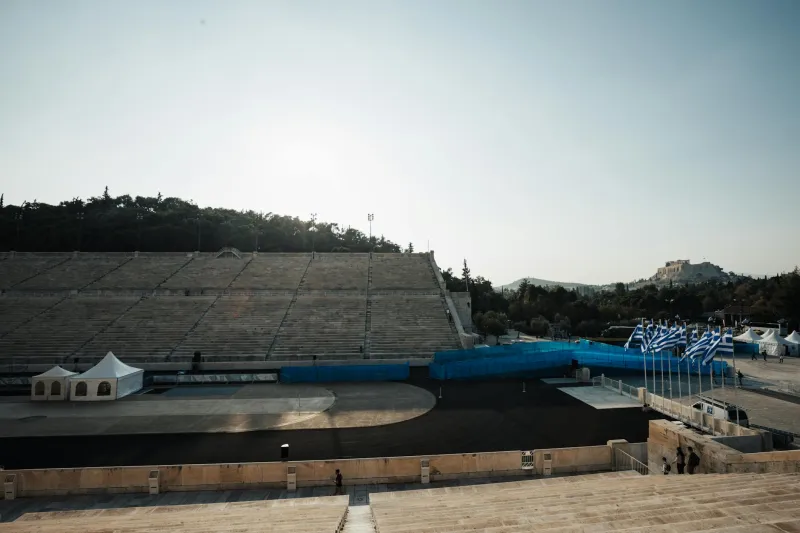
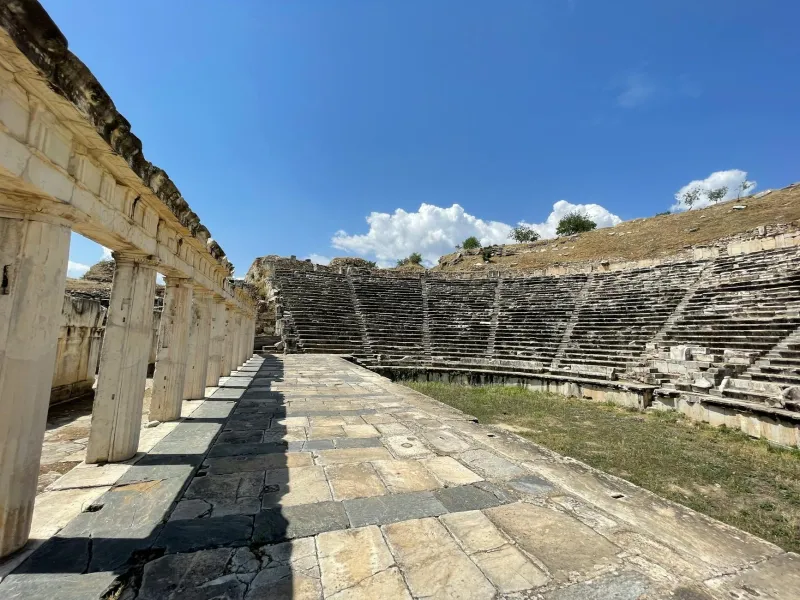
Picture this: you're standing in the ancient stadium at Olympia, 776 BC. Twenty runners are crouched at the starting line, muscles coiled like springs, waiting for the signal to begin the most important race of their lives. But there's a problem—how do you ensure that all twenty athletes start at exactly the same moment? No starting pistols, no electronic sensors, no photo finish cameras. Just human officials trying to manage the chaos of competitive ambition.
The ancient Greeks faced the same challenge that haunts every track meet today: creating a perfectly fair start. Their solution was so brilliant that its basic principles still govern how we begin races more than 2,800 years later.
Enter the Hysplex: Ancient Greece's Starting Gate Revolution
Sometime around the 5th century BC, Greek engineers developed what might be the most underrated invention in sports history: the hysplex. This wasn't just a simple rope or wooden barrier—it was a sophisticated mechanical system that would make modern NASCAR officials proud.
The hysplex consisted of a series of wooden posts connected by taut cords or chains. Each runner would position themselves behind their designated cord, which was held in place by a spring-loaded mechanism. When the official was ready to begin the race, he would release a single trigger, simultaneously dropping all the barriers and freeing every runner to sprint forward.
Think of it as the ancient world's version of a drag racing Christmas tree, but designed for human athletes instead of muscle cars.
Why Greeks Obsessed Over Fair Starts
To understand why the Greeks invested so much engineering effort into starting mechanisms, you need to understand what was at stake. Olympic victory wasn't just about personal glory—it was about divine favor, civic pride, and eternal fame. Winners became legends, their victories commemorated in poetry and sculpture. Cities would tear down their walls to welcome home Olympic champions, believing that no fortress could be stronger than having a man favored by the gods.
With stakes that high, even the slightest advantage at the start could mean the difference between immortal glory and forgotten obscurity. A runner who jumped the start by even a fraction of a second could steal victory from a superior athlete. The Greeks understood that true competition required true fairness, and true fairness began with ensuring every competitor had an equal opportunity from the very first step.
The Technology Behind Ancient Timing
The hysplex wasn't the Greeks' only innovation in race management. Archaeological evidence from Olympia reveals starting lines carved directly into stone, with grooves for runners' feet positioned at precisely measured intervals. These weren't casual scratches in the dirt—they were permanent installations, engineered with the kind of precision that modern track architects would recognize.
Greek officials also developed a system of false start penalties that would feel familiar to any modern sprinter. Jump the start once, and you'd face a warning and possible disqualification. The concept of "on your mark, set, go" traces its roots directly back to the ritualized starting procedures used at ancient Olympic Games.
From Olympia to Oregon: The Evolution Continues
When you watch Usain Bolt or Sydney McLaughlin-Levrone explode from modern starting blocks, you're witnessing the culmination of a technological journey that began in ancient Greece. Today's starting blocks, with their adjustable foot plates and precise angles, serve the same fundamental purpose as those ancient stone grooves: giving every runner an equal platform for explosive acceleration.
Modern electronic starting systems have added layers of sophistication the Greeks could never have imagined. Pressure sensors detect the exact moment a runner's foot leaves the block. Audio systems ensure every athlete hears the starting signal simultaneously, accounting for the speed of sound across the width of the track. False start detection systems can measure reaction times down to thousandths of a second.
But strip away the electronics and digital precision, and you'll find the same core principle that drove Greek engineers to create the hysplex: the belief that great competition requires perfect fairness, and perfect fairness begins with an equal start.
The American Connection
When American colleges began organizing track meets in the 1800s, they inherited more than just the concept of competitive running from the Greeks—they inherited the obsession with fair starts. The first intercollegiate track meet, held between Harvard and Yale in 1876, used starting procedures directly descended from ancient Greek practices.
Today, American high school and college tracks feature the most sophisticated starting systems in the world, but they're all solving the same problem that Greek officials faced nearly three millennia ago: how do you ensure that the fastest runner wins, not the one who gets the best jump on the field?
Why Ancient Starting Lines Still Matter
Every time you see runners settle into their blocks at an Olympic final, you're watching the latest chapter in a story that began when Greek engineers first realized that fair competition required engineered solutions. The hysplex wasn't just a starting gate—it was a statement of values, a declaration that athletic competition should be decided by skill, training, and determination rather than luck or gamesmanship.
In our age of photo finishes decided by thousandths of a second, it's worth remembering that the pursuit of perfect fairness in athletic competition began not with computers and lasers, but with Greek craftsmen who understood that every great race starts with every runner getting an equal chance to be great.
The next time you hear a starter's pistol crack at a track meet, listen carefully. In that sound, you can hear the echo of ancient Greek officials releasing the first hysplex, launching not just a race, but a 2,800-year tradition of making sure the best athlete wins.