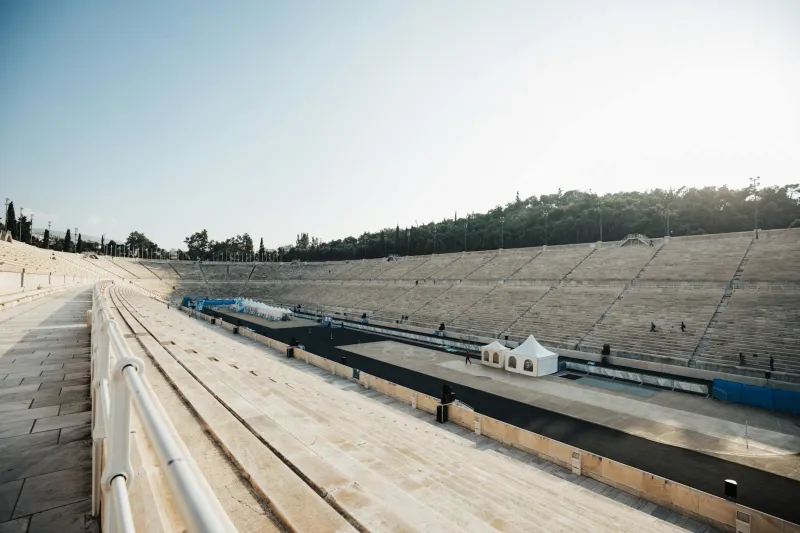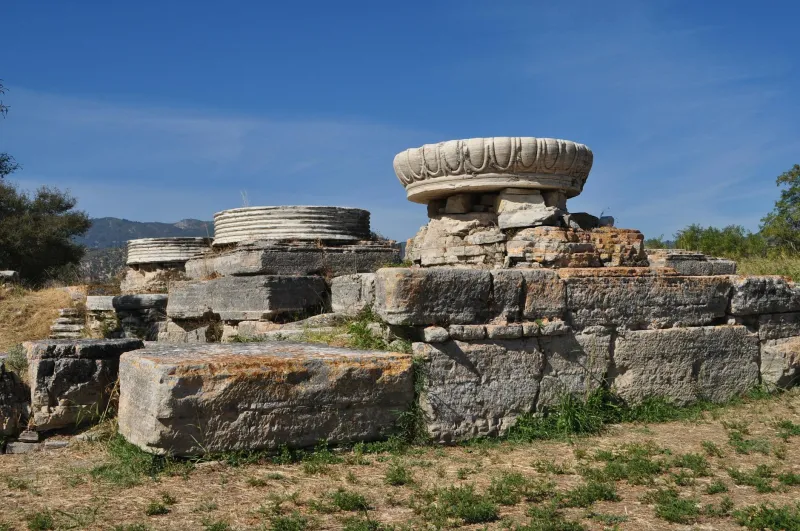
The World's First Purpose-Built Sports Venue
When architects designed SoFi Stadium's sweeping curves and optimal sightlines, they were unknowingly following a blueprint written in ancient Greece. The original stadium at Olympia, built around 776 BC, established design principles that continue to influence every major American sports venue, from Fenway Park to AT&T Stadium.
The Greek word "stadion" literally meant "a place to stand," but the reality was far more sophisticated. This wasn't just an empty field where athletes happened to compete—it was the world's first purpose-built sports facility, designed specifically to showcase athletic competition to maximum effect.
The Geometry of Spectacle
What made the ancient Greek stadium revolutionary wasn't its simplicity, but its sophistication. The track was precisely measured—exactly 600 Greek feet long, roughly 630 feet in modern measurements. But more importantly, the entire venue was engineered around the spectator experience.
Spectators sat on natural hillsides that formed a elongated "U" shape around the track, creating what we now recognize as the fundamental stadium design. This configuration ensured that everyone had a clear view of the action while maximizing capacity within the natural landscape. Sound familiar? It's the same principle behind the design of modern American football stadiums, where upper decks curve around the field to bring as many fans as close to the action as possible.
The Greeks understood something crucial about sports architecture: the venue itself is part of the competition. The roar of 40,000 spectators cascading down from the hillsides at Olympia created an acoustic environment that amplified the drama of competition—the same effect architects chase when designing modern arenas with steep seating angles and sound-focusing geometries.
Capacity and Community
Ancient Olympic crowds reached an estimated 40,000 to 50,000 spectators, remarkable numbers for the ancient world. But the Greeks didn't just pack people in randomly—they understood crowd psychology and social dynamics. Different sections were designated for different groups: athletes' families, visiting dignitaries, local officials, and general spectators all had their designated areas.
This social organization of space directly influenced how American stadiums handle everything from luxury suites to general admission. When Yankee Stadium separates premium seating from bleacher seats, or when NFL stadiums create distinct experiences for different ticket holders, they're following a template established in ancient Greece.
The Psychology of Sacred Space
Perhaps most importantly, the Greeks understood that a stadium needed to feel special—set apart from ordinary life. The stadium at Olympia wasn't just functional; it was sacred space, dedicated to athletic excellence and divine honor. This concept of the venue as hallowed ground permeates American sports culture today.
Think about how Americans talk about iconic venues: Fenway Park as a "cathedral of baseball," Lambeau Field as "the frozen tundra," Madison Square Garden as "the world's most famous arena." This reverence for sports venues as something more than mere buildings traces directly back to the Greek understanding of the stadium as sacred space.
Innovation Within Tradition
The Greeks also pioneered practical innovations that remain standard in modern venue design. They created dedicated entrances and exits to manage crowd flow, established vendor areas for food and drink, and even developed primitive but effective drainage systems to handle weather.
More subtly, they understood the importance of what we now call "fan experience." The stadium wasn't just about watching competition—it was about participating in a communal celebration of athletic excellence. This holistic approach to venue design, where architecture serves both practical and emotional needs, defines the best American sports facilities today.
From Marble to Steel
While modern stadiums use steel, concrete, and cutting-edge technology, the fundamental design challenges remain unchanged from ancient Greece. How do you create clear sightlines for maximum capacity? How do you manage crowd flow? How do you create an atmosphere that enhances rather than distracts from competition?
The Greeks solved these problems with earth, stone, and geometric precision. Modern architects solve them with computer modeling, advanced materials, and billion-dollar budgets. But the underlying principles—maximize visibility, optimize acoustics, create community, honor the competition—remain identical.
The Enduring Legacy
Every time you walk into an American stadium and feel that surge of anticipation as you emerge from the concourse to see the field spread out below, you're experiencing something the Greeks engineered over 2,700 years ago. The scale has changed, the materials have evolved, and the technology is unrecognizable, but the fundamental experience—the marriage of architecture and athletic drama—remains exactly what the Greeks intended.
The next time you're in a modern American stadium, look around and recognize the ancient Greek DNA embedded in every design choice. The curved seating, the focus on sightlines, the separation of different spectator areas, the sense of entering sacred space dedicated to athletic excellence—all of it traces back to that original dirt track in Olympia where the Greeks first understood that great sports require great venues.
In a world of retractable roofs and video scoreboards, the most important innovation in sports architecture remains the simplest: the understanding that where we watch matters almost as much as what we watch.