The Ancient Dynasty Builders
In American sports, we're fascinated by dynasties. The Celtics' 1960s basketball dominance. The Steelers' 1970s Super Bowl runs. The Patriots' 21st-century championship machine. These sustained periods of excellence capture our imagination because they seem to defy the natural cycle of competition.
But long before Tom Brady and Bill Belichick, ancient Greek city-states were building athletic dynasties that would make modern American sports franchises jealous. Between 776 BC and 393 AD, certain regions didn't just occasionally produce Olympic champions—they dominated competition with a consistency that seemed almost supernatural.
Sparta: The Ultimate Athletic Machine
If ancient Greece had ESPN, Sparta would have been the lead story every Olympic cycle. From the 7th to 4th centuries BC, Spartan athletes won Olympic events at a rate that defied statistical probability. They didn't just compete—they overwhelmed.
Sparta's secret wasn't natural talent or geographic advantage. It was systematic excellence. The Spartan "agoge" system created what was essentially a state-sponsored athletic development program that identified promising boys at age seven and subjected them to nearly two decades of increasingly demanding physical and mental conditioning.
This wasn't just military training—it was comprehensive athletic preparation. Spartan athletes mastered multiple disciplines, developed legendary mental toughness, and approached competition with a level of preparation that left opponents psychologically defeated before events even began.
The results speak for themselves. During their peak period, Spartans won Olympic crowns in wrestling, boxing, pankration, and running events with remarkable consistency. Other city-states began specifically training their athletes to compete against Spartan techniques, much like how modern NFL teams design their entire defensive schemes around stopping dominant offenses.
Croton: The Small-Market Miracle
While Sparta dominated through systematic training, the southern Italian city of Croton achieved Olympic success through what we'd now recognize as advanced sports science. Despite being smaller than major Greek cities, Croton produced Olympic champions at an extraordinary rate, particularly in running events.
Croton's edge came from their revolutionary approach to athlete nutrition and training methodology. They were among the first to understand the connection between diet and performance, feeding their athletes specific combinations of meat, cheese, and figs that provided optimal energy for competition.
Their training methods were equally innovative. Croton athletes practiced what we'd now call periodization, systematically building training intensity over months-long cycles. They incorporated rest and recovery periods, cross-training between different events, and mental preparation techniques that resembled modern sports psychology.
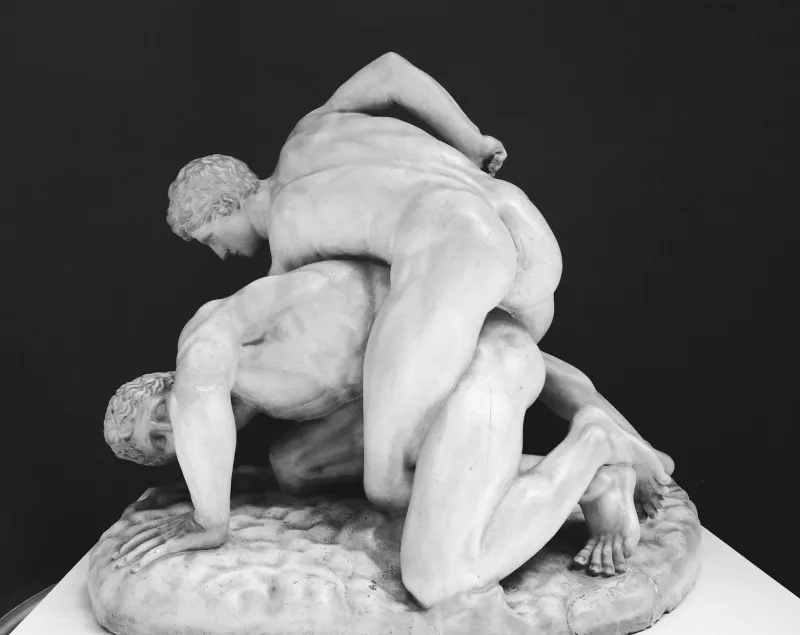
The most famous Croton athlete, Milo of Croton, won six Olympic wrestling titles over a 24-year period—a level of sustained excellence that rivals any modern athletic dynasty. His training methods, including his legendary practice of carrying a growing calf daily until it became a full-grown bull, demonstrated the systematic approach to strength development that defined Croton's athletic culture.
Athens: The Talent Development Pipeline
Athens took yet another approach to Olympic excellence, creating what we'd recognize today as a comprehensive talent development system. Rather than focusing on military-style conditioning like Sparta or specialized training like Croton, Athens built an educational infrastructure that identified and developed athletic talent from a young age.
Athenian gymnasiums functioned like modern sports academies, providing technical instruction, competitive opportunities, and pathways to elite competition. Wealthy Athenian families invested heavily in private coaching for promising young athletes, creating an early version of the youth sports specialization that defines modern American athletics.
This systematic approach to talent development produced Olympic champions across multiple generations. Athenian athletes were particularly dominant in technical events like discus throwing and javelin, where their emphasis on proper form and methodical skill development provided significant advantages.
The Dynasty Formula
What's remarkable about these ancient Greek powerhouses is how their approaches to sustained excellence mirror the methods that define successful modern American sports organizations.
Sparta's systematic development program resembles the way teams like the San Antonio Spurs built decades of NBA success through consistent player development and organizational culture. Croton's focus on sports science and nutrition anticipates the way modern franchises invest in cutting-edge training methods and performance optimization. Athens' comprehensive talent pipeline mirrors the way successful college programs recruit and develop athletes over multiple recruiting cycles.
Cultural Investment in Excellence
Perhaps most importantly, these dominant city-states shared a common characteristic: they made athletic excellence a cultural priority. Success wasn't just celebrated—it was systematically pursued through institutional commitment that extended across generations.
Sparta built their entire social structure around physical excellence. Croton invested communal resources in athletic training facilities and coaching expertise. Athens created educational systems that identified and developed talent from childhood through adulthood.
Lessons for Modern Sports
These ancient dynasties prove that sustained athletic success isn't accidental. It requires systematic approaches to talent identification, development, and competition preparation that extend far beyond individual athletes or single competitive cycles.
When we analyze modern American sports dynasties—from the Yankees' championship runs to the Warriors' basketball dominance—we're seeing the same principles that drove ancient Greek success: institutional commitment to excellence, systematic player development, innovative approaches to training and preparation, and organizational cultures that prioritize sustained success over short-term results.
The Enduring Blueprint
The ancient Greek city-states didn't just compete in the Olympics—they created the blueprint for building athletic dynasties that transcends any single sport or era. Their methods for identifying talent, developing skills, and creating cultures of excellence remain the foundation for every successful sports organization, from youth leagues to professional franchises.
Every time we marvel at sustained athletic success, we're witnessing the evolution of strategies that were first perfected in the gymnasiums and training grounds of ancient Greece, where city-states proved that greatness isn't just about individual talent—it's about systematic excellence that can be built, sustained, and passed down through generations.