The Fight That Never Ended
Imagine stepping into a boxing ring with no gloves, no rounds, no referee to break up the action, and no weight classes. Your opponent might outweigh you by 50 pounds, but that's your problem to solve. The fight doesn't stop until one of you can't continue—and sometimes, that meant never getting up again.
Welcome to ancient Greek boxing, the Olympic sport that killed its competitors.
While modern boxing fans debate whether a fight should go 12 rounds instead of 15, ancient Greek boxers faced a much simpler rule: last man standing wins. No breaks, no water bottles, no corner men shouting advice. Just two athletes wrapped in hardened leather straps called himantes, pounding each other until one collapsed.
The Leather That Drew Blood
Those leather wraps weren't designed for protection—they were weapons. Early himantes were simple leather thongs that protected the knuckles while leaving fingers free. But as the sport evolved, so did the brutality. By the time the Romans took over the Games, boxers were using caestus—leather wraps reinforced with metal studs and spikes that could split skin with a single punch.
American boxing fans who think bare-knuckle fighting is hardcore have no idea what their ancestors endured. These ancient fighters essentially wore brass knuckles made of leather and bronze, turning every punch into a potential death blow.
No Weight Classes, No Problem
Modern boxing's elaborate weight division system—from flyweight to heavyweight—would have baffled ancient Greeks. Size didn't matter because skill, endurance, and pain tolerance were considered the true measures of a champion. A 140-pound athlete could face a 200-pound opponent, and the crowd would cheer just as loudly.
This approach created legendary mismatches that somehow produced legendary fighters. Melankomas of Caria became famous not for his knockout power, but for his defensive genius—he could dance around opponents for hours without taking or landing a significant blow, winning through pure exhaustion tactics.
The Ultimate Test of Character
Greek boxing wasn't just about physical dominance—it was a test of andreia, the Greek concept of courage and manliness. Fighters who quit were branded as cowards, their reputations destroyed across the Greek world. This social pressure created warriors who would rather die than surrender.
The most famous example is Arrhichion of Phigalia, who won his third Olympic boxing title while literally dying. As his opponent applied a chokehold, Arrhichion managed to break the man's ankle with his legs. His opponent tapped out from the pain just as Arrhichion died from strangulation. The judges awarded the victory to the corpse.
Try explaining that to a modern athletic commission.
Training for War
Ancient boxing served a practical purpose beyond entertainment—it prepared men for warfare. The same skills that helped you survive in the ring translated directly to battlefield combat. Boxers learned to fight through pain, maintain focus under extreme stress, and never surrender.
This military connection explains why boxing held such prestige in Greek society. Olympic boxing champions weren't just athletes; they were proven warriors who could lead troops and defend their cities. The sport produced leaders, not just entertainers.
The Roman Corruption
When Rome conquered Greece, boxing got even deadlier. Romans preferred spectacle over sport, introducing gladiatorial elements that emphasized blood and death over athletic skill. The noble art of Greek boxing devolved into a savage entertainment that horrified even battle-hardened soldiers.
This Roman influence eventually contributed to the sport's decline. When Christianity spread throughout the empire, boxing was seen as barbaric paganism incompatible with civilized society. The sport disappeared for over a thousand years.
The Modern Connection
Today's boxing world owes everything to those ancient Greek pioneers who established boxing as the "sweet science." The modern emphasis on footwork, defensive positioning, and tactical thinking all trace back to fighters like Melankomas who proved that brains could beat brawn.
Even the psychological aspects of modern boxing—the mental warfare, the intimidation tactics, the importance of never showing weakness—were perfected in ancient Greek gymnasiums where fighters learned that surrender meant social death.
Why It Still Matters
Ancient Greek boxing reminds us that sport has always been about more than entertainment. It was about testing human limits, building character, and preparing citizens for life's challenges. While modern boxing is infinitely safer, it still carries that ancient DNA—the idea that stepping into a ring reveals who you really are when everything is on the line.
The next time you watch a heavyweight championship fight, remember that you're witnessing the evolution of a 2,800-year-old tradition that once literally separated the living from the dead. Those ancient Greeks may have been brutal, but they created something that still captivates millions of Americans every time two fighters step between the ropes.
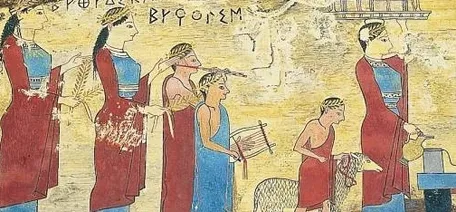 Photo: ancient Olympics, via historyprojectancientgreekolympics.weebly.com