The Upset That Shook the Ancient World
Imagine if a high school wrestler from rural Montana defeated the reigning Olympic heavyweight champion in front of 50,000 screaming fans. The crowd would go absolutely wild, right? That's essentially what happened at the Olympic Games in 456 BC when a young athlete named Diagoras from the tiny island of Rhodes defeated the heavily favored boxing champions from Athens and Sparta.
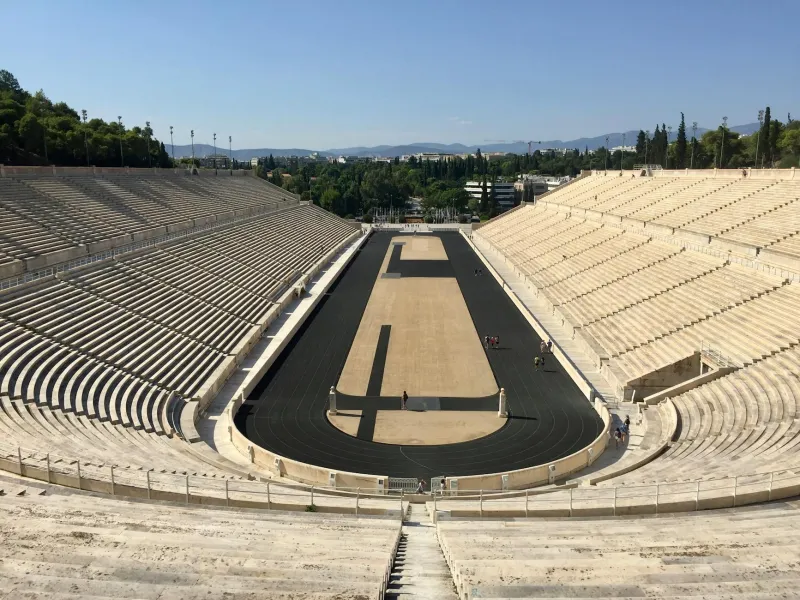
 Photo: Olympic Games, via cdn.wccftech.com
The victory was so stunning that it inspired Pindar, the greatest poet of ancient Greece, to write an entire ode celebrating the upset. But here's what makes this story remarkable for modern American sports fans: it was just one of hundreds of similar underdog victories that ancient Greeks celebrated with the same passion we reserve for March Madness brackets and Super Bowl upsets.
 Photo: Pindar, via static.wikia.nocookie.net
The Greeks didn't just witness underdog stories—they invented the entire cultural framework that makes us love them.
David vs. Goliath in Ancient Stadiums
Long before the biblical story became a metaphor for athletic upsets, ancient Greek festivals were producing their own versions of small defeating mighty. The Olympic Games, Pythian Games, and other major competitions were structured in a way that practically guaranteed shocking results.
Unlike modern sports with their seedings, rankings, and predictive algorithms, ancient Greek competitions were essentially random draws. A farmer's son from a remote village could find himself matched against the defending champion in the first round. There were no preliminary heats or qualifying standards—just pure competition where anyone could face anyone.
This system created what we now recognize as the perfect recipe for underdog stories: high stakes, unpredictable matchups, and massive audiences hungry for drama. The Greeks understood something that American sports marketing has spent billions trying to recreate—uncertainty drives passion.
The Poetry of Unexpected Victory
When underdogs won in ancient Greece, the celebration wasn't just loud—it was literary. Poets like Pindar made careers out of immortalizing unexpected victories in verse. These weren't simple game recaps; they were epic narratives that transformed athletic upsets into timeless stories about human potential.
Pindar's victory odes read like the ancient equivalent of ESPN's 30 for 30 documentaries. He would trace an underdog athlete's journey from humble beginnings, highlight the overwhelming odds they faced, and then describe their moment of triumph with language so powerful that people memorized and recited these poems for generations.
One of his most famous odes celebrates Hagesidamos, a young boxer from western Greece who defeated a series of established champions. Pindar writes: "From small cities come great men," a line that could easily describe any Cinderella team in March Madness. The poet understood that underdog victories weren't just athletic achievements—they were proof that excellence could emerge from anywhere.
Sculpting the Impossible
Ancient Greeks didn't just write about underdog victories—they carved them in stone. Successful long-shot athletes were often honored with bronze or marble statues that stood for centuries as permanent reminders of their unlikely triumphs. These weren't participation trophies; they were monuments to the idea that the impossible was always possible.
Archaeologists have discovered dozens of these victory statues, many celebrating athletes from small, politically insignificant city-states who defeated champions from major powers like Athens or Sparta. The Greeks were so captivated by these David-and-Goliath stories that they literally built shrines to them.
This cultural obsession with celebrating the unexpected mirrors perfectly with American sports culture's love affair with underdog narratives. From the Miracle on Ice to Leicester City's Premier League title, we're drawn to the same stories that captivated ancient Greek audiences—ordinary people achieving extraordinary things against impossible odds.
The Economics of Upset
Ancient Greek underdog stories weren't just emotionally satisfying—they were economically transformative. A major athletic victory could literally change a city-state's fortunes overnight. When an athlete from a small community won at Olympia, it brought prestige, trade opportunities, and political leverage that lasted for generations.
This is remarkably similar to how modern American cities view major sporting success. When the Golden State Warriors transformed from lovable losers to champions, it didn't just change the team—it helped rebrand the entire Bay Area as a destination for tech innovation and cultural relevance.
The Greeks understood that athletic success was never just about individual achievement. It was about proving that greatness could emerge from unexpected places, a message that resonated with audiences then just as it does with American sports fans today.
The Psychological Blueprint
What made ancient Greek underdog stories so compelling was their psychological sophistication. These weren't just tales of lucky breaks or referee mistakes. They were narratives about mental toughness, preparation overcoming talent, and the power of believing in yourself when no one else does.
Greek historians and poets would dig deep into the backstories of upset victories, exploring how unknown athletes prepared mentally for facing established champions. They wrote about visualization techniques, confidence-building rituals, and the importance of controlling pre-competition nerves—concepts that modern sports psychology has only recently rediscovered.
These ancient insights help explain why American audiences are so drawn to underdog narratives in movies like Rocky or Rudy. We're not just watching fictional characters overcome odds—we're experiencing echoes of stories that have captivated human audiences for over two millennia.
From Olive Wreaths to March Madness
The direct line from ancient Greek upset celebrations to modern American sports culture is unmistakable. March Madness brackets generate billions in revenue because they promise the same thing ancient Olympic festivals delivered: the chance to witness the impossible.
When a 16-seed defeats a 1-seed in the NCAA tournament, the explosion of social media excitement mirrors exactly how ancient Greek crowds reacted to similar upsets. The difference is scale and technology, not emotional impact.
American sports media has essentially recreated the ancient Greek poet system. Where Pindar wrote odes to celebrate unexpected victories, we have highlight reels, documentary films, and endless analysis that transforms athletic upsets into cultural touchstones.
The Eternal Appeal
Ancient Greeks understood something fundamental about human nature that American sports culture has inherited: we need to believe that anyone can win. In a world where success often seems predetermined by resources, connections, or circumstances, athletic competition offers the promise that effort and heart can still triumph over advantages.
Every time an American underdog team makes an unlikely playoff run, every time an unknown athlete breaks through at the Olympics, every time we root for Rocky against Apollo Creed, we're participating in a tradition that began in ancient Olympia. The Greeks didn't just create competitive sports—they created the narrative framework that makes those sports emotionally meaningful.
The next time you find yourself pulling for the underdog, remember: you're experiencing an emotion that's been captivating audiences for over 2,500 years. The Greeks wrote the playbook, and we're still following the script.