26.2 Miles of History: How a Greek Legend Became America's Favorite Race
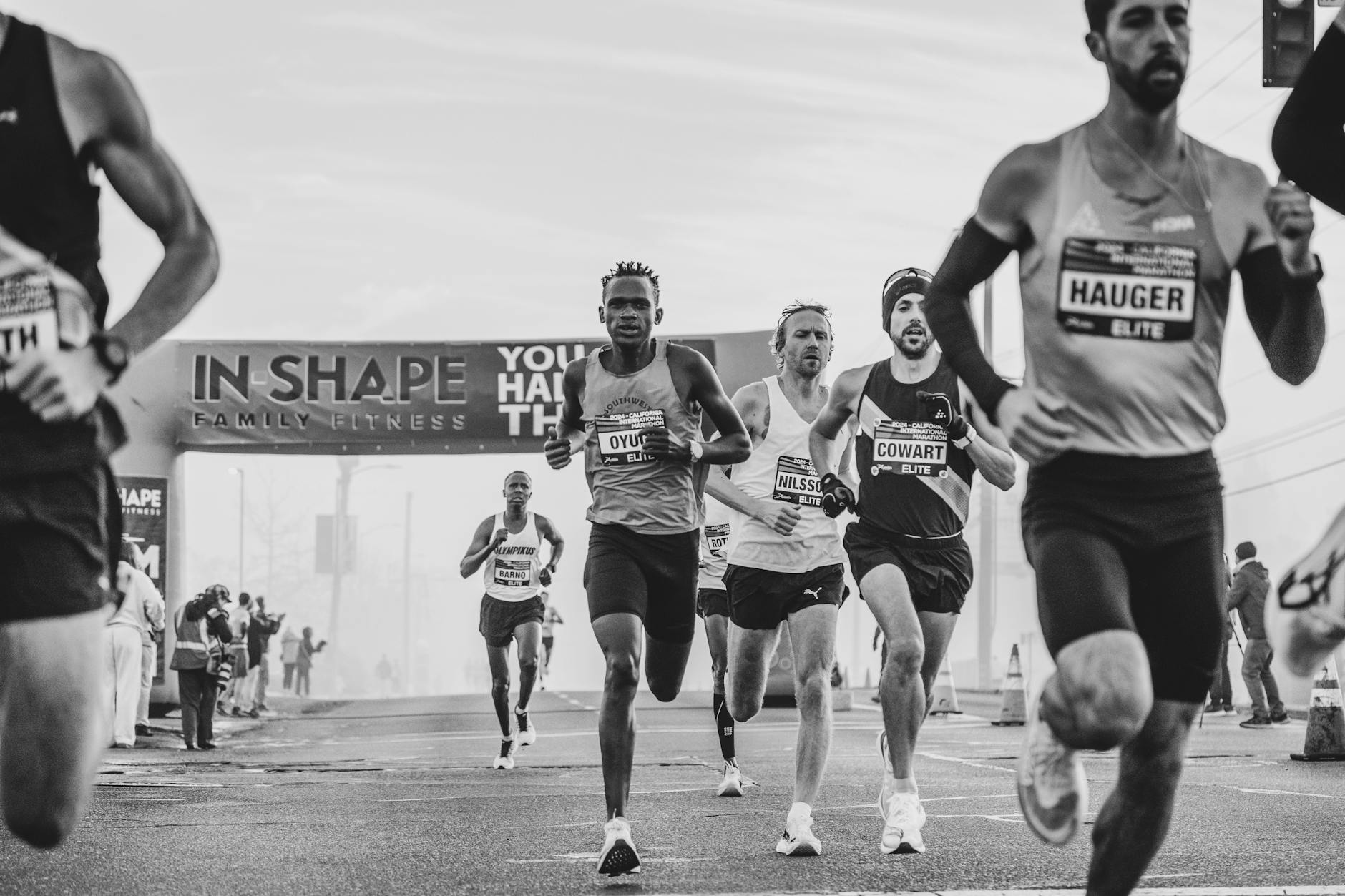
Every April, hundreds of thousands of people line the streets of Boston to watch somewhere around thirty thousand runners cover 26.2 miles from Hopkinton to Copley Square. Some of those runners are elite athletes chasing world-class times. Most are regular people — teachers, accountants, nurses, retirees — who trained for months and are about to do something extraordinary. All of them, whether they know it or not, are participants in one of sport's oldest and most improbable stories.
The marathon's origin is part history, part legend, and entirely compelling. It starts on a battlefield in ancient Greece, winds through the founding of the modern Olympic movement, and ends up on the streets of American cities where millions of people have decided that running really far, for no practical reason, is one of the best things a person can do.
The Legend of Pheidippides
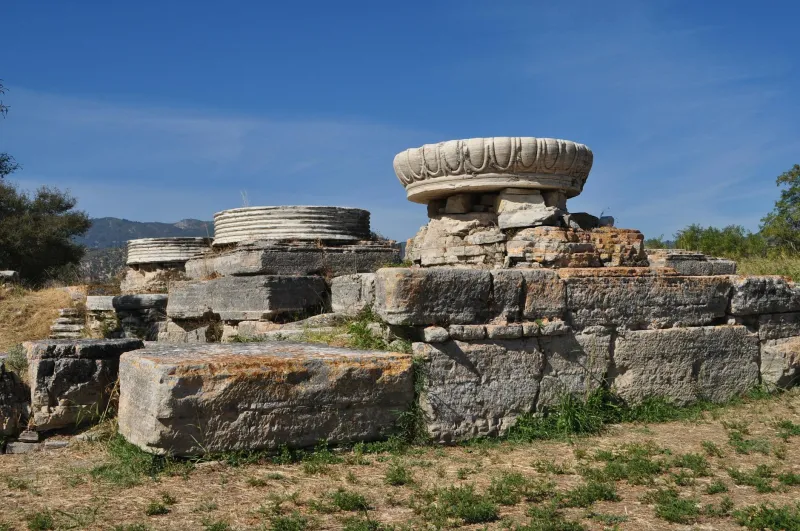
In 490 BC, a Greek soldier named Pheidippides — or Philippides, depending on which ancient source you trust — reportedly ran from the town of Marathon to Athens, a distance of roughly 25 miles, to deliver news of a stunning military victory. The Athenian army had defeated the invading Persian forces at the Battle of Marathon, and someone needed to get word to the city before panic set in.
According to the legend, Pheidippides ran the entire distance without stopping, burst into the assembly, shouted something along the lines of "we have won" — the Greek word is nenikekamen — and promptly collapsed and died.
Historians have spent considerable energy debating how much of this story is literally true. The ancient historian Herodotus, who wrote about the Battle of Marathon in detail, doesn't actually include the famous run to Athens in his account. The story appears later, in the writings of Plutarch and Lucian. It's possible the tale was embellished over time, as good stories tend to be.
But the underlying event — the Battle of Marathon, the Athenian victory, the urgent need to communicate across distance — is historical fact. And the legend, accurate in its details or not, captured something real about human endurance, sacrifice, and the will to push the body past every rational limit.
That idea proved to be extremely durable.
Athens 1896: The Marathon Is Born as a Competitive Event
When Pierre de Coubertin and his colleagues revived the Olympic Games in Athens in 1896, they faced a question that was as much symbolic as athletic: how do you honor the Greek heritage of the Games while also building something new and modern?
Michel Bréal, a French linguist and friend of de Coubertin, had an answer. He proposed a long-distance race that retraced the legendary route from Marathon to Athens. The idea was immediately embraced. It felt right — a race that connected the ancient world to the modern one, held on the very soil where the legend originated.
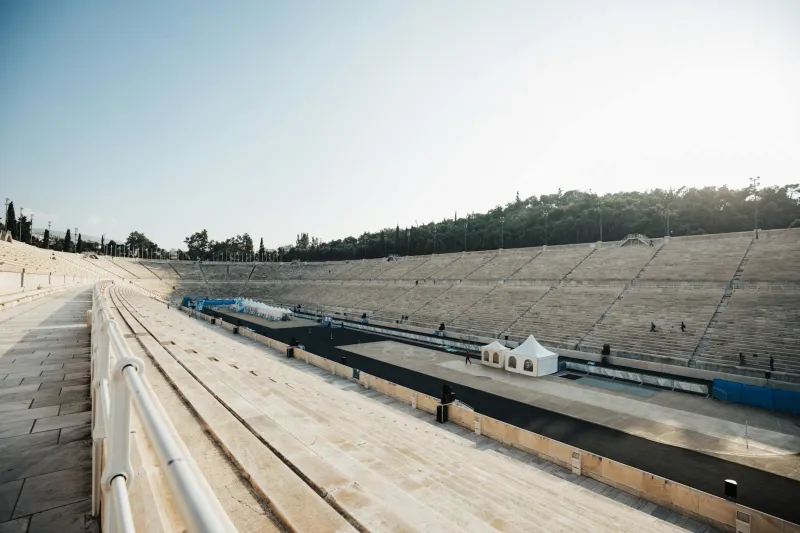
On April 10, 1896, seventeen athletes lined up in the town of Marathon. The course covered approximately 40 kilometers — the distance hadn't yet been standardized — and wound through the Greek countryside to the Panathenaic Stadium in Athens, where a crowd of around 100,000 spectators waited.
The winner was Spyridon Louis, a Greek water carrier from a village near Athens. His winning time was 2 hours, 58 minutes, and 50 seconds. He entered the stadium to a roar that eyewitnesses described as unlike anything they had ever heard. Two Greek princes reportedly ran the final stretch alongside him. Louis became a national hero overnight.
For context: the current men's marathon world record, set by Eliud Kipchoge of Kenya in Berlin in 2022, stands at 2:01:09. The gap between Louis's winning time in 1896 and Kipchoge's record is nearly an hour. Nearly sixty minutes of improvement over 127 years, driven by training science, nutrition, course management strategy, and purpose-built performance footwear that earlier generations couldn't have imagined.
The Distance Gets Standardized — Thanks to a Royal Request
Here's a detail that surprises most people: the marathon's famous 26.2-mile distance isn't rooted in the ancient legend at all. It's rooted in the British royal family.
At the 1908 London Olympics, the marathon course was arranged so the race would start on the grounds of Windsor Castle — reportedly so the royal children could watch from the nursery window — and finish in front of the royal box at the Olympic stadium. That specific point-to-point distance came out to 26 miles and 385 yards, or 26.2 miles. The International Association of Athletics Federations officially standardized that distance in 1921, and it has been the global standard ever since.
The world's most iconic endurance race has a distance determined partly by the sight lines from a royal nursery. Sport history is full of moments like that.
How America Fell in Love with the Marathon
The Boston Athletic Association organized the first Boston Marathon in 1897, just one year after the Athens Olympics — making it the oldest annual marathon in the world. Fifteen runners started that first race. John J. McDermott won in 2:55:10, running a course that was slightly shorter than today's standardized distance.
For most of the twentieth century, the marathon was considered an extreme undertaking, the domain of a small, dedicated community of long-distance specialists. That began to change in the 1970s, when the American running boom — fueled in part by Frank Shorter's gold medal performance at the 1972 Munich Olympics and the broader cultural shift toward personal fitness — brought recreational running into the mainstream.
By the time the New York City Marathon opened its five-borough course in 1976, something had fundamentally shifted. Running a marathon was no longer just an athletic achievement — it was a personal milestone, a bucket-list item, a statement about who you were and what you were capable of. The race became a vehicle for fundraising, for community, for individual transformation.
Today, the United States hosts more marathons than any other country in the world. Hundreds of thousands of Americans cross marathon finish lines every year. The Boston Marathon's qualifying standards are treated as serious athletic goals by everyday runners who have built their training calendars around earning a bib. Chicago, New York, and Boston are three of the six World Marathon Majors, the sport's most prestigious events.
The Finish Line That Keeps Moving
Pheidippides — or the legend of him — ran to deliver a message. Today, thirty thousand people run Boston because the act of covering 26.2 miles means something to them personally, athletically, or both. The race has evolved from a survival story to a founding myth to a competitive event to a mass-participation phenomenon, and it has lost none of its power at any stage of that transformation.
Spyridon Louis crossed the finish line in Athens in just under three hours, and a stadium of 100,000 people lost their minds. Eliud Kipchoge ran the same distance in just over two hours, and the world watched online in real time. Somewhere in between those two moments, the marathon stopped being an event and became an institution.
And every April in Boston, it starts all over again.