There is no simpler concept in sport. Run as fast as you can. Get there first. That's it.
And yet the 100-meter dash has become something far bigger than its premise. It is ten seconds of pure theater — the most-watched, most-analyzed, most-talked-about stretch of ground in the entire Olympic program. Every four years, the world stops to watch a handful of humans settle an ancient argument: who is the fastest person alive?
That argument started a very long time ago.
A Race Born in the Dust of Ancient Greece
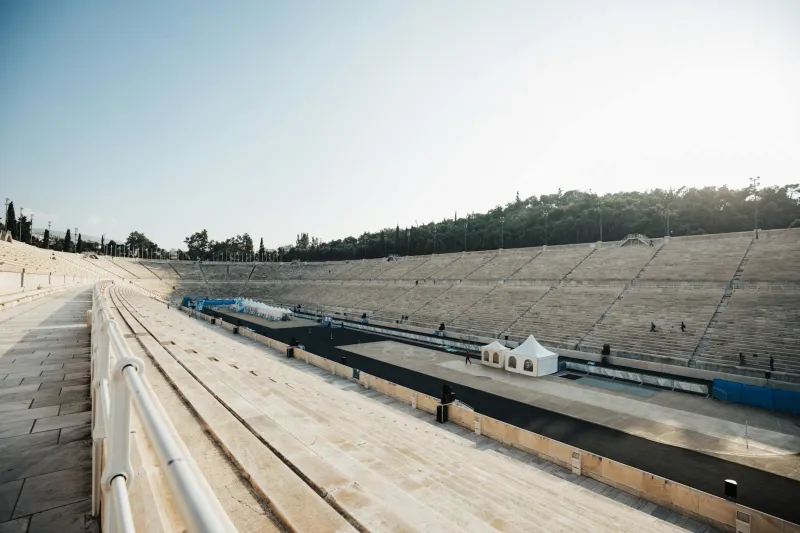
The earliest recorded version of competitive sprinting dates back to 776 BC, when the ancient Greeks held their first formal athletic festival at Olympia. The centerpiece of those early Games wasn't a discus throw or a wrestling match — it was a foot race called the stadion, a single-length sprint of roughly 200 meters across a packed dirt track.
The stadion was more than a race. It was a religious act. The Games were held in honor of Zeus, and the athletes who competed weren't weekend warriors — they were dedicated competitors who trained for years under the watchful eye of coaches known as paidotribes. They ran barefoot, wore no clothing, and competed with an intensity that the Greeks believed honored the gods.
For nearly a thousand years, this tradition held. The ancient Olympics survived wars, political upheaval, and changing rulers until the Roman Emperor Theodosius I shut them down in 393 AD, declaring them a pagan ritual incompatible with the Christian empire.
The race went dark. But the instinct never disappeared.
1896: The Sprint Comes Back
When Pierre de Coubertin revived the Olympic Games in Athens in 1896, the sprint returned with it — this time measured at 100 meters, reflecting the metric system that had become the global standard. The track was still rudimentary by modern standards: a cinder surface, hand-dug lanes, and athletes starting from a crouched position they improvised themselves.
Thomas Burke of the United States won that first modern 100-meter final in 12.0 seconds. Burke used a distinctive crouch start that his competitors found unusual, almost comical. It turned out to be a preview of what was coming — athletes and coaches had already begun experimenting with technique, looking for any edge the rules didn't explicitly prohibit.
For context, the current world record sits at 9.58 seconds. That's more than two full seconds faster than Burke's winning time. In a race measured in fractions, that's an almost incomprehensible gap.
The Technology That Changed Everything
The improvements didn't come from one single breakthrough. They came in layers, each generation of athletes inheriting a slightly faster world than the one before.
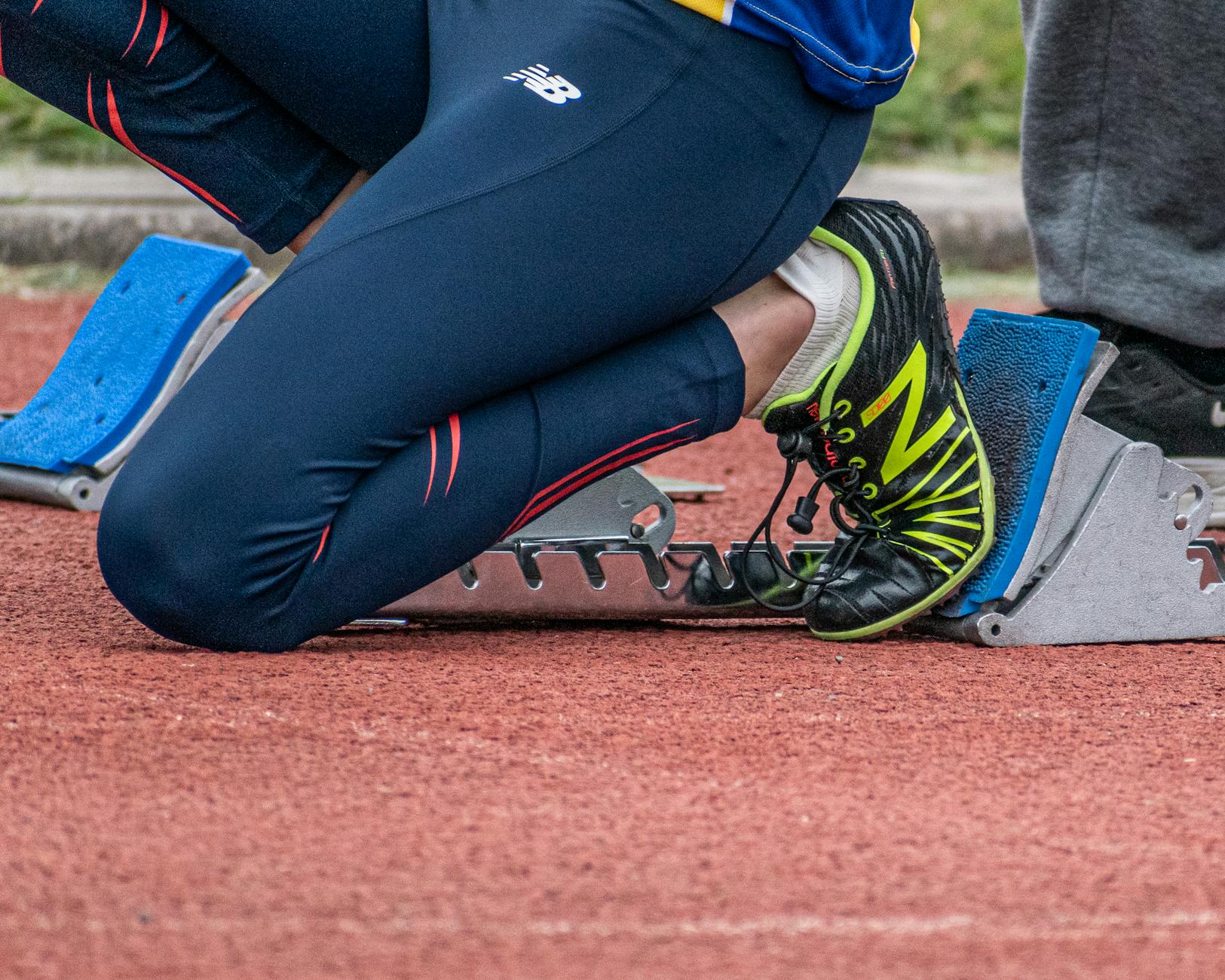
Starting blocks arrived in the 1930s, replacing the practice of digging footholds in the track surface. Suddenly, every sprinter had the same stable, optimized launch position. Reaction times tightened. The first few meters — where races are often decided — became a science unto themselves.
Track surfaces underwent their own quiet revolution. Cinder gave way to all-weather synthetic tracks in the late 1960s, a change that shaved meaningful time off performances almost overnight. The 1968 Mexico City Olympics, held at altitude on a brand-new synthetic surface, produced a wave of world records that shocked the sport. Jim Hines became the first man to break the 10-second barrier officially, running 9.95.
Spikes and footwear evolved in parallel. Modern sprint spikes are engineered to maximize energy return and minimize weight, with some designs barely registering on a scale. The shoe a sprinter wears today is as much a performance instrument as the training they've done for years.
Sports science pulled everything together. Video analysis allowed coaches to break down stride mechanics frame by frame. Strength and conditioning programs became sport-specific, building the explosive fast-twitch muscle fibers that power elite sprinting. Nutrition science told athletes not just what to eat, but when and how much, calibrated to their training load.
The Bolt Moment
All of those threads converged on August 16, 2008, in Beijing.
Usain Bolt crossed the finish line of the Olympic 100-meter final in 9.69 seconds — a world record, run while visibly easing up in the final meters and thumping his chest before he'd even finished. The world record he set the following year in Berlin, 9.58 seconds, still stands today.
Bolt was something the sport hadn't quite seen before: a 6-foot-5 sprinter who, by every traditional model, shouldn't have been the fastest man alive. His stride was longer, his start was slower, and his mechanics defied the template. He was a reminder that sport has a way of humbling the formulas we build around it.
Why Every Tenth Still Matters
The 100-meter dash is a race that lasts less time than it takes to read this sentence aloud. And yet it carries the weight of nearly three thousand years of human competitive instinct.
From a barefoot sprint across Greek dirt to a biomechanically optimized launch off carbon-fiber starting blocks, the event has been refined by every generation that touched it. The ancient Greek who won the stadion in Olympia and the sprinter who lines up in Paris or Los Angeles in the years ahead are separated by millennia of science, technology, and culture.
But they're chasing exactly the same thing.
Get there first. That's it.